

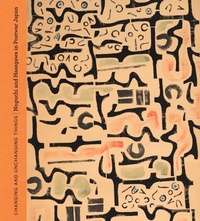
Changing and Unchanging Things
Noguchi and Hasegawa in Postwar Japan
1st Edition
Will be published approx. on 15. March 2019
Book
Hardback
240 pages
978-0-520-29822-4 (ISBN)
Description
In May 1950 Isamu Noguchi (1904-88) returned to Japan for his first visit in 20 years. He was, Noguchi said, seeking models for evolving the relationship between sculpture and society-having emerged from the war years with a profound desire to reorient his work "toward some purposeful social end." The artist Saburo Hasegawa (1906-57) was a key figure for Noguchi during this period, making introductions to Japanese artists, philosophies, and material culture. Hasegawa, who had mingled with the European avant-garde during time spent as a painter in Paris in the 1930s, was, like Noguchi, seeking an artistic hybridity. By the time Hasegawa and Noguchi met, both had been thinking deeply about the balance between tradition and modernity, and indigenous and foreign influences, in the development of traditional cultures for some time. The predicate of their intense friendship was a thorough exploration of traditional Japanese culture within the context of seeking what Noguchi termed "an innocent synthesis" that "must rise from the embers of the past."
Changing and Unchanging Things is an account of how their joint exploration of traditional Japanese culture influenced their contemporary and subsequent work. The 40 masterpieces in the exhibition-by turns elegiac, assured, ambivalent, anguished, euphoric, and resigned-are organized into the major overlapping subjects of their attention: the landscapes of Japan, the abstracted human figure, the fragmentation of matter in the atomic age, and Japan's traditional art forms.
Published in association with The Noguchi Museum.
Exhibition dates:
Yokohama Museum of Art, Japan: January 12-March 21, 2019
The Noguchi Museum, New York: May 1-July 14, 2019
Asian Art Museum, San Francisco: September 27-December 8, 2019
Changing and Unchanging Things is an account of how their joint exploration of traditional Japanese culture influenced their contemporary and subsequent work. The 40 masterpieces in the exhibition-by turns elegiac, assured, ambivalent, anguished, euphoric, and resigned-are organized into the major overlapping subjects of their attention: the landscapes of Japan, the abstracted human figure, the fragmentation of matter in the atomic age, and Japan's traditional art forms.
Published in association with The Noguchi Museum.
Exhibition dates:
Yokohama Museum of Art, Japan: January 12-March 21, 2019
The Noguchi Museum, New York: May 1-July 14, 2019
Asian Art Museum, San Francisco: September 27-December 8, 2019
Reviews / Votes
"Will undoubtedly be an important reference for future studies on Hasegawa, Noguchi, and postwar art by Japanologists and non-Japanologists alike." * Journal of Japanese Studies *More details
Edition
First Edition
Language
English
Place of publication
Berkerley
United States
Target group
Professional and scholarly
Product notice
Cloth over boards
Illustrations
150 color images
Dimensions
Height: 274 mm
Width: 250 mm
Thickness: 30 mm
Weight
1726 gr
ISBN-13
978-0-520-29822-4 (9780520298224)
Copyright in bibliographic data and cover images is held by Nielsen Book Services Limited or by the publishers or by their respective licensors: all rights reserved.
Schweitzer Classification
Persons
Dakin Hart is Senior Curator of the Isamu Noguchi Foundation and Garden Museum.
Mark Dean Johnson is Professor of Art at San Francisco State University.
Mark Dean Johnson is Professor of Art at San Francisco State University.
Content
FOREWORD JENNY DIXON
INTRODUCTION Changing and Unchanging Things: Noguchi and Hasegawa in Postwar Japan DAKIN HART AND MARK DEAN JOHNSON
ONE Modernist Passions for "Old Japan:" Saburo Hasegawa and Isamu Noguchi in 1950 BERT WINTHER-TAMAKI
TWO "Accumulated Impressions": A Photographic Travelogue of Noguchi and Hasegawa in Japan MATTHEW KIRSCH
THREE Regretting the Future: Noguchi, and Hasegawa Consider the Direction of Postwar Japanese Art KOICHI KAWASAKI
FOUR Isamu Noguchi's Memorial to the Dead of Hiroshima: The Monument that Never Was and an Artistic Vision Shared with Saburo Hasegawa NAOAKI NAKAMURA
FIVE Saburo Hasegawa in America: A Wide Open Road MARK DEAN JOHNSON
SIX True Development of an Old Tradition: Isamu Noguchi's Work in the 1950s DAKIN HART
SEVEN Toward Abstraction: Saburo Hasegawa's Exploration of the Photogram YASUFUMI NAKAMORI
PLATES Saburo Hasegawa and Isamu Noguchi
PRIMARY SOURCES Remembrance of Saburo Hasegawa ISAMU NOGUCHI
Noguchi in Japan SABURO HASEGAWA
CHRONOLOGY Isamu Noguchi and Saburo Hasegawa: 1904-April 1959 MATTHEW KIRSCH
Japanese Translations
Contributors
Photography credits
INTRODUCTION Changing and Unchanging Things: Noguchi and Hasegawa in Postwar Japan DAKIN HART AND MARK DEAN JOHNSON
ONE Modernist Passions for "Old Japan:" Saburo Hasegawa and Isamu Noguchi in 1950 BERT WINTHER-TAMAKI
TWO "Accumulated Impressions": A Photographic Travelogue of Noguchi and Hasegawa in Japan MATTHEW KIRSCH
THREE Regretting the Future: Noguchi, and Hasegawa Consider the Direction of Postwar Japanese Art KOICHI KAWASAKI
FOUR Isamu Noguchi's Memorial to the Dead of Hiroshima: The Monument that Never Was and an Artistic Vision Shared with Saburo Hasegawa NAOAKI NAKAMURA
FIVE Saburo Hasegawa in America: A Wide Open Road MARK DEAN JOHNSON
SIX True Development of an Old Tradition: Isamu Noguchi's Work in the 1950s DAKIN HART
SEVEN Toward Abstraction: Saburo Hasegawa's Exploration of the Photogram YASUFUMI NAKAMORI
PLATES Saburo Hasegawa and Isamu Noguchi
PRIMARY SOURCES Remembrance of Saburo Hasegawa ISAMU NOGUCHI
Noguchi in Japan SABURO HASEGAWA
CHRONOLOGY Isamu Noguchi and Saburo Hasegawa: 1904-April 1959 MATTHEW KIRSCH
Japanese Translations
Contributors
Photography credits