

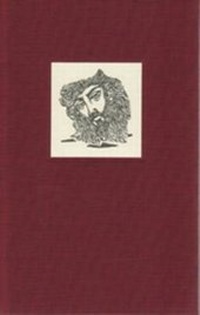
In Secret: Versions of Yannis Ritsos
Published on 16. May 2013
Book
Leather / fine binding
80 pages
978-1-907587-70-2 (ISBN)
Description
In Secret gives versions of Ritsos's short lyric poems: brief, compressed narratives that are spare, though not scant. They possess an emotional resonance that is instinctively subversive: rooted in the quotidian but at the same time freighted with mystery. The poems are so pared-down, so distilled, that the story-fragments we are given - the scene- settings, the tiny psychodramas - have an irresistible potency. 'Harsent is one of those rare poets whose work commands attention outside the poetry world.' - Guardian
Reviews / Votes
In Secret: Versions of Yannis Ritsos translated by David Harsent - review Beverley Bie Brahic is charmed by a collection of taut, laconic lyrics from Greece's preeminent poet Yannis Ritsos - spent much of his life resisting fascism. I don't know if it's the same in Greek, but in French, en secret is a loaded phrase, with the usual connotations of "secret", but also of "in solitary confinement", which seems apt for the poetry of a man who spent a good part of his life resisting fascism, sometimes in prison. Yannis Ritsos (1909-1990) is one of Greece's preeminent 20th-century poets. Revered in his own country and abroad, he's a perennial bridesmaid on the Nobel Prize list. He wrote broadly and copiously; his translator, David Harsent, gives us in this attractive volume a selection of short lyrics, many of them political, that show Ritsos's sympathy for the lives of ordinary folk: women airing sheets, mourners "scuffing their feet, heads down - wearing coats that no longer quite fit": the eternal carriers-on. Ritsos's style is plain but taut; his sentences are understatedly declarative, even flat; between the lines, however, there's a lot going on. The first poem, "A Break in Routine", takes pronouns for protagonists: They came to the door and read names from a list. If you heard your name you had to get ready fast: a busted suitcase, a bundle you might carry over your shoulder, perhaps; forget the rest. With each new departure, the place seemed to shrink. He thereby involves the reader in separating the good, who mostly come to no good, from their persecutors; and suggests the dehumanising (and bureaucratising) nature of tyranny. A few laconic but concrete details almost always suffice to sketch a situation and its potential for black comedy - in "A Break in Routine" (note the irony of the title) there's an anecdote involving an alarm clock. Many poems have a surrealist element. They juxtapose rather than proceed chronologically or logically, from cause to effect; they contain enigmatic and startling images that give the reader the pleasure of ferreting out connections, much as we do when we look at a cubist painting that combines figures and colour planes, or at a surrealist painting by, say, De Chirico, with its congealed dreamscapes. Here is "The Acrobat", a favourite subject of Picasso and Apollinaire: He walked on his hands, so perfectly upside-down that he seemed to make past present, present past. Then the floor opened and swallowed him. We looked at each other: who would ever believe us? A moment later, the doorbell rang. There he stood, with a basket of oranges. It's sleight of word, and utterly charming. Perhaps the best method of reading such a poem is to turn the thing over and over in one's hands and get the feel of it. And as with Apollinaire, and the surrealists who came along after the first world war, the presence of women is strong; it stokes the erotic muse: "He thinks there must be a woman in every mirror, naked, locked in. / He thinks the woman he's thinking of fell asleep // smelling the faint odour of a distant star, / the self-same whiff of scorch that now keeps him awake." ("The Same Star"). A Ritsos poem's protagonists, male and female, are equally prey to the terror of daily life: "Men and women. Gardens and books. They come and go. / And that tinny tinkle you heard / just before dawn wasn't the mail arriving. / It was the old bell-wether leading lambs to the slaughter." ("The Bell"). In Secret, which David Harsent calls "adaptation or hommage" rather than close translations, will be a fine addition to one's Ritsos shelf, or a good place to start one. Beverley Bie Brahic's White Sheets and Apollinaire: The Little Auto, are both published by CB editions.More details
Edition
Signed Limited Edition of 35
Language
English
Place of publication
London
United Kingdom
Dimensions
Height: 225 mm
Width: 143 mm
Thickness: 10 mm
ISBN-13
978-1-907587-70-2 (9781907587702)
Copyright in bibliographic data and cover images is held by Nielsen Book Services Limited or by the publishers or by their respective licensors: all rights reserved.
Schweitzer Classification
Persons
Yannis Ritsos (1909 - 1990) is one of Greece's finest and most celebrated poets, and was nine times nominated for a Nobel Prize. Louis Aragon called him 'the greatest poet of our age'. He wrote in the face of ill health, personal tragedy and the systematic persecution by successive hard-line, right-wing regimes that led to many years in prison, or in island detention camps. Despite this, his lifetime's work amounted to 120 collections of poems, several novels, critical essays, and translations of Russian and Eastern European poetry.The 1960 setting, by Mikis Theodorakis, of Ritsos's epic poem Epitaphios was said to have helped inspire a cultural revolution in Greece. David Harsent has published nine collections of poetry, winning many awards including the Forward Prize. His most recent collection, Night (Faber, 2011), won the 2012 Griffin International Poetry Prize, having been shortlisted for the Costa, Forward and T.S. Eliot awards.