

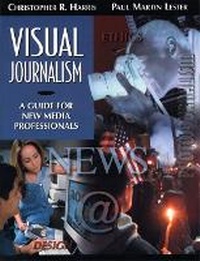
Visual Journalism
A Guide for New Media Professionals
Published on 1. March 2002
Book
Paperback/Softback
368 pages
978-0-205-32259-6 (ISBN)
Description
Visual Journalism discusses the growing visual communication field, making it the first book to combine all of the information necessary to start anyone on a visual communication career.
This text examines the historical context of visual journalism while providing insights into modern-day applications of new media processes for the new media professional. It consolidates information from various sectors of graphics to aid the "new media" practitioner, providing practical insight into the changing visual profession. By discussing topics such as visual literacy, ethical considerations, reporting and writing, typography and graphic design, and Internet research, it is of value in any course in which students are asked to create and use visual messages - including graphics, photography, Web design, typography, audio, and video.
This text examines the historical context of visual journalism while providing insights into modern-day applications of new media processes for the new media professional. It consolidates information from various sectors of graphics to aid the "new media" practitioner, providing practical insight into the changing visual profession. By discussing topics such as visual literacy, ethical considerations, reporting and writing, typography and graphic design, and Internet research, it is of value in any course in which students are asked to create and use visual messages - including graphics, photography, Web design, typography, audio, and video.
More details
Language
English
Place of publication
United States
Publishing group
Pearson Education (US)
Target group
Professional and scholarly
Dimensions
Height: 232 mm
Width: 178 mm
Weight
567 gr
ISBN-13
978-0-205-32259-6 (9780205322596)
Copyright in bibliographic data and cover images is held by Nielsen Book Services Limited or by the publishers or by their respective licensors: all rights reserved.
Schweitzer Classification
Content
INTRODUCTION: Digital Convergence and the Age of the Visual Journalist - Paul Martin Lester
SECTION 1: USING VISUALS.
1. Visual Journalism: Past, Present, and Future - Paul Martin Lester.
2. Visual Literacy - Paul Martin Lester.
3. An Ethical Approach - Paul Martin Lester.
SECTION 2: USING PHOTOGRAPHY.
4. Technical Considerations - Christopher R. Harris.
5. Documentary Assignments - Christopher R. Harris.
6. Manipulated Assignments - Christopher R. Harris.
SECTION 3: USING WORDS.
7. Reporting - Steve Doig, Arizona State University.
8. Writing - Gerald Grow, Florida A&M University.
SECTION 4: USING DESIGNS.
9. Typography - Jean Trumbo, University of Wisconsin.
10. Graphic Design - Jean Trumbo, University of Wisconsin.
11. Informational Graphics - Paul Martin Lester.
SECTION 5: USING MULTIMEDIA .
12. Visual Motion - Douglas Mitchell, Middle Tennessee State University.
13. Audio and Motion - Douglas Mitchell, Middle Tennessee State University.
14. Interactive Multimedia - Marc Barr, Middle Tennessee State University.
SECTION 6: USING COMPUTERS.
15. Internet Research - Robert Spires, Middle Tennessee State University.
16. Computer Applications - Larry Burriss, Middle Tennessee State University.
CONCLUSION: Visual Journalism Awaits You - Christopher R. Harris.
BIBLIOGRAPHY.
SECTION 1: USING VISUALS.
1. Visual Journalism: Past, Present, and Future - Paul Martin Lester.
2. Visual Literacy - Paul Martin Lester.
3. An Ethical Approach - Paul Martin Lester.
SECTION 2: USING PHOTOGRAPHY.
4. Technical Considerations - Christopher R. Harris.
5. Documentary Assignments - Christopher R. Harris.
6. Manipulated Assignments - Christopher R. Harris.
SECTION 3: USING WORDS.
7. Reporting - Steve Doig, Arizona State University.
8. Writing - Gerald Grow, Florida A&M University.
SECTION 4: USING DESIGNS.
9. Typography - Jean Trumbo, University of Wisconsin.
10. Graphic Design - Jean Trumbo, University of Wisconsin.
11. Informational Graphics - Paul Martin Lester.
SECTION 5: USING MULTIMEDIA .
12. Visual Motion - Douglas Mitchell, Middle Tennessee State University.
13. Audio and Motion - Douglas Mitchell, Middle Tennessee State University.
14. Interactive Multimedia - Marc Barr, Middle Tennessee State University.
SECTION 6: USING COMPUTERS.
15. Internet Research - Robert Spires, Middle Tennessee State University.
16. Computer Applications - Larry Burriss, Middle Tennessee State University.
CONCLUSION: Visual Journalism Awaits You - Christopher R. Harris.
BIBLIOGRAPHY.