

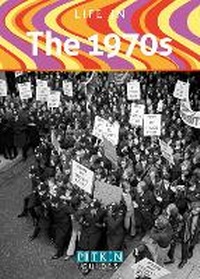
Life in the 1970s
Will be published approx. on 2. June 2014
Book
Paperback/Softback
36 pages
978-1-84165-541-3 (ISBN)
Description
The 1970s are noted as the decade of strikes, the winter of discontent and the three-day week. But is this the full story; what was it really like for ordinary British people? In this book, Carol Harris looks at the stories and people who made the headlines - from Thatcher and David Bowie to Barbie and Ken - but also how ordinary people really lived at the time; how we worked and played, how we shopped, what we ate, wore, drove, watched and listened to. Britain went decimal and was introduced to the VHS player and the microwave, Gary Glitter and Elton John entertained us and fashion gave us punks, hippies and glam rockers all at once. This book will bring back memories for those who were there, and, for those who were not yet born, it will give them an idea of what the 70s were really like.
More details
Language
English
Place of publication
United Kingdom
Publishing group
Batsford
Dimensions
Height: 240 mm
Width: 172 mm
ISBN-13
978-1-84165-541-3 (9781841655413)
Copyright in bibliographic data and cover images is held by Nielsen Book Services Limited or by the publishers or by their respective licensors: all rights reserved.
Schweitzer Classification
Person
Carol Harris is a writer, journalist and social historian who writes around a range of themes including feminism, fashion and fighting. She is currently Social History Editor at Coram, the UK's oldest children's charity, and on the Interaction team at the imperial War Museum. Her Pitkin titles include work on social history and heritage in the 20th century.Carol Harris is a writer, journalist and social historian who writes around a range of themes including feminism, fashion and fighting. She is currently Social History Editor at Coram, the UK's oldest children's charity, and on the Interaction team at the imperial War Museum. Her Pitkin titles include work on social history and heritage in the 20th century.