


The Legacy of Sandor Ferenczi
From ghost to ancestor
1st Edition
Published on 5. May 2015
Book
Paperback/Softback
300 pages
978-1-138-82012-8 (ISBN)
Description
Winner of the 2016 Gradiva Award for Edited Book
The Legacy of Sandor Ferenczi, first published in 1993 & edited by Lewis Aron & Adrienne Harris, was one of the first books to examine Ferenczi's invaluable contributions to psychoanalysis and his continuing influence on contemporary clinicians and scholars. Building on that pioneering work, The Legacy of Sandor Ferenczi: From Ghost to Ancestor brings together leading international Ferenczi scholars to report on previously unavailable data about Ferenczi and his professional descendants.
Many-including Sigmund Freud himself-considered Sandor Ferenczi to be Freud's most gifted patient and protege. For a large part of his career, Ferenczi was almost as well known, influential, and sought after as a psychoanalyst, teacher and lecturer as Freud himself. Later, irreconcilable differences between Freud, his followers and Ferenzi meant that many of his writings were withheld from translation or otherwise stifled, and he was accused of being mentally ill and shunned. In this book, Harris and Kuchuck explore how newly discovered historical and theoretical material has returned Ferenczi to a place of theoretical legitimacy and prominence. His work continues to influence both psychoanalytic theory and practice, and covers many major contemporary psychoanalytic topics such as process, metapsychology, character structure, trauma, sexuality, and social and progressive aspects of psychoanalytic work.
Among other historical and scholarly contributions, this book demonstrates the direct link between Ferenczi's pioneering work and subsequent psychoanalytic innovations. With rich clinical vignettes, newly unearthed historical data, and contemporary theoretical explorations, it will be of great interest and use to clinicians of all theoretical stripes, as well as scholars and historians.
The Legacy of Sandor Ferenczi, first published in 1993 & edited by Lewis Aron & Adrienne Harris, was one of the first books to examine Ferenczi's invaluable contributions to psychoanalysis and his continuing influence on contemporary clinicians and scholars. Building on that pioneering work, The Legacy of Sandor Ferenczi: From Ghost to Ancestor brings together leading international Ferenczi scholars to report on previously unavailable data about Ferenczi and his professional descendants.
Many-including Sigmund Freud himself-considered Sandor Ferenczi to be Freud's most gifted patient and protege. For a large part of his career, Ferenczi was almost as well known, influential, and sought after as a psychoanalyst, teacher and lecturer as Freud himself. Later, irreconcilable differences between Freud, his followers and Ferenzi meant that many of his writings were withheld from translation or otherwise stifled, and he was accused of being mentally ill and shunned. In this book, Harris and Kuchuck explore how newly discovered historical and theoretical material has returned Ferenczi to a place of theoretical legitimacy and prominence. His work continues to influence both psychoanalytic theory and practice, and covers many major contemporary psychoanalytic topics such as process, metapsychology, character structure, trauma, sexuality, and social and progressive aspects of psychoanalytic work.
Among other historical and scholarly contributions, this book demonstrates the direct link between Ferenczi's pioneering work and subsequent psychoanalytic innovations. With rich clinical vignettes, newly unearthed historical data, and contemporary theoretical explorations, it will be of great interest and use to clinicians of all theoretical stripes, as well as scholars and historians.
Reviews / Votes
"Ferenczi wanted his colleagues and pupils to think and work in their own unique ways and according to their own interests and personality. This is one of the reasons that therapists and analysts of various theoretical origins continue to be drawn to his propositions. Ferenczi was probably the first and perhaps still even the only psychoanalyst who did not speak of training in psychoanalysis, but of learning it according to one's own rhythms rather than merely following a prescribed course. This important new book illustrates Ferenczi's unique vision of psychoanalysis and summarizes and expands on the gifts psychoanalysts can find in the abundance of his work. It also offers a glimpse into Ferenczi's personal history, and how this affected the ways in which he considered human beings, the world, psychoanalysis, and himself."-Judith Dupont, Ph.D. Editor, The Clinical Diary of Sandor Ferenczi, Literary representative of Sandor Ferenczi, Recipient of the 2013 Sigourney Award"This fine collection of essays, written by clinicians and scholars of diverse backgrounds, honors the memory of Sandor Ferenczi, Sigmund Freud's closest friend and collaborator, whose groundbreaking contributions to the theory and practice of psychoanalysis were scorned and marginalized by many of his contemporaries. The contributors to this volume have adroitly and sensitively demonstrated the relevance of Ferenczi's ideas to current trends in psychoanalytic thinking and are taking a major step toward restoring his legacy to its rightful place in history."-Peter T. Hoffer, Ph. D. Psychoanalytic Center of Philadelphia; Translator, The Correspondence of Sigmund Freud and Sandor Ferenczi
"When "The Legacy of Sandor Ferenczi" appeared in 1993, Ferenczi was often ignored or maligned in psychoanalytic circles. That book was a significant part of the Ferenczi Renaissance - a striking example of the psychoanalytic notion that the past keeps changing. The present volume appears in a different climate - Ferenczi, to our great benefit, returned from exile - and testifies to the continued liveliness of contemporary Ferenczi scholarship by eminent authors around the world, illuminating his life and the development of his stimulating revolutionary ideas."-Emanuel Berman, Ph.D. Israel Psychoanalytic Society "Ferenczi wanted his colleagues and pupils to think and work in their own unique ways and according to their own interests and personality. This is one of the reasons that therapists and analysts of various theoretical origins continue to be drawn to his propositions. Ferenczi was probably the first and perhaps still even the only psychoanalyst who did not speak of training in psychoanalysis, but of learning it according to one's own rhythms rather than merely following a prescribed course. This important new book illustrates Ferenczi's unique vision of psychoanalysis and summarizes and expands on the gifts psychoanalysts can find in the abundance of his work. It also offers a glimpse into Ferenczi's personal history, and how this affected the ways in which he considered human beings, the world, psychoanalysis, and himself."-Judith Dupont, Ph.D. Editor, The Clinical Diary of Sandor Ferenczi, Literary representative of Sandor Ferenczi, Recipient of the 2013 Sigourney Award
This fine collection of essays, written by clinicians and scholars of diverse backgrounds, honors the memory of Sandor Ferenczi, Sigmund Freud's closest friend and collaborator, whose groundbreaking contributions to the theory and practice of psychoanalysis were scorned and marginalized by many of his contemporaries. The contributors to this volume have adroitly and sensitively demonstrated the relevance of Ferenczi's ideas to current trends in psychoanalytic thinking and are taking a major step toward restoring his legacy to its rightful place in history."-Peter T. Hoffer, Ph. D. Psychoanalytic Center of Philadelphia; Translator, The Correspondence of Sigmund Freud and Sandor Ferenczi
"When "The Legacy of Sandor Ferenczi" appeared in 1993, Ferenczi was often ignored or maligned in psychoanalytic circles. That book was a significant part of the Ferenczi Renaissance - a striking example of the psychoanalytic notion that the past keeps changing. The present volume appears in a different climate - Ferenczi, to our great benefit, returned from exile - and testifies to the continued liveliness of contemporary Ferenczi scholarship by eminent authors around the world, illuminating his life and the development of his stimulating revolutionary ideas."-Emanuel Berman, Ph.D. Israel Psychoanalytic Society
More details
Series
Language
English
Place of publication
London
United Kingdom
Publishing group
Taylor & Francis Ltd
Target group
College/higher education
Professional and scholarly
Postgraduate and Professional
Dimensions
Height: 234 mm
Width: 156 mm
Thickness: 17 mm
Weight
491 gr
ISBN-13
978-1-138-82012-8 (9781138820128)
Copyright in bibliographic data and cover images is held by Nielsen Book Services Limited or by the publishers or by their respective licensors: all rights reserved.
Schweitzer Classification
Other editions
Additional editions
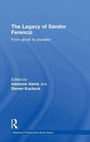
Book
05/2015
1st Edition
Routledge
€264.30
Shipment within 10-20 days
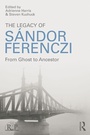
E-Book
04/2015
Routledge
€65.99
Available for download
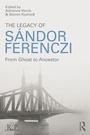
E-Book
04/2015
Routledge
€65.99
Available for download
Persons
Adrienne Harris, Ph.D. is faculty and supervisor, NYU Postdoctoral Program in Psychotherapy and Psychoanalysis, Faculty and Training Analyst at the Psychoanalytic Institute of Northern California, serves on the Editorial Boards of Psychoanalytic Dialogues, Studies in Gender and Sexuality, Psychoanalytic Perspectives and the Journal of the American Psychoanalytic Association. ?
Steven Kuchuck, LCSW is a faculty member, supervisor, Board member, and codirector of curriculum for the adult training program in psychoanalysis at the National Institute for the Psychotherapies and faculty, Stephen Mitchell Center for Relational Studies. Steven is Editor-in-Chief of Psychoanalytic Perspectives, Associate Editor of the Routledge Relational Perspectives Book Series.
Steven Kuchuck, LCSW is a faculty member, supervisor, Board member, and codirector of curriculum for the adult training program in psychoanalysis at the National Institute for the Psychotherapies and faculty, Stephen Mitchell Center for Relational Studies. Steven is Editor-in-Chief of Psychoanalytic Perspectives, Associate Editor of the Routledge Relational Perspectives Book Series.
Content
Acknowledgments. Introduction. Ferenczi in Our Contemporary World. The Penis on the Trail. Ferenczi's Attitude. Out of the Archive/Unto the Couch. George Groddeck's Influence on Sandor Ferenczi. Elizabeth Severn: Sandor Ferenczi's Analysand and Collaborator in the Study and Treatment of Trauma. Ferenczi's Work on War Neuroses. The Other Side of the Story: Severn on Ferenczi and Mutual Analysis. Freud and Ferenczi: Wandering Jews in Palermo. Ferenczi, the "Introjective Analyst". The persistent sense of being bad: The moral dimension of identification with the aggressor. On the Therapeutic Action of Love and Desire. The Dialogue of Unconsciouses, Mutual Analysis and the Uses of the Self in Contemporary Relational Psychoanalysis. Ferenczi with Lacan: A Missed Encounter . A Second Confusion of Tongues. Some preventive considerations about Ferenczi's ideas regarding trauma and analytic experience.