

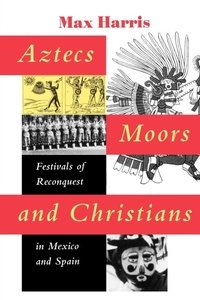
Aztecs, Moors, and Christians
Festivals of Reconquest in Mexico and Spain
Published on 1. July 2000
Book
Paperback/Softback
319 pages
978-0-292-73132-5 (ISBN)
Description
In villages and towns across Spain and its former New World colonies, local performers stage mock battles between Spanish Christians and Moors or Aztecs that range from brief sword dances to massive street theatre lasting several days. The festival tradition officially celebrates the triumph of Spanish Catholicism over its enemies, yet this does not explain its persistence for more than five hundred years nor its widespread diffusion.
In this insightful book, Max Harris seeks to understand Mexicans' "puzzling and enduring passion" for festivals of moros y cristianos. He begins by tracing the performances' roots in medieval Spain and showing how they came to be superimposed on the mock battles that had been a part of pre-contact Aztec calendar rituals. Then using James Scott's distinction between "public" and "hidden transcripts," he reveals how, in the hands of folk and indigenous performers, these spectacles of conquest became prophecies of the eventual reconquest of Mexico by the defeated Aztec peoples. Even today, as lively descriptions of current festivals make plain, they remain a remarkably sophisticated vehicle for the communal expression of dissent.
In this insightful book, Max Harris seeks to understand Mexicans' "puzzling and enduring passion" for festivals of moros y cristianos. He begins by tracing the performances' roots in medieval Spain and showing how they came to be superimposed on the mock battles that had been a part of pre-contact Aztec calendar rituals. Then using James Scott's distinction between "public" and "hidden transcripts," he reveals how, in the hands of folk and indigenous performers, these spectacles of conquest became prophecies of the eventual reconquest of Mexico by the defeated Aztec peoples. Even today, as lively descriptions of current festivals make plain, they remain a remarkably sophisticated vehicle for the communal expression of dissent.
Reviews / Votes
"This is a major contribution to the rich and fascinating cultural history of colonial-era Mexico and the tumultuous clash of European and Native American values, institutions, and technologies... It is beautifully written and makes compelling reading." Robert Potter, Professor of Dramatic Art, University of California, Santa BarbaraMore details
Language
English
Place of publication
Austin, TX
United States
Target group
Professional and scholarly
Product notice
Paperback (trade)
Dimensions
Height: 229 mm
Width: 152 mm
Thickness: 19 mm
Weight
522 gr
ISBN-13
978-0-292-73132-5 (9780292731325)
Copyright in bibliographic data and cover images is held by Nielsen Book Services Limited or by the publishers or by their respective licensors: all rights reserved.
Schweitzer Classification
Person
Max Harris is Executive Director of the Wisconsin Humanities Council at the University of Wisconsin-Madison and author of The Dialogical Theatre: Dramatizations of the Conquest of Mexico and the Question of the Other.
Content
Acknowledgments
List of Illustrations
Part One: Prologue
1. Beheading the Moor (Zacatecas, 1996)
2. Reading the Mask (Cuetzalan, 1988)
Part Two: Spain, 1150-1521
3. A Royal Wedding (Lleida, 1150)
4. A Medley of Battles (Zaragoza, 1286-1414)
5. A Martyrdom with Hobby Horses (Barcelona, 1424)
6. A Game of Canes (JaEn, 1462)
Part Three: Mexico, 1321-1521
7. The Fields of the Wars of Flowers
8. The Festival of the Sweeping of the Roads
9. The Festival of the Raising of the Banners
10. The Festival of the Flaying of Men
11. The Dance of the Emperor Motecuzoma
Part Four: Mexico, 1521-1600
12. The Conquest of Mexico (1524-1536)
13. The Conquest of Rhodes (Mexico City, 1539)
14. The Conquest of Jerusalem (Tlaxcala, 1539)
15. The Tensions of Empire (Mexico City, 1565-1595)
16. The Travels of Alonso Ponce (New Spain, 1584-1589)
17. The Conquest of New Mexico (1598)
Part Five: Spain, 1521-1600
18. Touring Aztecs (1522-1529)
19. Royal Entries (Toledo, 1533, and Naples, 1543)
20. Great Balls of Fire (Trent, 1549)
21. Noble Fantasies (Binche, 1549, and Rouen, 1550)
22. FEted Dreams of Peace (Andalusia, 1561-1571)
23. Changing Tastes (Daroca to Valencia, 1585-1586)
24. Gilded Indians (1521-1600)
Part Six: Epilogue
25. Dancing With Malinche (New Mexico and Oaxaca, 1993-1994)
Notes
Bibliography
Index
List of Illustrations
Part One: Prologue
1. Beheading the Moor (Zacatecas, 1996)
2. Reading the Mask (Cuetzalan, 1988)
Part Two: Spain, 1150-1521
3. A Royal Wedding (Lleida, 1150)
4. A Medley of Battles (Zaragoza, 1286-1414)
5. A Martyrdom with Hobby Horses (Barcelona, 1424)
6. A Game of Canes (JaEn, 1462)
Part Three: Mexico, 1321-1521
7. The Fields of the Wars of Flowers
8. The Festival of the Sweeping of the Roads
9. The Festival of the Raising of the Banners
10. The Festival of the Flaying of Men
11. The Dance of the Emperor Motecuzoma
Part Four: Mexico, 1521-1600
12. The Conquest of Mexico (1524-1536)
13. The Conquest of Rhodes (Mexico City, 1539)
14. The Conquest of Jerusalem (Tlaxcala, 1539)
15. The Tensions of Empire (Mexico City, 1565-1595)
16. The Travels of Alonso Ponce (New Spain, 1584-1589)
17. The Conquest of New Mexico (1598)
Part Five: Spain, 1521-1600
18. Touring Aztecs (1522-1529)
19. Royal Entries (Toledo, 1533, and Naples, 1543)
20. Great Balls of Fire (Trent, 1549)
21. Noble Fantasies (Binche, 1549, and Rouen, 1550)
22. FEted Dreams of Peace (Andalusia, 1561-1571)
23. Changing Tastes (Daroca to Valencia, 1585-1586)
24. Gilded Indians (1521-1600)
Part Six: Epilogue
25. Dancing With Malinche (New Mexico and Oaxaca, 1993-1994)
Notes
Bibliography
Index