

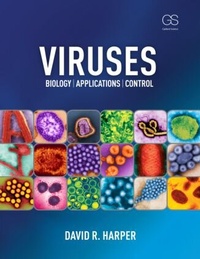
Viruses
Biology, Applications, and Control
1st Edition
Published on 20. June 2011
Book
Paperback/Softback
346 pages
978-0-8153-4150-5 (ISBN)
Description
Viruses: Biology, Application, and Control is a concise textbook for advanced undergraduate and graduate students covering the essential aspects of virology included in biomedical science courses. It is an updated and expanded version of David Harper's Molecular Virology, Second Edition. Focusing on key mechanisms and developments, Viruses presents many new recent scientific advances, including virus evolution, emerging infections, virus extinction, control of infections, antiviral drugs, gene therapy, bacteriophage therapy, and diagnostics.
The first chapters introduce the reader to the structure and nature of viruses, including their classification and evolution. As viruses cause widespread and serious disease, the ensuing chapters explain how they interact with the immune system and the different ways we try to defeat them: vaccines, antiviral drugs, and immunotherapy. Laboratory methods for viral detection and laboratory diagnosis are also covered. While viruses do cause disease, many do not, and their special biology means they can have beneficial uses, and this aspect of viruses is emphasized. One of the most interesting areas in virology, given extensive coverage here, is how new viruses emerge and establish themselves.
Viruses: Biology, Application, and Control is a rigorous treatment of the molecular side of virology and its conceptual approach makes it an essential text for students and non-specialists.
The first chapters introduce the reader to the structure and nature of viruses, including their classification and evolution. As viruses cause widespread and serious disease, the ensuing chapters explain how they interact with the immune system and the different ways we try to defeat them: vaccines, antiviral drugs, and immunotherapy. Laboratory methods for viral detection and laboratory diagnosis are also covered. While viruses do cause disease, many do not, and their special biology means they can have beneficial uses, and this aspect of viruses is emphasized. One of the most interesting areas in virology, given extensive coverage here, is how new viruses emerge and establish themselves.
Viruses: Biology, Application, and Control is a rigorous treatment of the molecular side of virology and its conceptual approach makes it an essential text for students and non-specialists.
Reviews / Votes
"...this is a recommended book for undergraduates studying virology and would provide a good source material for a lecture series on the topic." - Immunology NewsMore details
Language
English
Place of publication
Bosa Roca
United States
Publishing group
Taylor & Francis Inc
Target group
College/higher education
Postgraduate and Undergraduate
Product notice
Paperback (UK-B)
Illustrations
42 s/w Photographien bzw. Rasterbilder, 21 Farbfotos bzw. farbige Rasterbilder, 157 farbige Zeichnungen
157 Line drawings, color; 21 Halftones, color; 42 Halftones, black and white
Dimensions
Height: 276 mm
Width: 219 mm
Weight
300 gr
ISBN-13
978-0-8153-4150-5 (9780815341505)
Copyright in bibliographic data and cover images is held by Nielsen Book Services Limited or by the publishers or by their respective licensors: all rights reserved.
Schweitzer Classification
Other editions
Person
Content
1. Virus Structure and Infection
2. Virus classification and evolution
3. Virus Replication
4. Immune response & evasion
5. Vaccines and vaccination
6. Antiviral Drugs
7. Beneficial use of viruses
8. Emergence, spread, and extinction
9. Viruses, vectors, and genomics
10. Culture, Detection and Diagnosis
Appendix 1: Viral Replication Strategies
Appendix 2: Current Antiviral Drugs
2. Virus classification and evolution
3. Virus Replication
4. Immune response & evasion
5. Vaccines and vaccination
6. Antiviral Drugs
7. Beneficial use of viruses
8. Emergence, spread, and extinction
9. Viruses, vectors, and genomics
10. Culture, Detection and Diagnosis
Appendix 1: Viral Replication Strategies
Appendix 2: Current Antiviral Drugs