

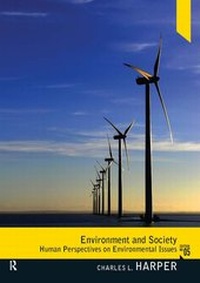
Environment and Society
5th Edition
Published on 3. November 2011
Book
Paperback/Softback
336 pages
978-0-205-82053-5 (ISBN)
Description
A sociological approach to human-environment relations
Environment and Society relates to a diverse audience and encompasses viewpoints from a variety of natural and social science approaches.
This integrative book about human-environment relations connects many issues about human societies, ecological systems, and environments with data and perspectives from different fields of study. Its viewpoint is primarily sociological and it is designed for courses in Environmental Sociology and Environmental Issues, or taught in departments of Sociology, Environmental Studies, Anthropology, Political Science, and Human Geography.
Learning Goals
Upon completing this book, readers should be able to:
Understand how environmental problems relate to human behavior, culture, and social institutions
Evaluate suggestions for changing the human-environment relationship to a more "sustainable" environment, society, and world order
Recognize the importance of worldviews and paradigms that have implicit basic assumptions about the "way the world works" and see how they shape the scholarship of experts in different fields
Examine the work and perspectives of economists, political scientists, anthropologists, geographers and policy analysts as they address environmental and ecological issues
Note: MySearchLab does not come automatically packaged with this text. To purchase MySearchLab, please visit: www.mysearchlab.com or you can purchase a ValuePack of the text + MySearchLab with Pearson eText (at no additional cost). ValuePack ISBN-10: 0205863639 / ValuePack ISBN-13: 9780205863631
Environment and Society relates to a diverse audience and encompasses viewpoints from a variety of natural and social science approaches.
This integrative book about human-environment relations connects many issues about human societies, ecological systems, and environments with data and perspectives from different fields of study. Its viewpoint is primarily sociological and it is designed for courses in Environmental Sociology and Environmental Issues, or taught in departments of Sociology, Environmental Studies, Anthropology, Political Science, and Human Geography.
Learning Goals
Upon completing this book, readers should be able to:
Understand how environmental problems relate to human behavior, culture, and social institutions
Evaluate suggestions for changing the human-environment relationship to a more "sustainable" environment, society, and world order
Recognize the importance of worldviews and paradigms that have implicit basic assumptions about the "way the world works" and see how they shape the scholarship of experts in different fields
Examine the work and perspectives of economists, political scientists, anthropologists, geographers and policy analysts as they address environmental and ecological issues
Note: MySearchLab does not come automatically packaged with this text. To purchase MySearchLab, please visit: www.mysearchlab.com or you can purchase a ValuePack of the text + MySearchLab with Pearson eText (at no additional cost). ValuePack ISBN-10: 0205863639 / ValuePack ISBN-13: 9780205863631
More details
Edition
5th edition
Language
English
Place of publication
New York
United States
Publishing group
Taylor & Francis Inc
Target group
College/higher education
Edition type
Revised edition
Dimensions
Height: 246 mm
Width: 152 mm
Thickness: 17 mm
Weight
534 gr
ISBN-13
978-0-205-82053-5 (9780205820535)
Schweitzer Classification
Other editions
New editions
Book
03/2017
6th Edition
Routledge
€205.50
Shipment within 10-20 days
Additional editions
E-Book
08/2015
5th Edition
Routledge
€67.99
Available for download
Previous edition
Charles L. Harper
Environment and Society
Book
08/2007
4th Edition
Routledge
Unfortunately, price unknown
No shipping information available
Person
Charles Harper is a professor of sociology at Creighton University in Omaha, Nebraska. As a member of the faculty there since 1968, he has developed and taught numerous courses in the sociology department. Dr. Harper's teaching and scholarly interests inolve the study of social change, globalization, the sociology of religion, social theory, and environmental sociology. He has published papers in a variety of academic journals.
Along with Environment and Society, Dr. Harper is the author of two other textbooks. Co-authored with Kevin Leicht, his book Exploring Social Change: America and the World (Prentice Hall, 2007) is now in its Fifth Edition. Another book, Food, Society, and Environment (Prentice Hall, 2003) was co-authored with Bryan F. LeBeau. .
As an undergraduate, Dr. Harper studied biology and the natural sciences. He received a bachelor's degree from Central Missouri State University, a Master's degree in sociology from the University of Missouri, and a Ph.D. in sociology from the University of Nebraska at Lincoln.
He and his wife, Anne, live close to Creighton's campus near a "clan" of adult children, stepchildren, and grandchildren. He also enjoys traveling, bicycling, and reading.
Along with Environment and Society, Dr. Harper is the author of two other textbooks. Co-authored with Kevin Leicht, his book Exploring Social Change: America and the World (Prentice Hall, 2007) is now in its Fifth Edition. Another book, Food, Society, and Environment (Prentice Hall, 2003) was co-authored with Bryan F. LeBeau. .
As an undergraduate, Dr. Harper studied biology and the natural sciences. He received a bachelor's degree from Central Missouri State University, a Master's degree in sociology from the University of Missouri, and a Ph.D. in sociology from the University of Nebraska at Lincoln.
He and his wife, Anne, live close to Creighton's campus near a "clan" of adult children, stepchildren, and grandchildren. He also enjoys traveling, bicycling, and reading.
Content
IN THIS SECTION:
1.) BRIEF
2.) COMPREHENSIVE
BRIEF TABLE OF CONTENTS:
Chapter 1: Environment, Human Systems, and Social Science
Chapter 2: Humans and the Resources of the Earth: Sources and Sinks
Chapter 3: Global Climate Change
Chapter 4: Energy and Society
Chapter 5: Population, Environment, and Food
Chapter 6: Globalization, Growth, and Sustainability
Chapter 7: Transforming Structures: Markets and Politics
COMPREHENSIVE TABLE OF CONTENTS:
Preface
Chapter 1: Environment, Human Systems, and Social Science
Ecocatastrophe or Ecohype?
Ecosystems: Concepts and Components
Sociocultural Systems
Ecosystem and Sociocultural Evolution: Human Ecology
Environmental Social Sciences
Conclusion: Environment, Ecosystems, and Human Systems
Personal Connections
Chapter 2: Humans and the Resources of the Earth: Sources and Sinks
Land and Soil
Water Resources
Biodiversity and Forests
Wastes and Pollution
Conclusion: The Resources of the Earth
Personal Connections
Chapter 3: Global Climate Change
Ozone Depletion and Ultraviolet Radiation
Turning Up the Heat: Global Warming
Do We Know Enough to Act?
Policy Options: What Could Be Done about Global Warming?
Personal Connections
Chapter 4: Energy and Society
A Historical Detour: Recent Energy Crises
Energy Problems: Environmental and Social
The Energetics of Human Societies
The Present Energy System and Its Alternatives
Barriers, Transitions, and Energy Policy
In Summary: Energy and the Risks We Take
Personal Connections
Chapter 5: Population, Environment, and Food
The Dynamics of Population Change
How Serious Is the Problem of World Population Growth?
Making Sense Out of This Controversy
Population, Food, and Hunger
Feeding Eight Billion People in the Next Fifty Years?
Stabilizing World Population: Policy Options
Conclusion
Personal Connections
Chapter 6: Globalization, Growth, and Sustainability
Globalization
Sustainability
Growth and Sustainability: Two Perspectives
Sustainable Societies?
Transformations and Sustainability: Social Change
Conclusion: A Transformation to Sustainability?
Personal Connections
Chapter 7: Transforming Structures: Markets and Politics
Markets
Politics and Policy
Possible Levers for Progress
The Global Political Economy and the Environment
Conclusion
Personal Connections
Epilogue
References
Name Index
Subject Index
1.) BRIEF
2.) COMPREHENSIVE
BRIEF TABLE OF CONTENTS:
Chapter 1: Environment, Human Systems, and Social Science
Chapter 2: Humans and the Resources of the Earth: Sources and Sinks
Chapter 3: Global Climate Change
Chapter 4: Energy and Society
Chapter 5: Population, Environment, and Food
Chapter 6: Globalization, Growth, and Sustainability
Chapter 7: Transforming Structures: Markets and Politics
COMPREHENSIVE TABLE OF CONTENTS:
Preface
Chapter 1: Environment, Human Systems, and Social Science
Ecocatastrophe or Ecohype?
Ecosystems: Concepts and Components
Sociocultural Systems
Ecosystem and Sociocultural Evolution: Human Ecology
Environmental Social Sciences
Conclusion: Environment, Ecosystems, and Human Systems
Personal Connections
Chapter 2: Humans and the Resources of the Earth: Sources and Sinks
Land and Soil
Water Resources
Biodiversity and Forests
Wastes and Pollution
Conclusion: The Resources of the Earth
Personal Connections
Chapter 3: Global Climate Change
Ozone Depletion and Ultraviolet Radiation
Turning Up the Heat: Global Warming
Do We Know Enough to Act?
Policy Options: What Could Be Done about Global Warming?
Personal Connections
Chapter 4: Energy and Society
A Historical Detour: Recent Energy Crises
Energy Problems: Environmental and Social
The Energetics of Human Societies
The Present Energy System and Its Alternatives
Barriers, Transitions, and Energy Policy
In Summary: Energy and the Risks We Take
Personal Connections
Chapter 5: Population, Environment, and Food
The Dynamics of Population Change
How Serious Is the Problem of World Population Growth?
Making Sense Out of This Controversy
Population, Food, and Hunger
Feeding Eight Billion People in the Next Fifty Years?
Stabilizing World Population: Policy Options
Conclusion
Personal Connections
Chapter 6: Globalization, Growth, and Sustainability
Globalization
Sustainability
Growth and Sustainability: Two Perspectives
Sustainable Societies?
Transformations and Sustainability: Social Change
Conclusion: A Transformation to Sustainability?
Personal Connections
Chapter 7: Transforming Structures: Markets and Politics
Markets
Politics and Policy
Possible Levers for Progress
The Global Political Economy and the Environment
Conclusion
Personal Connections
Epilogue
References
Name Index
Subject Index