

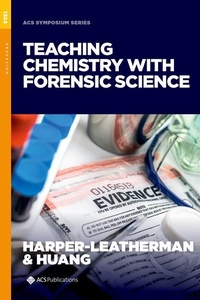
Teaching Chemistry with Forensic Science
Published on 3. November 2020
Book
Hardback
260 pages
978-0-8412-3483-3 (ISBN)
Description
This work serves as a valuable resource in the chemical education field and is a great look into the ways professors are utilizing forensic science concepts to teach chemistry. Each chapter introduces innovative teaching techniques, courses, pedagogies, and laboratory experiments from those using this popular area of science to teach chemistry.
More details
Series
Language
English
Place of publication
New York
United States
Target group
College/higher education
Professional and scholarly
Dimensions
Height: 261 mm
Width: 182 mm
Thickness: 21 mm
Weight
798 gr
ISBN-13
978-0-8412-3483-3 (9780841234833)
Copyright in bibliographic data and cover images is held by Nielsen Book Services Limited or by the publishers or by their respective licensors: all rights reserved.
Schweitzer Classification
Persons
Amanda S. Harper-Leatherman, Department of Chemistry & Biochemistry, Fairfield University
Ling Huang, Department of Chemistry, Hofstra University
Ling Huang, Department of Chemistry, Hofstra University
Content
Chapter 1. Introduction to Teaching Chemistry with Forensic Science, Amanda S. Harper-Leatherman and Ling Huang
Chapter 2. Chemistry and Crime: Investigating Chemistry from a Forensic Science Perspective, Lawrence J. Kaplan
Chapter 3. Incorporating Forensic Science throughout the Undergraduate Analytical Curriculum: From Nonmajors through Instrumental Analysis, Douglas J. Beussman
Chapter 4. Using Forensic Science To Engage Nontraditional Learners, Megan L. Pajski
Chapter 5. Teaching Introductory Forensic Chemistry Using Open Educational and Digital Resources, Brooke Taylor
Chapter 6. On Utilizing Forensic Science To Motivate Students in a First-Semester General Chemistry Laboratory, Stephen M. Testa
Chapter 7. Interdisciplinary Learning Communities: Bridging the Gap between the Sciences and the Humanities through Forensic Science, Maria Danielle Garrett
Chapter 8. Interdisciplinary Learning Activity Incorporating Forensic Science and Forensic Nursing, Amanda S. Harper-Leatherman and Linda N. Roney
Chapter 9. Drugs and DNA: Forensic Topics Ideal for the Analytical Chemistry Curriculum, Ling Huang
Chapter 10. From DUIs to Stolen Treasure: Using Real-World Sample Analysis To Increase Engagement and Critical Thinking in Analytical Chemistry Courses, Sarah E. C. Gray
Chapter 11. Integration of Forensic Themes in Teaching Instrumental Analysis at Pace University, Elmer-Rico E. Mojica, Robert Marvin, Normisha Evans, Lauren Reilly, David Mendoza, Styliani Karpadakis, Charles Cusumano, Demosthenes Athanasopoulos, and Zhaohua Dai
Chapter 12. Using Expert Witness Testimony with an Illicit Substance Analysis To Increase Student Engagement in Learning the GC/MS Technique, Albert D. Dukes, Jeffrey M. Hollifield, and David E. Gardner
Chapter 13. Generative Learning Strategies and Prelecture Assignments in a Flipped Forensic Chemistry Classroom, Tamra Legron-Rodriguez
Editors' Biographies
Author Index
Subject Index
Chapter 2. Chemistry and Crime: Investigating Chemistry from a Forensic Science Perspective, Lawrence J. Kaplan
Chapter 3. Incorporating Forensic Science throughout the Undergraduate Analytical Curriculum: From Nonmajors through Instrumental Analysis, Douglas J. Beussman
Chapter 4. Using Forensic Science To Engage Nontraditional Learners, Megan L. Pajski
Chapter 5. Teaching Introductory Forensic Chemistry Using Open Educational and Digital Resources, Brooke Taylor
Chapter 6. On Utilizing Forensic Science To Motivate Students in a First-Semester General Chemistry Laboratory, Stephen M. Testa
Chapter 7. Interdisciplinary Learning Communities: Bridging the Gap between the Sciences and the Humanities through Forensic Science, Maria Danielle Garrett
Chapter 8. Interdisciplinary Learning Activity Incorporating Forensic Science and Forensic Nursing, Amanda S. Harper-Leatherman and Linda N. Roney
Chapter 9. Drugs and DNA: Forensic Topics Ideal for the Analytical Chemistry Curriculum, Ling Huang
Chapter 10. From DUIs to Stolen Treasure: Using Real-World Sample Analysis To Increase Engagement and Critical Thinking in Analytical Chemistry Courses, Sarah E. C. Gray
Chapter 11. Integration of Forensic Themes in Teaching Instrumental Analysis at Pace University, Elmer-Rico E. Mojica, Robert Marvin, Normisha Evans, Lauren Reilly, David Mendoza, Styliani Karpadakis, Charles Cusumano, Demosthenes Athanasopoulos, and Zhaohua Dai
Chapter 12. Using Expert Witness Testimony with an Illicit Substance Analysis To Increase Student Engagement in Learning the GC/MS Technique, Albert D. Dukes, Jeffrey M. Hollifield, and David E. Gardner
Chapter 13. Generative Learning Strategies and Prelecture Assignments in a Flipped Forensic Chemistry Classroom, Tamra Legron-Rodriguez
Editors' Biographies
Author Index
Subject Index