

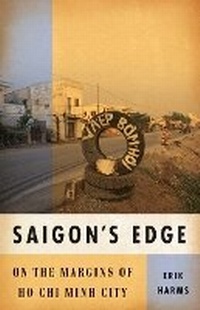
Saigon's Edge
On the Margins of Ho Chi Minh City
Will be published approx. on 4. March 2011
Book
Hardback
320 pages
978-0-8166-5605-9 (ISBN)
Description
Much of the world's population inhabits the urban fringe, an area that is neither fully rural nor urban. HOc MOn, a district that lies along a key transport corridor on the outskirts of Ho Chi Minh City, epitomizes one of those places. In Saigon's Edge, Erik Harms explores life in HOc MOn, putting forth a revealing perspective on how rapid urbanization impacts the people who live at the intersection of rural and urban worlds.
Unlike the idealized Vietnamese model of urban space, HOc MOn is between worlds, neither outside nor inside but always uncomfortably both. With particular attention to everyday social realities, Harms demonstrates how living on the margin can be both alienating and empowering, as forces that exclude its denizens from power and privilege in the inner city are used to thwart the status quo on the rural edges.
More than a local case study of urban change, Harms's work also opens a window on Vietnam's larger turn toward market socialism and the celebration of urbanization-transformations instructively linked to trends around the globe.
Unlike the idealized Vietnamese model of urban space, HOc MOn is between worlds, neither outside nor inside but always uncomfortably both. With particular attention to everyday social realities, Harms demonstrates how living on the margin can be both alienating and empowering, as forces that exclude its denizens from power and privilege in the inner city are used to thwart the status quo on the rural edges.
More than a local case study of urban change, Harms's work also opens a window on Vietnam's larger turn toward market socialism and the celebration of urbanization-transformations instructively linked to trends around the globe.
Reviews / Votes
"Sad and tragic, and at times funny and full of hope, Erik Harms shows how people live in the murky zones of the urban-rural divide, in the runoff, the debris, and wasteland of a now relentless urban industrial expansion. Saigon's Edge is a wake up call for all of us who study the global city: socialist cities in the throes of global integration and world capitalist utopian imaginings have powerful stories to tell that we cannot afford to ignore. Saigon's Edge sets a new benchmark on how to study the urban form, capitalist, socialist, and everything in between." -Ralph Litzinger, Duke UniversityMore details
Language
English
Place of publication
Minnesota
United States
Target group
Professional and scholarly
Dimensions
Height: 216 mm
Width: 140 mm
Thickness: 33 mm
ISBN-13
978-0-8166-5605-9 (9780816656059)
Copyright in bibliographic data and cover images is held by Nielsen Book Services Limited or by the publishers or by their respective licensors: all rights reserved.
Schweitzer Classification
Person
Erik Harms is assistant professor of anthropology at Yale University.
Content
Acknowledgments
Glossary
Introduction: Saigon, Inside Out
Part I. Social Edginess
1. Bittersweet Transitions: Urbanization on the Fringe of the City
2. Power and Exclusion on the Edge: The Conflation of Rural and Urban Spaces
Part II. Space, Time, and Urban Expansion
3. Future Orientations in the Country of Memory: Social Conceptions of Time
4. Negotiating Time and Space: Household, Labor, Land, and Movement
Part III. Realizing the Ideal
5. The Road to Paradise: Building the Trans-Asia Highway
6. The Problem of Urban Civilization on Saigon's Edge
Conclusion: What Edges Do
Notes
Bibliography
Index
Glossary
Introduction: Saigon, Inside Out
Part I. Social Edginess
1. Bittersweet Transitions: Urbanization on the Fringe of the City
2. Power and Exclusion on the Edge: The Conflation of Rural and Urban Spaces
Part II. Space, Time, and Urban Expansion
3. Future Orientations in the Country of Memory: Social Conceptions of Time
4. Negotiating Time and Space: Household, Labor, Land, and Movement
Part III. Realizing the Ideal
5. The Road to Paradise: Building the Trans-Asia Highway
6. The Problem of Urban Civilization on Saigon's Edge
Conclusion: What Edges Do
Notes
Bibliography
Index