

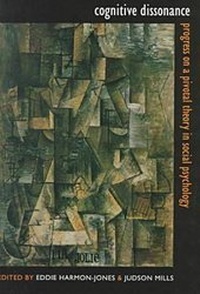
Cognitive Dissonance
Progress on a Pivotal Theory in Social Psychology
Published on 1. January 1999
Book
Hardback
424 pages
978-1-55798-565-1 (ISBN)
Description
Tell any smoker that his habit is unhealthy, and he most likely will agree, but continue smoking. What mental process does a person go through when he or she continues to do something unhealthy? When an honest person tells a "white lie", what happens to her integrity? If someone must choose between two equally attractive options, why does one's value judgement of the options change after the choice has been made? In 1954 Dr. Leon Festinger drafted a version of a theory describing the psychological phenomenon that occurs in these situations. He called it "cognitive dissonance": the feeling of psychological discomfort produced by the combined presence of two thoughts that do not follow from one another. Festinger proposed that the greater the discomfort, the greater the desire to reduce the dissonance of the two cognitive elements. The elegance of this theory has inspired psychologists over the last four decades. "Cognitive Dissonance: Perspectives on a Pivotal Theory in Social Psychology" documents the on-going research and debate provoked by this theory.
More details
Language
English
Place of publication
Washington DC
United States
Target group
College/higher education
Professional and scholarly
Illustrations
Illustrations
Dimensions
Height: 230 mm
Weight
835 gr
ISBN-13
978-1-55798-565-1 (9781557985651)
Copyright in bibliographic data and cover images is held by Nielsen Book Services Limited or by the publishers or by their respective licensors: all rights reserved.
Schweitzer Classification
Other editions
New editions
Book
03/2019
2nd Edition
American Psychological Association
€51.00
Article not available at the moment
Content
Improving the 1957 Version on Dissonance Theory; A Radical Point of View on Dissonance Theory; Toward an Understanding of the Motivation Underlying Dissonance Effects - Is the Production of Aversive Consequences Necessary?; Dissonance, Hypocrisy and the Self Concept; Self-Affirmation Theory - an Update and Appraisal; Unwanted Consequences and the Self - In Search of the Motivation for Dissonance Reduction; What Exactly Have I Done? the Role of Self-Attribute Accessibility in Dissonance; A Self-Accountability Model of Dissonance Reduction - Multiple Modes on a Continuum of Elaboration; Computer Simulation of Cognitive Dissonance Reduction; A Multiplicative Power Function Model of Cognitive Dissonance - Toward an Integrated Theory of Cognition, Emotion and Behaviour After Leon Festinger; Moving Beyond Attitude Change in the Study of Dissonance-Related Processes; "Remembering" Dissonance - Simultaneous Accessibility of Inconsistent Elements Moderates Epistemic Discomfort; Appendexes: Social Communication and Cognition; Reflections on Cognitive Dissonance - 30 Years Later; - Historical Note on Festinger's Tests on Dissonance Theory.