

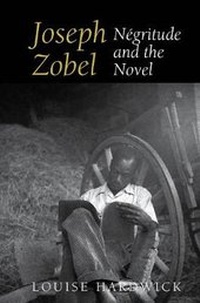
Joseph Zobel
Negritude and the Novel
Published on 27. March 2018
Book
Hardback
288 pages
978-1-78694-073-5 (ISBN)
Description
Joseph Zobel (1915-2006) is one of the best-known Francophone Caribbean authors, and is internationally recognised for his novel La Rue Cases-Negres (1950). Yet very little is known about his other novels, and most readings of La Rue Cases-Negres consider the text in isolation. Through a series of close readings of the author's six published novels, with supporting references drawn from his published short stories, poetry and diaries, Joseph Zobel: Negritude and the Novel generates new insights into Zobel's highly original decision to develop Negritude's project of affirming pride in black identity through the novel and social realism. The study establishes how, influenced by the American Harlem Renaissance movement, Zobel expands the scope of Negritude by introducing new themes and stylistic innovations which herald a new kind of social realist French Caribbean literature. These discoveries in turn challenge and alter the current understanding of Francophone Caribbean literature during the Negritude period, in addition to contributing to changes in the current understanding of Caribbean and American literature more broadly understood.
Reviews / Votes
'Louise Hardwick's Joseph Zobel: Negritude and the Novel is a remarkable and timely examination one of the key authors of francophone postcolonial writing. With exacting scholarship and empassioned prose, Hardwick reveals the full complexity of Zobel's extensive novelistic enterprise, including the many twists and turns of the rewritings of his earlier works. [...] Hardwick's groundbreaking research reveals long-forgotten texts, biographical intricacies, and political and aesthetic debates to finally and rightfully accord Zobel recognition as one of the central and most original figures of Negritude.'Nick Nesbitt, Princeton University 'Through settings, characterizations, and themes, Zobel's work confronts France's political and cultural grip in Martinique, giving voice to destitute blacks. Benefiting from Hardwick's translations, this is a valuable addition to the literature on postcolonialism.'
D. M. Jarrett, Choice 'It is one of the many strengths of this study that it situates that novel in its rightful relationship with the rest of Zobel's work, which includes journalism, short stories, poetry, spoken word, radio, sculpture, and painting. This meticulously researched book persuasively makes the case for Zobel as a key and necessary figure in any understanding of the evolution of Francophone Caribbean literature and culture in the twentieth century.'
Martin Munro, H-France 'This monograph, which will prove to be a catalyst for further research into postcolonial literature, should be required reading by both academics and students, and is a valuable and original contribution to the field of Caribbean studies.'
Maeva McComb, French Studies
More details
Series
Language
English
Place of publication
Liverpool
United Kingdom
Target group
College/higher education
Dimensions
Height: 239 mm
Width: 163 mm
ISBN-13
978-1-78694-073-5 (9781786940735)
Copyright in bibliographic data and cover images is held by Nielsen Book Services Limited or by the publishers or by their respective licensors: all rights reserved.
Schweitzer Classification
Person
Louise Hardwick is Professor of Francophone Studies and World Literature at the University of Birmingham (UK).
Content
Introduction
Chapter 1: Zobel, Negritude and the Novel
Chapter 2: Earth, Ecocriticism and Economics: Diab'-la
Chapter 3: Nothing Happens, Twice: Les Jours immobiles becomes Les Mains pleines d'oiseaux
Chapter 4: Re-reading La Rue Cases-Negres
Chapter 5: Cultural Capital in the French Capital: Quand la neige aura fondu
Afterword
Bibliography
Chapter 1: Zobel, Negritude and the Novel
Chapter 2: Earth, Ecocriticism and Economics: Diab'-la
Chapter 3: Nothing Happens, Twice: Les Jours immobiles becomes Les Mains pleines d'oiseaux
Chapter 4: Re-reading La Rue Cases-Negres
Chapter 5: Cultural Capital in the French Capital: Quand la neige aura fondu
Afterword
Bibliography