

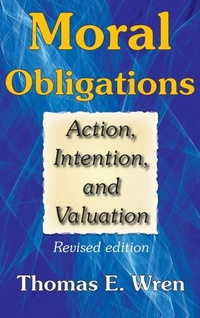
Moral Obligations
Action, Intention, and Valuation
1st Edition
Published on 20. September 2017
Book
Hardback
150 pages
978-1-138-52834-5 (ISBN)
Description
There are many ways of writing about the moral life; Moral Obligations follows the way of what philosophers call ""meta-ethics"": the analysis, not of particular moral problems, but of how the concepts used in formulating and solving them, concepts like ""right"" and ""obligatory,"" have significance and power over us. The meta-ethical part of this book is preceded by a discussion of action, in which Wren lays the foundations for the argument that moral obligation is a part of the formal structure of human agency.
Wren's argument is practical and social-psychological: it is to help all, starting with those who are already committed to some version of the ethic of individual dignity, to promote interagency fellowship and peace as a result of seeing a certain truth, namely, the truth that the urgency of their feelings of moral obligation derives from a unspoken intention to belong to a community of agents.
Moral Obligations begins with the philosophy of action, and then it reviews the historical debate about the nature of obligation and its social context. This is followed by a section about action in general: it establishes the standpoint of the agent and makes an inventory of several species of action. Later chapters summarize the foregoing themes, with emphasis on the unspoken side of intention, and develop them in conjunction with an analysis of the hypothetical imperative. The work closes with a discussion of the dilemma of membership in competing moral communities.
Wren's argument is practical and social-psychological: it is to help all, starting with those who are already committed to some version of the ethic of individual dignity, to promote interagency fellowship and peace as a result of seeing a certain truth, namely, the truth that the urgency of their feelings of moral obligation derives from a unspoken intention to belong to a community of agents.
Moral Obligations begins with the philosophy of action, and then it reviews the historical debate about the nature of obligation and its social context. This is followed by a section about action in general: it establishes the standpoint of the agent and makes an inventory of several species of action. Later chapters summarize the foregoing themes, with emphasis on the unspoken side of intention, and develop them in conjunction with an analysis of the hypothetical imperative. The work closes with a discussion of the dilemma of membership in competing moral communities.
More details
Language
English
Place of publication
London
United Kingdom
Publishing group
Taylor & Francis Ltd
Target group
College/higher education
Dimensions
Height: 235 mm
Width: 157 mm
Thickness: 13 mm
Weight
378 gr
ISBN-13
978-1-138-52834-5 (9781138528345)
Copyright in bibliographic data and cover images is held by Nielsen Book Services Limited or by the publishers or by their respective licensors: all rights reserved.
Schweitzer Classification
Other editions
Additional editions
E-Book
07/2017
Routledge
€65.99
Available for download
E-Book
07/2017
Routledge
€65.99
Available for download
Book
06/2010
1st Edition
Routledge
€71.70
Shipment within 10-15 days
Person
Carol Harding
Content
Acknowledgments
Introduction to the Transaction Edition
CHAPTER 1. ACTION
1. The Standpoint of the Agent
2. The Primacy of Action
3. Self and Other
4. A Taxonomy of Action
5. Transitive, Intransitive, and Static Actions
CHAPTER 2. INTENTION
1. The Descriptions of an Action
2. Levels of Intention
3. The Tacit Side of Intention
4. The Vertical, Forward, and Lateral Dimensions
CHAPTER 3. VALUATION
1. The Greek Debate
2. Medieval Conceptions of Value
3. The Naturalistic Fallacy
4. Prescriptivism
5. Descriptivism
CHAPTER 4. OBLIGATION
1. Three Preparatory Distinctions
2. Moral Urgency and Other Oughts
3. Why Be Moral?
4. The Necessity of Interagency
CHAPTER 5: THE MORAL COMMUNITY
1. The Rightness of Rules
2. Self-Imposed Heteronomy
3. Three Conceptions of Harmony
CHAPTER 6: THE MORAL DOMAIN
1. The Model
2. Applied Geometry
3. Some Ongoing Discussions of Moral Agency
INDEX
Introduction to the Transaction Edition
CHAPTER 1. ACTION
1. The Standpoint of the Agent
2. The Primacy of Action
3. Self and Other
4. A Taxonomy of Action
5. Transitive, Intransitive, and Static Actions
CHAPTER 2. INTENTION
1. The Descriptions of an Action
2. Levels of Intention
3. The Tacit Side of Intention
4. The Vertical, Forward, and Lateral Dimensions
CHAPTER 3. VALUATION
1. The Greek Debate
2. Medieval Conceptions of Value
3. The Naturalistic Fallacy
4. Prescriptivism
5. Descriptivism
CHAPTER 4. OBLIGATION
1. Three Preparatory Distinctions
2. Moral Urgency and Other Oughts
3. Why Be Moral?
4. The Necessity of Interagency
CHAPTER 5: THE MORAL COMMUNITY
1. The Rightness of Rules
2. Self-Imposed Heteronomy
3. Three Conceptions of Harmony
CHAPTER 6: THE MORAL DOMAIN
1. The Model
2. Applied Geometry
3. Some Ongoing Discussions of Moral Agency
INDEX