

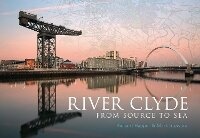
River Clyde
From Source to Sea
Will be published approx. on 15. October 2014
Book
Paperback/Softback
160 pages
978-1-4456-4311-3 (ISBN)
Description
The Clyde is a river of global importance - it was once the world's pre-eminent ship-building centre and a major trade hub for the British Empire. This book will explore the history, culture and geography of the river, from its source, in the remote southern uplands, to the city of Glasgow via Scotland's industrial heartland, and on to where it meets the sea in the beautiful Firth of Clyde.
The Clyde rises in a relatively unknown, but ruggedly beautiful, part of the southern uplands. It meanders through moor and picturesque farmland that belies a very active mining past. Our journey takes us past the Falls of Clyde - a spectacular beauty spot and now a UNESCO World Heritage site - and past the mausoleum of Hamilton Palace, one of the grandest country houses ever built in Britain.
Then the river reaches Glasgow itself. Beautiful river bridges, stations and riverfront buildings tell the story of the 'Second City of the Empire'. Over 25,000 ships have been built on the Clyde, including famous oceangoing liners such as the Queen Mary. Today the shipyards specialise in the construction of technologically advanced warships. The Clyde's trade in tobacco and sugar generated wealth that built the elegant streets of Glasgow. The river also runs right past two of the Commonwealth Games venues.
The beautiful Firth of Clyde is home to many points of interest including islands, Second World War torpedo ranges, nuclear submarine bases and beautiful mountains.
The Clyde rises in a relatively unknown, but ruggedly beautiful, part of the southern uplands. It meanders through moor and picturesque farmland that belies a very active mining past. Our journey takes us past the Falls of Clyde - a spectacular beauty spot and now a UNESCO World Heritage site - and past the mausoleum of Hamilton Palace, one of the grandest country houses ever built in Britain.
Then the river reaches Glasgow itself. Beautiful river bridges, stations and riverfront buildings tell the story of the 'Second City of the Empire'. Over 25,000 ships have been built on the Clyde, including famous oceangoing liners such as the Queen Mary. Today the shipyards specialise in the construction of technologically advanced warships. The Clyde's trade in tobacco and sugar generated wealth that built the elegant streets of Glasgow. The river also runs right past two of the Commonwealth Games venues.
The beautiful Firth of Clyde is home to many points of interest including islands, Second World War torpedo ranges, nuclear submarine bases and beautiful mountains.
More details
Series
Edition
UK ed.
Language
English
Place of publication
Chalford
United Kingdom
Illustrations
200 Illustrations
Dimensions
Height: 168 mm
Width: 246 mm
Weight
532 gr
ISBN-13
978-1-4456-4311-3 (9781445643113)
Copyright in bibliographic data and cover images is held by Nielsen Book Services Limited or by the publishers or by their respective licensors: all rights reserved.
Schweitzer Classification
Other editions
Additional editions

E-Book
10/2014
1st Edition
Amberley Publishing
€9.19
Available for download
Persons
Richard Happer is the author of around fifteen non-fiction books, including Extreme Survivors and The Times Book of Britain From Above. Mark Steward has project-led a variety of titles such as the 'Times Atlas of London' and 'Times Atlas of Britain' as well as many children's educational atlases. Mark is now a freelance publishing project manager and photographer.