

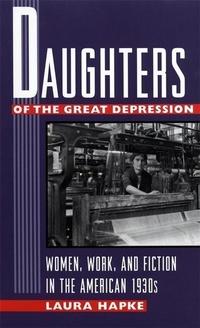
Daughters of the Great Depression
Women, Work, and Fiction in the American 1930s
Will be published approx. on 1. January 1997
Book
Paperback/Softback
312 pages
978-0-8203-1908-7 (ISBN)
Description
Daughters of the Great Depression is a reinterpretation of more than fifty well-known and rediscovered works of Depression-era fiction that illuminate one of the decade's central conflicts: whether to include women in the hard-pressed workforce or relegate them to a literal or figurative home sphere.
Laura Hapke argues that working women, from industrial wage earners to business professionals, were the literary and cultural scapegoats of the 1930s. In locating these key texts in the "don't steal a job from a man" furor of the time, she draws on a wealth of material not usually considered by literary scholars, including articles on gender and the job controversy; Labor Department Women's Bureau statistics; "true romance" stories and "fallen woman" films; studies of African American women's wage earning; and Fortune magazine pronouncements on white-collar womanhood.
A valuable revisionist study, Daughters of the Great Depression shows how fiction's working heroines-so often cast as earth mothers, flawed mothers, lesser comrades, harlots, martyrs, love slaves, and manly or apologetic professionals-joined their real-life counterparts to negotiate the misogynistic labor climate of the 1930s.
Laura Hapke argues that working women, from industrial wage earners to business professionals, were the literary and cultural scapegoats of the 1930s. In locating these key texts in the "don't steal a job from a man" furor of the time, she draws on a wealth of material not usually considered by literary scholars, including articles on gender and the job controversy; Labor Department Women's Bureau statistics; "true romance" stories and "fallen woman" films; studies of African American women's wage earning; and Fortune magazine pronouncements on white-collar womanhood.
A valuable revisionist study, Daughters of the Great Depression shows how fiction's working heroines-so often cast as earth mothers, flawed mothers, lesser comrades, harlots, martyrs, love slaves, and manly or apologetic professionals-joined their real-life counterparts to negotiate the misogynistic labor climate of the 1930s.
Reviews / Votes
Carefully researched and detailed . . . Cultural constructions of gender roles continue to be powerfully affected by economic conditions. Hapke gives us a probing analysis of the way this process shaped the lives of Depression-era Americans. -- <i>New York Times Book Review</i> A masterful integration of history and literature . . . This is a groundbreaking work, outstanding for its clarity, scope, exemplary scholarship, and wealth of fact and insight. -- <i>Choice</i> [Hapke's] historical overview of the period is impressive. -- <i>Women's Review of Books</i>More details
Edition
Revised edition
Language
English
Place of publication
Georgia
United States
Target group
College/higher education
Professional and scholarly
Product notice
Paperback (trade)
Illustrations
8 photos
Dimensions
Height: 236 mm
Width: 154 mm
Thickness: 23 mm
Weight
544 gr
ISBN-13
978-0-8203-1908-7 (9780820319087)
Copyright in bibliographic data and cover images is held by Nielsen Book Services Limited or by the publishers or by their respective licensors: all rights reserved.
Schweitzer Classification
Person
LAURA HAPKE is a professor of English at Pace University in New York City. She is the author of Tales of the Working Girl: Wage-earning Women in American Literature, 1890-1925 and The Worker in American Fiction: Texts and Contexts.