


The Begging Question
Sweden's Social Responses to the Roma Destitute
Published on 1. May 2023
Book
Hardback
354 pages
978-1-4962-2503-0 (ISBN)
Description
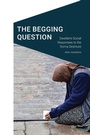
Begging, thought to be an inherently un-Swedish phenomenon, became a national fixture in the 2010s as homeless Romanian and Bulgarian Roma EU citizens arrived in Sweden seeking economic opportunity. People without shelter were forced to use public spaces as their private space, disturbing aesthetic and normative orders, creating anxiety among Swedish subjects and resulting in hate crimes and everyday racism.
Parallel with Europe's refugee crisis in the 2010s, the "begging question" peaked. The presence of the media's so-called EU migrants caused a crisis in Swedish society along political, juridical, moral, and social lines due to the contradiction embodied in the Swedish authorities' denial of social support to them while simultaneously seeking to maintain the nation's image as promoting welfare, equality, and antiracism.
In The Begging Question Erik Hansson argues that the material configurations of capitalism and class society are not only racialized but also unconsciously invested with collective anxieties and desires. By focusing on Swedish society's response to the begging question, Hansson provides insight into the dialectics of racism. He shrewdly deploys Marxian economics and Lacanian psychoanalysis to explain how it became possible to do what once was thought impossible: criminalize begging and make fascism politically mainstream, in Sweden. What Hansson reveals is not just an insight into one of the most captivating countries on earth but also a timely glimpse into what it means to be human.
Parallel with Europe's refugee crisis in the 2010s, the "begging question" peaked. The presence of the media's so-called EU migrants caused a crisis in Swedish society along political, juridical, moral, and social lines due to the contradiction embodied in the Swedish authorities' denial of social support to them while simultaneously seeking to maintain the nation's image as promoting welfare, equality, and antiracism.
In The Begging Question Erik Hansson argues that the material configurations of capitalism and class society are not only racialized but also unconsciously invested with collective anxieties and desires. By focusing on Swedish society's response to the begging question, Hansson provides insight into the dialectics of racism. He shrewdly deploys Marxian economics and Lacanian psychoanalysis to explain how it became possible to do what once was thought impossible: criminalize begging and make fascism politically mainstream, in Sweden. What Hansson reveals is not just an insight into one of the most captivating countries on earth but also a timely glimpse into what it means to be human.
Reviews / Votes
"This brilliant and intense book is recommended for anyone conducting research on homelessness and urban poverty in general."-HElEne B. Ducros, EuropeNow "Politically urgent, theoretically exciting, and beautifully written, The Begging Question combines razor-sharp materialist and psychoanalytic analysis to offer a radical rethinking of begging and of how to escape the limited political and ethical imaginaries that surround it."-Felicity Callard, professor of human geography at the University of Glasgow "Artfully exposes the unconscious underpinnings of social democracy in Sweden, showing how it is laced with proclivities to scapegoat the Other. Essential reading for anyone interested in contemporary forms of racism and poverty."-Ilan Kapoor, professor of critical development studies at York University, Toronto "Erik Hansson innovatively combines theories of psychoanalysis, class dynamics, and racism to explain anxieties in encountering begging and contradictory political responses to the arrival of Roma from the European Union."-Michael Jones, professor emeritus of geography at the Norwegian University of Science and Technology "A rich and thought-provoking examination of the emergence of racialized poverty and begging in one of Europe's historically most egalitarian social democracies. Drawing creatively on Marxist and psychoanalytic theory, Erik Hansson opens a vital space to reflect-politically and psychically-on what inequality, nationalism, and the politics of redistribution mean in Sweden today."-Jesse Proudfoot, assistant professor of sociology at Durham UniversityMore details
Series
Language
English
Place of publication
Lincoln
United States
Target group
Professional and scholarly
Product notice
Cloth over boards
Illustrations
1 chart, index
Dimensions
Height: 159 mm
Width: 237 mm
Thickness: 29 mm
Weight
670 gr
ISBN-13
978-1-4962-2503-0 (9781496225030)
Copyright in bibliographic data and cover images is held by Nielsen Book Services Limited or by the publishers or by their respective licensors: all rights reserved.
Schweitzer Classification
Other editions
Additional editions
E-Book
05/2023
1st Edition
University of Nebraska Press
€39.49
Available for download
Persons
Erik Hansson is a human geographer. He wrote this book during his postdoctoral fellowship at Norwegian University of Science and Technology. He has also been stationed at Uppsala University, University of Gothenburg, and Mid Sweden University.
Content
List of Illustrations
Foreword by Don Mitchell
Acknowledgments
The Problem: An Introduction
Part 1. Anxiety: The Universal in the Particular
1. Searching for Elucidations
2. The Concrete’s Historical Layers
3. Abjection, or Hell Is Othered People
4. Anxiety and Ethics
5. Ideology, or Enjoying the National Thing
Part 2. Hegemony: The Particular in the Universal
6. The Swedish Ideology, or Missing Exceptional Equality
7. The Tolerant Stance of Inaction, 2010–2015
8. The Borromean Welfare Knot
9. The Conjuncture, 2015–2019
The Problem: An Epitome
Notes
Bibliography
Index
Foreword by Don Mitchell
Acknowledgments
The Problem: An Introduction
Part 1. Anxiety: The Universal in the Particular
1. Searching for Elucidations
2. The Concrete’s Historical Layers
3. Abjection, or Hell Is Othered People
4. Anxiety and Ethics
5. Ideology, or Enjoying the National Thing
Part 2. Hegemony: The Particular in the Universal
6. The Swedish Ideology, or Missing Exceptional Equality
7. The Tolerant Stance of Inaction, 2010–2015
8. The Borromean Welfare Knot
9. The Conjuncture, 2015–2019
The Problem: An Epitome
Notes
Bibliography
Index