

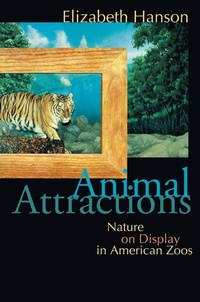
Animal Attractions
Nature on Display in American Zoos
Published on 15. September 2002
Book
Hardback
288 pages
978-0-691-05992-1 (ISBN)
Description
On a rainy day in May 1988, a lowland gorilla named Willie B. stepped outdoors for the first time in twenty-seven years, into a new landscape immersion exhibit. Born in Africa, Willie B. had been captured by an animal collector and sold to a zoo. During the decades he spent in a cage, zoos stopped collecting animals from the wild and Americans changed the ways they wished to view animals in the zoo. Zoos developed new displays to simulate landscapes like the Amazon River basin and African forests. Exhibits similar to animals' natural habitats began to replace old-fashioned animal houses. But such displays are only the most recent effort of zoos to present their audiences with an authentic experience of nature. Since the first zoological park opened in the United States in Philadelphia in 1874, zoos have promised their visitors a journey into the natural world. And for more than a century they have been popular places for education and recreation: every year more than 130 million Americans go to zoos to look at the animals and enjoy a day outdoors.
The first book-length history of American zoos, "Animal Attractions" examines the meaning of nature in the city by looking at the ways zoos have assembled and displayed their animal collections. Situated literally and culturally in the American middle landscape, zoos are concrete expressions of longstanding tensions between wildness and civilization, science and popular culture, education and entertainment. In their efforts to promote nature appreciation, they reveal much about how our culture envisions the natural world and the human place in it and how these ideas have changed.
The first book-length history of American zoos, "Animal Attractions" examines the meaning of nature in the city by looking at the ways zoos have assembled and displayed their animal collections. Situated literally and culturally in the American middle landscape, zoos are concrete expressions of longstanding tensions between wildness and civilization, science and popular culture, education and entertainment. In their efforts to promote nature appreciation, they reveal much about how our culture envisions the natural world and the human place in it and how these ideas have changed.
Reviews / Votes
An excellent summary of an often-ignored subject... Hanson covers the social evolution of how we have seen zoos, and delves into changes in how zoos see themselves. -- Adrian Barnett New Scientist Taking the kids to the zoo is as much a Sunday afternoon ritual as watching the NFL on television. But while the zoo is a pretty common experience, it is also an unsettling idea, causing the human animal to feel uncomfortable... The ideas that sustained [zoos] were, as Elizabeth Hanson explains in Animal Attractions, progressive. These were not seedy, sideshow affairs where you went for cheap thrills but places for 'recreation, self improvement and spiritual renewal.' -- Geoffrey Norman Wall Street Journal If ever a book lived up to its title and subtitle, this one, an interesting and readable history of zoos and influences on their development in the US, certainly does. Choice This book is rich in striking examples... [It] leaves readers with a clear appreciation of the pressures that shaped American zoos in the past and continue to drive innovations in display today. -- Elizabeth Blackmar American Historical Review Animal Attractions carefully and importantly contextualizes the zoo amidst broader developments in American culture... [A]n important contribution to the vital rethinking of zoos and urban space and the relationship of nature and culture in modern America. -- Brett Mizelle Journal of American History Animal Attractions is an enjoyable overview of zoo cultural history, and will be of interest to scientific and cultural historians, as well as anyone curious about the context of what they are seeing during a day at the zoo. -- Lisa Faust Quarterly Review of BiologyMore details
Language
English
Place of publication
New Jersey
United States
Target group
Professional and scholarly
College/higher education
Product notice
Trade binding
Illustrations
32 halftones.
Dimensions
Height: 229 mm
Width: 152 mm
Weight
510 gr
ISBN-13
978-0-691-05992-1 (9780691059921)
Copyright in bibliographic data and cover images is held by Nielsen Book Services Limited or by the publishers or by their respective licensors: all rights reserved.
Schweitzer Classification
Other editions
Additional editions
E-Book
11/2018
1st Edition
Princeton University Press
€43.99
Available for download
Book
02/2004
Princeton University Press
€38.90
Article not available at the moment
Person
Elizabeth Hanson is a historian of science and Director of Special Projects at The Rockefeller University. She is the author of "Achievements: A Century of Science for the Benefit of Humankind, 1901-2001".
Content
Acknowledgments ix Introduction 1 Chapter One: Animals in the Landscape 11 Chapter Two: Who Belongs in the Zoo? 41 Chapter Three: The Wild Animal Trade 71 Chapter Four: Zoo Expeditions 100 Chapter Five: Natural Settings 130 Chapter Six: Zoos Old and New 162 Notes 187 Index 233