


Femininity, Self-harm and Eating Disorders in Japan
Navigating contradiction in narrative and visual culture
1st Edition
Published on 30. June 2017
Book
Paperback/Softback
224 pages
978-1-138-50279-6 (ISBN)
Description
From the 1980s onwards, the incidence of eating disorders and self-harm has increased among Japanese women, who report receiving mixed messages about how to be women. Mirroring this, women's self-directed violence has increasingly been thematised in diverse Japanese narrative and visual culture.
This book examines the relationship between normative femininity and women's self-directed violence in contemporary Japanese culture. To theoretically define the complexities that constitute normativity, the book develops the concept of 'contradictive femininity' and shows how in Japanese culture, women's paradoxical roles are thematised through three character construction techniques, broadly derived from the doppelgaenger motif. It then demonstrates how eating disorders and self-harm are included in normative femininity and suggests that such self-directed violence can be interpreted as coping strategies to overcome feelings of fragmentation related to contradictive femininity. Looking at novels, artwork, manga, anime, TV dramas and news stories, the book analyses both globally well known Japanese culture such as Murakami Haruki's literary works and Miyazaki Hayao's animation, as well as culture unavailable to non-Japanese readers. The aim of juxtaposing such diverse narrative and visual culture is to map common storylines and thematisation techniques about normative femininity, self-harm and eating disorders. Furthermore, it shows how women's private struggles with their own bodies have become public discourse available for consumption as entertainment and lifestyle products.
Highly interdisciplinary, it will be of huge interest to students and scholars of Japanese studies, Japanese culture and society and gender and women's studies, as well as to academics and consumers of Japanese literature, manga and animation.
This book examines the relationship between normative femininity and women's self-directed violence in contemporary Japanese culture. To theoretically define the complexities that constitute normativity, the book develops the concept of 'contradictive femininity' and shows how in Japanese culture, women's paradoxical roles are thematised through three character construction techniques, broadly derived from the doppelgaenger motif. It then demonstrates how eating disorders and self-harm are included in normative femininity and suggests that such self-directed violence can be interpreted as coping strategies to overcome feelings of fragmentation related to contradictive femininity. Looking at novels, artwork, manga, anime, TV dramas and news stories, the book analyses both globally well known Japanese culture such as Murakami Haruki's literary works and Miyazaki Hayao's animation, as well as culture unavailable to non-Japanese readers. The aim of juxtaposing such diverse narrative and visual culture is to map common storylines and thematisation techniques about normative femininity, self-harm and eating disorders. Furthermore, it shows how women's private struggles with their own bodies have become public discourse available for consumption as entertainment and lifestyle products.
Highly interdisciplinary, it will be of huge interest to students and scholars of Japanese studies, Japanese culture and society and gender and women's studies, as well as to academics and consumers of Japanese literature, manga and animation.
Reviews / Votes
"The book engages the reader with the complicated definitions of femininity, the demands of society on women, the impossibility of both accepting and not accepting designated roles and the particularities of Japanese society that render this all the more difficult. Ultimately, however, in my view, this is a book for those interested in a social constructionist view of femininity, both within Japan and Western societies" - Michele Head, Clinical Psychologist "It is clear that for Hansen, 'feminine' is not a fixed position, but rather exists on a spectrum. She raises interesting points about the culturally-defined nature of what societies consider to be healthy or sick, questioning the norms which dictate that self-cutting and purging are pathologised, whilst cutting in the context of piercings or tattoos, or strict dieting, are thought healthy. She jumps, too, between different forms of cultural product: from anime to text, and from TV drama to visual art."Charlotte Goff, The Japan Society
More details
Series
Language
English
Place of publication
London
United Kingdom
Publishing group
Taylor & Francis Ltd
Target group
College/higher education
Illustrations
17 s/w Abbildungen, 17 s/w Photographien bzw. Rasterbilder
17 Halftones, black and white; 17 Illustrations, black and white
Dimensions
Height: 234 mm
Width: 156 mm
Thickness: 12 mm
Weight
351 gr
ISBN-13
978-1-138-50279-6 (9781138502796)
Copyright in bibliographic data and cover images is held by Nielsen Book Services Limited or by the publishers or by their respective licensors: all rights reserved.
Schweitzer Classification
Other editions
Additional editions
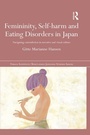
Gitte Marianne Hansen
Femininity, Self-harm and Eating Disorders in Japan
Navigating contradiction in narrative and visual culture
E-Book
12/2015
Routledge
€69.99
Available for download
Gitte Marianne Hansen
Femininity, Self-harm and Eating Disorders in Japan
Navigating contradiction in narrative and visual culture
E-Book
12/2015
Routledge
€69.99
Available for download
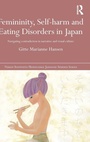
Gitte Marianne Hansen
Femininity, Self-harm and Eating Disorders in Japan
Navigating contradiction in narrative and visual culture
Book
12/2015
1st Edition
Routledge
€231.60
Shipment within 10-20 days
Person
Gitte Marianne Hansen a Lecturer in Japanese Studies at Newcastle University, UK. She holds a PhD in Japanese Studies from the Unversity of Cambridge, UK.
Content
1. Introduction: Women and Mixed Messages Part I: Normativity 2. Defining Normativity: Femininity with a Long Leash 3. Teaming Up: Double and Multiples Characters 4. (De)subjectifying Her: Extended Characters 5. Doing it All: Transforming Characters Part II: Self-directed Violence 6. Repairing Fragmented Selves: Self-harm and Eating Disorders 7. Consuming the War in the Body: Developing Analytical Markers 8. Exposing Embedded Storylines: Battling Appetite, Desire and a Harmless Monster 9. Conclusions: Contradictive-femininity-as-doppelgaenger Motif