

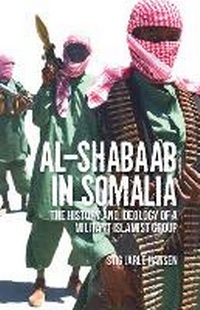
Al-Shabaab in Somalia
The History and Ideology of a Militant Islamist Group
Will be published approx. on 24. March 2016
Book
Paperback/Softback
208 pages
978-1-84904-510-0 (ISBN)
Description
Since early 2007 a new breed of combatants has appeared on the streets of Mogadishu and other towns in Somalia: the 'Shabaab', or youth, the only self-proclaimed branch of al-Qaeda to have gained acceptance (and praise) from Ayman al-Zawahiri and 'AQ centre' in Afghanistan. Itself an offshoot of the Islamic Courts Union, which split in 2006, Shabaab has imposed Sharia law and is also heavily influenced by local clan structures within Somalia itself. It remains an infamous and widely discussed, yet little-researched and understood, Islamist group. Hansen's remarkable book attempts to go beyond the media headlines and simplistic analyses based on alarmist or localist narratives and, by employing intensive field research conducted within Somalia, as well as on the ground inter- views with Shabaab leaders themselves, explores the history of a remarkable organisation, one that has survived predictions of its collapse on several occasions. Hansen portrays al-Shabaab as a hybrid Islamist organisation that combines a strong streak of Somali nationalism with the rhetorical obligations of international jihadism, thereby attracting a not insignificant number of foreign fighters to its ranks. Both these strands of Shabaab have been inadvertently boosted by Ethiopian, American and African Union attempts to defeat it militarily, all of which have come to nought.
Reviews / Votes
Essential reading - Hansen focuses on the complex ideological detours and military tactics of the Shabab from its inception - a succinct and definitive history. -- The Economist Al-Shabaab in Somalia is a judicious and timely study of a poorly understood militant Islamist group. A brave attempt to both historicize and scrutinize Al-Shabaab, it is a must-read for anyone wishing to understand a group that has unleashed havoc in parts of Africa. -- African Affairs E?xceptional? - D?eserve?[s]? a broad readership?. -- Nicholas van de Walle, Foreign Affairs An intimidatingly impressive book. No one else has amassed this level of detail and matched it with analysis. - Stig Jarle Hansen knows more about the positions, decompositions and recompositions of Al-Shabaab than any Western scholar. This book is a real service to us all. -- Stephen Chan, SOAS, University of London, The Round Table: The Commonwealth Journal of International Studies If you want to understand the reality of the Al-Shabaab phenomenon in Somalia, its existence in the country and its grounding in that ravaged land, this short book, written by a researcher who actually engaged in person with his research topic, will provide you with more concrete nourishment than a whole raft of official reports. -- Gerard Prunier, author of From Genocide to Continental War: The 'Congolese' Conflict and the Crisis of Contemporary Africa Hansen has travelled widely through Somalia for years and is personally familiar with many of the members and leaders of the movement. As a result, his description of events carries a powerful sense of legitimacy - [He] has put together a remarkably a remarkably detailed account of al-Shabaab's history - [and] until the distant and unlikely day when something better comes along, Al-Shabaab in Somalia is the definitive book on the subject. -- Richard J. Norton, Parameters, The US Army War College Quarterly A compact and rich history. -- RUSI Journal Unlike the legion of ivory-tower academics, armchair analysts, and self-promoting pundits who have expatiated about Al-Shabaab without even having set foot anywhere near Somalia, much less ever encountering an adherent of the group, Stig Jarle Hansen is a charter member of the small band of intrepid scholars who, even at the height of the insurgency, still pursued their research in the country, their work consistently informed by direct knowledge of actors and events. His is a comprehensive and accessible treatment of a significant subject. Highly recommended. -- J. Peter Pham, Director, Michael S. Ansari Africa Center, Atlantic Council, and Editor-in-Chief, The Journal of the Middle East and Africa? This disturbing but fascinating book not only documents the rise of one of the most dangerous of al-Qaeda's affiliates but also explains its central importance to Somali politics. Hansen is a skilful writer whose long experience of Somali life allows him to enter into the thinking of one of the world's most dangerous fundamentalist groups. -- Christopher Coker, Professor of International Relations, London School of Economics, and author of Warrior Geeks: How 21st Century Technology is Changing the Way We Fight and Think About War So far, no book-length treatment of Al-Shabaab exists in the academic literature, and due to the political and military importance of the group in Somalia and the wider Horn of Africa, policymakers and development workers, as well as area specialists, are in urgent need of such a detailed account. -- Markus Hoehne, Max Planck Institute for Social Anthropology Stig Jarle Hansen has written what is undoubtedly the best book on Al-Shabaab [ - ] Predictions of Al-Shabaab's collapse have occurred frequently since 2008 but, despite notable set-backs, it has survived [ - ] Hansen's book is an essential tool for those wishing to understand what the future might hold. -- Magnus Taylor, African ArgumentsMore details
Language
English
Place of publication
London
United Kingdom
Dimensions
Height: 216 mm
Width: 138 mm
ISBN-13
978-1-84904-510-0 (9781849045100)
Copyright in bibliographic data and cover images is held by Nielsen Book Services Limited or by the publishers or by their respective licensors: all rights reserved.
Schweitzer Classification
Person
Stig Jarle Hansen is an Associate Professor in International Relations at the University of Life Science in Norway. He specialises in the geopolitics of the Middle East and the Horn of Africa, as well as the links between religion, politics and war economies.