

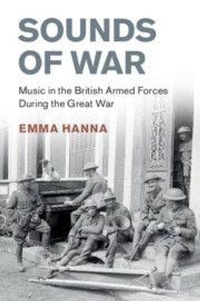
Sounds of War
Music in the British Armed Forces during the Great War
Published on 5. March 2020
Book
Hardback
320 pages
978-1-108-48008-6 (ISBN)
Description
Comparatively little is known about the musical cultures of the British armed forces during the Great War. This groundbreaking study is the first to examine music's vital presence in a range of military contexts including military camps, ships, aerodromes and battlefields, canteen huts, hospitals and PoW camps. Emma Hanna argues that music was omnipresent in servicemen's wartime existence and was a vital element for the maintenance of morale. She shows how music was utilised to stimulate recruitment and fundraising, for diplomatic and propaganda purposes, and for religious, educational and therapeutic reasons. Music was not in any way ephemeral, it was unmatched in its power to cajole, console, cheer and inspire during the conflict and its aftermath. This study is a major contribution to our understanding of the wartime realities of the British armed forces during the Great War.
Reviews / Votes
'This triumphant blend of cultural and military history hits all the right notes. Emma Hanna provides a highly original exploration of an often neglected but hugely important aspect of the Great War experience: music. A brilliant book which makes a highly distinctive contribution to scholarship on the First World War. Brava!' Jonathan Boff, author of Haig's Enemy: Crown Prince Rupprecht and Germany's War on the Western Front 'This wonderful and enriching book restores music to its rightful place as an essential part of how we understand the British experience of the First World War. It reveals the many different ways in which music was part of the everyday life of service personnel, as well as its wider implications, such as military welfare, wartime voluntarism and contemporary debates about the meanings of the conflict.' Daniel Todman, author of Britain's War: Into Battle, 1937-1941 '... this [book] remains an important and informative text which offers a comprehensive overview of the many ways in which music was deployed in this conflict. As such, it is likely also to be a useful introduction to the roles of music in military life more generally, including for advanced students with some prior, basic knowledge of the War from the British perspective.' Morag Josephine Grant, H-Soz-Kult 'Hanna effectively weaves together cultural and military history to provide a refreshing look at the First World War. The breadth of her study allows her to effectively show the significance of music during the ... [this] study is a valuable read not only for those who study the First World War but also for those interested in the diverse ways that music can shape the experience of war.' Theodore Racicot, H-Net: Humanities and Social Science Reviews OnlineMore details
Series
Language
English
Place of publication
Cambridge
United Kingdom
Target group
Professional and scholarly
Product notice
sewn/stitched
Cloth over boards
Illustrations
Worked examples or Exercises; 29 Halftones, black and white
Dimensions
Height: 234 mm
Width: 178 mm
Thickness: 18 mm
Weight
635 gr
ISBN-13
978-1-108-48008-6 (9781108480086)
Copyright in bibliographic data and cover images is held by Nielsen Book Services Limited or by the publishers or by their respective licensors: all rights reserved.
Schweitzer Classification
Other editions
Additional editions
E-Book
03/2020
Cambridge University Press
€29.49
Available for download
E-Book
02/2020
Cambridge University Press
€31.49
Available for download
Person
Emma Hanna is a Lecturer in the School of History at the University of Kent,Canterbury. She is the author of The Great War on the Small Screen: Representing the First World War in Contemporary Britain (2009).
Content
Introduction; 1. Music in Britain, 1914; 2. Recruitment and fundraising; 3. Instruments of war; 4. Songs, identity and morale; 5. Captivity; 6. Religion and pastoral Care; 7. Medicine and therapy; 8. The gramophone; 9. Civilian concert parties; 10. Servicemen's concert parties; 11. After the Armistice; Conclusion.