

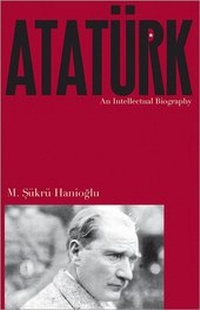
Atatuerk
An Intellectual Biography
Published on 29. May 2011
Book
Hardback
296 pages
978-0-691-15109-0 (ISBN)
Description
When Mustafa Kemal Ataturk became the first president of Turkey in 1923, he set about transforming his country into a secular republic where nationalism sanctified by science--and by the personality cult Ataturk created around himself--would reign supreme as the new religion. This book provides the first in-depth look at the intellectual life of the Turkish Republic's founder. In doing so, it frames him within the historical context of the turbulent age in which he lived, and explores the uneasy transition from the late Ottoman imperial order to the modern Turkish state through his life and ideas. Shedding light on one of the most complex and enigmatic statesmen of the modern era, M. Sukru Hanioglu takes readers from Ataturk's youth as a Muslim boy in the volatile ethnic cauldron of Macedonia, to his education in nonreligious and military schools, to his embrace of Turkish nationalism and the modernizing Young Turks movement. Who was this figure who sought glory as an ambitious young officer in World War I, defied the victorious Allies intent on partitioning the Turkish heartland, and defeated the last sultan?
Hanioglu charts Ataturk's intellectual and ideological development at every stage of his life, demonstrating how he was profoundly influenced by the new ideas that were circulating in the sprawling Ottoman realm. He shows how Ataturk drew on a unique mix of scientism, materialism, social Darwinism, positivism, and other theories to fashion a grand utopian framework on which to build his new nation.
Hanioglu charts Ataturk's intellectual and ideological development at every stage of his life, demonstrating how he was profoundly influenced by the new ideas that were circulating in the sprawling Ottoman realm. He shows how Ataturk drew on a unique mix of scientism, materialism, social Darwinism, positivism, and other theories to fashion a grand utopian framework on which to build his new nation.
Reviews / Votes
"[F]resh and concise ..."-- New Yorker "[T]his intellectual biography is a significant achievement, and indispensable for anyone seeking to understand the roots of modern Turkey."-- Times Higher Education "Atatrk does not lack for biographers, most of whose books are adulatory, but none has so thoroughly brought to life the ideological climate that molded the man as has Hanioglu. And few have presented Atatrk with such objectivity."-- Foreign Affairs "In this timely and brilliantly articulated book, Hanioglu reaffirms the need for an intimate understanding of historical context in biographical research... This rich and exhaustively researched study is indispensible for academics and students of Turkish and Middle Eastern studies alike. It is the definitive biography of Atatrk and an instant classic in the field."--Douglas H. Garrison, Digest of Middle East Studies "Cutting through years of writings filled with admiration for this charismatic leader and a popular sentiment close to hero worship, Hanio?lu performs a skillful analysis, focusing on the ideas and intellectual movements that shaped the statesman, rather than recounting Atatrk's personal life... Hanioglu does a stellar job highlighting the scientific trends Atatrk used to validate his Turkish national ideal."-- Library Journal "Hanioglu has prepared a concise, compelling biography of the founder of modern Turkey, Mustafa Kemal Atatrk. He examines the political and intellectual movements that influenced Atatrk from his early school years until his death in 1938, along with the implementation of their ideas, which led to the development of the Republic of Turkey... This work provides the essential intellectual framework to understand Ataturk and the enormity of his accomplishments."-- Choice "M. Skr Hanioglu probes the bold and pragmatic mind of Atatrk in his new book... Hanioglu provides us with a fresh way to look at Atatrk."-- Saudi Gazette "Professor Skr Hanioglu ... combines elegance and meticulousness in Atatrk."--Andrew Mango, Literary Review "Professor Hanioglu's study, based on meticulous research of primary sources, deals with the social setting and intellectual sources that shaped the ideas that have directed Ataturk's actions and policies. The book not only helps demythologize Ataturk, it also provides a most valuable contribution to a better understanding of the state he founded... Ataturk is indispensable reading for anyone who wishes to understand Turkey's politics."--Sahin Alpay, Today's Zaman "M. Skr Hanioglu's latest book, Atatrk: An Intellectual Biography, is probably the best book on Atatrk's legacy and his historic role... Hanioglu managed to combine both impartiality and immediate access to Turkish sources to produce a classic."--Herkl Millas, Today's Zaman "This book has the potential to inspire a new period of much needed assessment of Atatrk's thought, work and legacy."--Rifat Kandiyoti, Political Quarterly "This book breaks new ground in seeking to determine what Ataturk's reforms actually meant for their creator instead of trying to fit together his policies into a coherent doctrine called Ataturkism, as others have done. It is an important addition to the literature on the republic that Ataturk sought to define, and was determined to create."--Clement Dodd, Journal of Islamic Studies "This book is aimed less at historians of the Ottoman Empire or of Turkey than at a wider public. It is a fine work of synthesis, fully accessible to non-specialists, which takes account of the complexity of the transitional period between the Ottoman Empire and the Republic of Turkey. Hanioglu's line of argument is perfectly clear and his account is easy to follow."--Cllia Delbarre, booksandideas.net "By setting [Ataturk's] remarkable achievements within their historical context, Mr Hanioglu has not only done him a service, he has also provided the reader a better understanding of the contradictions of the fascinating country that is modern Turkey."--Kanika Datta, Business Standard "Professor Hanioglu has developed a well-informed and in-depth theoretical account, perhaps the most successful so far, of the ideological elements that shaped the ideas and mindset of Mustafa Kemal (later Ataturk). Although readers may be tempted to pass over yet another Ataturk biography, I would urge them to read this one... [T]he present study will undoubtedly become an indispensable tool to historians of modern Turkey. It will be widely consulted by anyone seeking to understand not only the historical roots of modern Turkey, but also the present conditions in that society. Professor Hanioglu's essential biography places Ataturk firmly within his historical and intellectual contexts, offering to the public a solid, well-written and comprehensive study."--Nikos Christofis, New Middle Eastern StudiesMore details
Language
English
Place of publication
New Jersey
United States
Target group
College/higher education
Professional and scholarly
Product notice
Trade binding
Illustrations
16 halftones.
Dimensions
Height: 203 mm
Width: 127 mm
Weight
482 gr
ISBN-13
978-0-691-15109-0 (9780691151090)
Copyright in bibliographic data and cover images is held by Nielsen Book Services Limited or by the publishers or by their respective licensors: all rights reserved.
Schweitzer Classification
Other editions

Person
M. ?ukru Hanio?lu is the Garrett Professor in Foreign Affairs in the Department of Near Eastern Studies at Princeton University. His books include "A Brief History of the Late Ottoman Empire" (Princeton).
Content
List of Figures and Tables ix A Note on Transliteration and Personal and Place Names xi Turkish Pronunciation Guide xiii Acknowledgments xv Introduction 1 Chapter 1. Fin-de-siecle Salonica 8 Chapter 2. Das Volk in Waffen: The Formation of an Ottoman Officer 31 Chapter 3. The Scientism of the Young Turks 48 Chapter 4. From Wars to the Great War: A Hero Is Born 68 Chapter 5. Muslim Communism? The Turkish War of Independence 86 Chapter 6. The Secular Republic 129 Chapter 7. Nationalism and Kemalism 160 Chapter 8. Turkey and the West 199 Conclusion 226 Bibliography 233 Index 255