

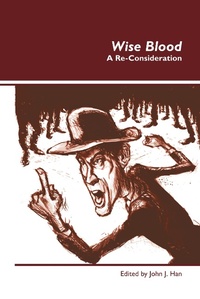
Wise Blood.
A Re-Consideration.
Published in August 2011
Book
472 pages
978-90-420-3389-4 (ISBN)
Description
Wise Blood: A Re-Consideration is a collection of nineteen new essays on Flannery O'Connor's 1952 novel about the spiritual journey of a young man raised in a fundamentalist Christian family. Following the pattern of previous books in the Dialogue series, it offers analyses by established and emerging scholars in North America. The volume comprises five sections: Religious and Philosophical Thought; Comedy, Humor, and Animality in Wise Blood; Influences on Wise Blood; Structural Issues; and Gender, Culture, and Genre. An intensely religious novel by a Catholic author, Wise Blood continues to draw keen attention from literary scholars, theologians, preachers, and lay readers. This volume encompasses many new critical perspectives that will encourage greater insights, deeper understandings, and further investigations of the complexities of O'Connor's modern classic set in the Deep South.
More details
Content
Contents
Acknowledgements
Abbreviations for O'Connor's Works
John J. Han: Introduction
Section I: Religious and Philosophical Thought
Debra L. Cumberland: Flannery O'Connor and the Question of the Christian Novel
Jonathan D. Fitzgerald: This Protestant World: Flannery O'Connor's Portrayal of the Modern Protestant South in Wise Blood
Susan Amper: "I believe, I believe": The Miracle of Christ in Flannery O'Connor's Wise Blood
Andrew Peter Atkinson: Virgil If Punched in the Gut: A Defense of Jansenist Interpretations of Wise Blood
Section II: Comedy, Humor, and Animality in Wise Blood
Andrew B. Leiter: Comedy and the Anti-existential in Flannery O'Connor's Wise Blood
Aaron Hillyer: Becoming Human, Becoming Animal: The Anthropological Machine at Work in Wise Blood
Paul Benedict Grant: O'Connor's Comic Vision: Faith and Humor in Wise Blood
Section III: Influences on Wise Blood
Jordan Cofer: Flannery & Franz: Tracing the Kafkaesque Influences on O'Connor's Wise Blood
John J. Han: A Roman Catholic Response to Nihilism and Protestantism: Wise Blood as an Anti-Kafkaesque Novel
Henry T. Edmondson III: Flannery O'Connor and Gerard Manley Hopkins on the Virtues of Blindness and Silence
Section IV: Structural Issues
W. A. Sessions: The Ambiguity of Vocation: Or, What Flannery Meant by "Malgré Lui"
Lewis MacLeod: "Was You Going Anywheres?": Wandering Between the Modern and Postmodern in Wise Blood
Lylas Dayton Rommel: The Dostoevskian Structure of Flannery O'Connor's Wise Blood
Section V: Gender, Culture, and Genre
Marshall Bruce Gentry: Wise Women, Wise Blood
Janine Tobeck: No Redeeming Value: The Violence of/toward Realism in Wise Blood
Teresa Clark Caruso: Whores and Heathens: Misogynistic Representations in Wise Blood
Stacey Peebles: He's Huntin' Something: Hazel Motes as Ex-Soldier
Sonya Freeman Loftis: Death, Horror, and Darkness: O'Connor's Gothic Novel on Screen
Mark Schiebe: Car Trouble: Hazel Motes and the Fifties Counterculture
Abstracts of Arguments
About the Authors
Index