

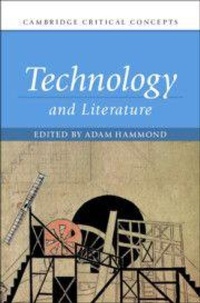
Technology and Literature
Published on 14. December 2023
Book
Hardback
438 pages
978-1-108-47258-6 (ISBN)
Description
Whereas previous books have explored how literature depicts or discusses scientific concepts, this book argues that literature is a technology. It shows how literature has been shaped by technological revolutions, and reveals the essential work that literature has done in helping to uncover the consequences of new technologies. Individual chapters focus on how specific literary technologies - the development of writing, the printing press, typewriters, the computer - changed the kinds of stories it was possible to tell, and how one could tell them. They also cover the way that literature has engaged with non-literary technologies - clocks, compasses, trains, telegraphs, cameras, bombs, computer networks - to help its readers to work through the new social configurations and new possibilities for human identity and imagination that they unveil. Human life is inescapably mediated through technology; literature demonstrates this, and thus helps its readers to engage consciously and actively with their technological worlds.
More details
Series
Language
English
Place of publication
Cambridge
United Kingdom
Product notice
sewn/stitched
Cloth over boards
Illustrations
Worked examples or Exercises
Dimensions
Height: 229 mm
Width: 152 mm
Thickness: 29 mm
Weight
812 gr
ISBN-13
978-1-108-47258-6 (9781108472586)
Copyright in bibliographic data and cover images is held by Nielsen Book Services Limited or by the publishers or by their respective licensors: all rights reserved.
Schweitzer Classification
Other editions
Additional editions
Adam Hammond
Technology and Literature
E-Book
12/2023
Cambridge University Press
€111.99
Available for download
Person
Content
List of figures; List of contributors; Timeline; Introduction Adam Hammond; Part I. Origins: 1. Orality and writing I. J. MacRae; 2. Manuscript Bonnie Mak; 3. The hand press, 1450-1800 Paula McDowell; 4. The mechanical press, 1800-1900 Simon Reader; 5. The typewriter Darren Wershler; 6. Literature in the electric age Lise Jaillant; 7. Digital text Maxwell Foxman; Part II. Developments: 8. Prostheses Alice Hall; 9. Clocks Scott Lightsey; 10. Compasses Chris Barrett; 11. Telescopes Peter C. Herman; 12. Steam engines Nicola Kirkby; 13. Wires Aaron Worth; 14. Cameras Beci Carver; 15. Phonographs Jason Camlot; 16. Waves and rays Jennifer A. Janechek; 17. The bomb Ann Larabee; 18. Networks David Ciccoricco; Part III. Applications: 19. Distant reading Natalie M. Houston; 20. Visualization Daniel Carter; 21. Digital editions Susan Brown; Index.