

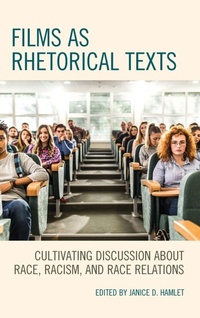
Films as Rhetorical Texts
Cultivating Discussion about Race, Racism, and Race Relations
Published on 13. November 2019
Book
Hardback
242 pages
978-1-7936-0271-8 (ISBN)
Description
Films as Rhetorical Texts: Cultivating Discussion about Race, Racism, and Race Relations presents critical essays focusing on select commercial films and what they can teach us about race, racism, and race relations in America. The films in this volume are critically assessed as rhetorical texts using various aspects and components of critical race theory, recognizing that race and racism are intricately ingrained in American society. Contributors argue that by viewing and evaluating culture-centered films-often centered around race-and critically analyzing them, faculty and students can promote the opportunity for genuine open discussions about race, racism, and race relations in the United States, specifically in the higher education classroom. Scholars of film studies, media studies, race studies, and education will find this book particularly useful.
More details
Language
English
Place of publication
United States
Publishing group
Bloomsbury Publishing Plc
Target group
Professional and scholarly
Product notice
sewn/stitched
Cloth over boards
With dust jacket
Illustrations
1 tables;
Dimensions
Height: 235 mm
Width: 157 mm
Thickness: 19 mm
Weight
549 gr
ISBN-13
978-1-7936-0271-8 (9781793602718)
Copyright in bibliographic data and cover images is held by Nielsen Book Services Limited or by the publishers or by their respective licensors: all rights reserved.
Schweitzer Classification
Other editions
Additional editions
Films as Rhetorical Texts
Cultivating Discussion About Race, Racism, and Race Relations
E-Book
11/2019
1st Edition
Lexington Books
€38.49
Available for download
Persons
Janice D. Hamlet is associate professor in the Department of Communication and director of diversity, equity, and inclusion at Northern Illinois University.
Content
Introduction: There's an Elephant in the Room and it's Not Leaving: Engaging Discussions about Race, Racism and Race Relations
Chapter One: The Story of Right Hand, Left Hand: The Rhetoric of Racial Angst in Spike Lee's Do the Right Thing
Chapter Two: The Spice of Life: Discussing Diversity and Disparity in Mississippi Masala
Chapter Three: The Ties that (UN) bind: Whiteness and the Racialization of Jewish Bodies in the film School Ties
Chapter Four: Smoke Signals: Opening the Conversation to Untold Stories from the First Americans
Chapter Five: "White-Side, Strong Side": A Critical Examination of Race and Leadership in Remember the Titans
Chapter Six: The Difficult Dialog of Critical Race Theory through the Lens of Crash
Chapter Seven: No Filter: Counter-Storytelling and The Help
Chapter Eight: Fruitvale Station: A Humanistic and Vulnerable Glimpse into Black Masculinities
Chapter Nine: Zootopia: Using a Utopia to Facilitate Conversations about a Dystopia in Society
Chapter Ten: Gook and the Conv
Chapter One: The Story of Right Hand, Left Hand: The Rhetoric of Racial Angst in Spike Lee's Do the Right Thing
Chapter Two: The Spice of Life: Discussing Diversity and Disparity in Mississippi Masala
Chapter Three: The Ties that (UN) bind: Whiteness and the Racialization of Jewish Bodies in the film School Ties
Chapter Four: Smoke Signals: Opening the Conversation to Untold Stories from the First Americans
Chapter Five: "White-Side, Strong Side": A Critical Examination of Race and Leadership in Remember the Titans
Chapter Six: The Difficult Dialog of Critical Race Theory through the Lens of Crash
Chapter Seven: No Filter: Counter-Storytelling and The Help
Chapter Eight: Fruitvale Station: A Humanistic and Vulnerable Glimpse into Black Masculinities
Chapter Nine: Zootopia: Using a Utopia to Facilitate Conversations about a Dystopia in Society
Chapter Ten: Gook and the Conv