

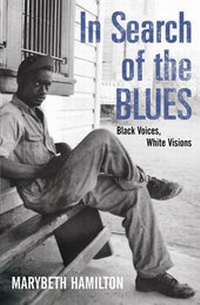
In Search Of The Blues
Published on 25. January 2007
Book
Paperback/Softback
256 pages
978-0-224-06018-9 (ISBN)
Description
Everyone knows the story of the Delta blues, with its fierce, raw voices and tormented drifters and deals with the devil at the crossroads at midnight. In this compelling book, Marybeth Hamilton radically rewrites that story. Archaic and primeval though the music may sound, the idea of something called 'Delta blues' emerged in the late twentieth century, the culmination of a longstanding white fascination with 'uncorrupted' black singers, untainted by the city, by commerce, by the sights and sounds of modernity. The prehistory of the Delta blues begins around 1900, when a group of obsessive white men and women set out to track down those 'uncontaminated' voices. For the would-be 'race scientist' Howard Odum, this meant combing remote Mississippi backroads with a cylinder phonograph to capture the obscene melodies of vagrants and field hands. For the plantation-bred folklorist Dorothy Scarborough, it meant finding elderly white Civil War veterans to recreate the croonings of mammies and nursemaids.
For the Texas banker turned song hunter John Lomax and his teenage son Alan, it meant prowling Southern penitentiaries (where isolation from the radio ensured 'primitive purity') and unearthing a double murderer, Leadbelly, whose rough, ragged, melancholy vocals evoked the anguish of the chain gang. Yet in time, that search for unsullied voices turned from living singers to disused recordings. The Delta blues, it turns out, had its birth in the 1950s in a single room in a Brooklyn YMCA, where a reclusive gay alcoholic named James McKune heard something pure and primal in the voices of Charley Patton and Robert Johnson, the prized items in the collection of scratched, battered 78s that he stored in a cardboard box under his bed. The book is remarkable not only for the stories it tells but also for its deep understanding of the place of the blues within the wider American culture, its obvious exclusion of women and its romance with outsider manhood. Written with exquisite grace and sensitivity, at once historically acute and hauntingly poetic, the book is an extraordinary excavation of the blues mystique.
For the Texas banker turned song hunter John Lomax and his teenage son Alan, it meant prowling Southern penitentiaries (where isolation from the radio ensured 'primitive purity') and unearthing a double murderer, Leadbelly, whose rough, ragged, melancholy vocals evoked the anguish of the chain gang. Yet in time, that search for unsullied voices turned from living singers to disused recordings. The Delta blues, it turns out, had its birth in the 1950s in a single room in a Brooklyn YMCA, where a reclusive gay alcoholic named James McKune heard something pure and primal in the voices of Charley Patton and Robert Johnson, the prized items in the collection of scratched, battered 78s that he stored in a cardboard box under his bed. The book is remarkable not only for the stories it tells but also for its deep understanding of the place of the blues within the wider American culture, its obvious exclusion of women and its romance with outsider manhood. Written with exquisite grace and sensitivity, at once historically acute and hauntingly poetic, the book is an extraordinary excavation of the blues mystique.
More details
Language
English
Place of publication
London
United Kingdom
Publishing group
Vintage Publishing
Product notice
Paperback (UK-trade)
Dimensions
Height: 232 mm
Width: 154 mm
Thickness: 20 mm
Weight
340 gr
ISBN-13
978-0-224-06018-9 (9780224060189)
Copyright in bibliographic data and cover images is held by Nielsen Book Services Limited or by the publishers or by their respective licensors: all rights reserved.
Schweitzer Classification
Other editions
New editions
Book
01/2008
Vintage
€22.20
Shipment within 10-20 days
Person
Marybeth Hamilton was born in California and teaches American history at Birkbeck College, University of London. She is the author of When I'm Bad, I'm Better: Mae West, Sex and American Entertainment.