

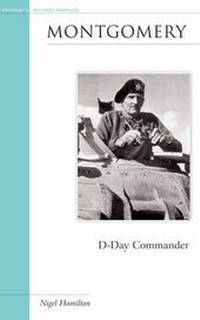
Montgomery
D-Day Commander
Published on 1. April 2007
Book
Hardback
160 pages
978-1-57488-903-1 (ISBN)
Description
This fascinating study of military leadership follows British general Bernard Law Montgomery's military career from his cadet days and service in World War I to his great victories of World War II, including his defeat of the great German panzer commander, Erwin Rommel, at Alamein.
Nigel Hamilton presents a brilliant, arrogant Montgomery, who refused to bow to authority and skated on the edge of dismissal like his American counterpart, George S. Patton. Though very different in their command styles, Montgomery and Patton became the two most successful Allied field generals in World War II. From North Africa through the invasion of Sicily, they routed the Germans in battle, with Patton as a thrusting cavalryman and Montgomery as an infantry commander devoted to applying massive force at a vital point. The author contends that Montgomery's planning and leadership transformed Operation Overlord from a Second Front project doomed to fail into a successful Allied invasion plan.
Allied operations after Normandy foundered in bitter arguments and failure, for Montgomery at Arnhem and Patton at Metz. Had Montgomery and Patton been ordered to fight in the same direction after Normandy, argues Professor Hamilton, the Allies might have ended the war in Europe in 1944. As it was, Montgomery and Patton had to save the Allies from sensational defeat in the Battle of the Bulge in what was to be their last battle together. The war ended for Monty on May 4, 1945, when he accepted the surrender of all German forces in the north.
Nigel Hamilton presents a brilliant, arrogant Montgomery, who refused to bow to authority and skated on the edge of dismissal like his American counterpart, George S. Patton. Though very different in their command styles, Montgomery and Patton became the two most successful Allied field generals in World War II. From North Africa through the invasion of Sicily, they routed the Germans in battle, with Patton as a thrusting cavalryman and Montgomery as an infantry commander devoted to applying massive force at a vital point. The author contends that Montgomery's planning and leadership transformed Operation Overlord from a Second Front project doomed to fail into a successful Allied invasion plan.
Allied operations after Normandy foundered in bitter arguments and failure, for Montgomery at Arnhem and Patton at Metz. Had Montgomery and Patton been ordered to fight in the same direction after Normandy, argues Professor Hamilton, the Allies might have ended the war in Europe in 1944. As it was, Montgomery and Patton had to save the Allies from sensational defeat in the Battle of the Bulge in what was to be their last battle together. The war ended for Monty on May 4, 1945, when he accepted the surrender of all German forces in the north.
More details
Series
Language
English
Place of publication
Dulles
United States
Target group
College/higher education
Professional and scholarly
Dimensions
Height: 204 mm
Width: 126 mm
ISBN-13
978-1-57488-903-1 (9781574889031)
Copyright in bibliographic data and cover images is held by Nielsen Book Services Limited or by the publishers or by their respective licensors: all rights reserved.
Schweitzer Classification
Other editions
Additional editions
Person
NIGEL HAMILTON is the author of Monty, which won the Whitbread Prize and the Templer Medal. He is also the author of JFK: Reckless Youth and Bill Clinton: An American Journey. Currently the John F. Kennedy Scholar and Visiting Professor in the John W. McCormack Graduate School of Policy Studies, University of Massachusetts at Boston, Hamilton lives in Cambridge, Massachusetts.