


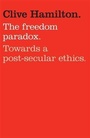
Freedom Paradox
Towards a Post-Secular Ethics
Published on 1. August 2008
Book
Paperback/Softback
288 pages
978-1-74175-507-7 (ISBN)
Description
A radical reconsideration of the meaning of freedom in the modern world. Despite all of the freedoms they now enjoy, the citizens of rich countries do not appear to be the contented, creative and flourishing individuals that were envisaged by the liberation movements of the 1960s and 1970s. Nor has the extension of political rights to all groups in society or free-market libertarianism brought promised personal fulfilment. Instead, the space created by the freedoms won has been filled by another form of coercion, one that deprives people of a hitherto neglected form of liberty. In what will be seen as a highly controversial stance, Hamilton argues that our 'inner freedom', our very human capacity for considered will, the very ethical basis of our society, has been compromised by our relentless focus on impulse and immediate gratification. Drawing on the great metaphysical philosophers Kant and Schopenhauer, Hamilton develops a new theory of morality for our times. He argues that true inner freedom and acting according to moral law are one and the same, and essential to reaching psychological maturity.
The Freedom Paradox is a brave and challenging work that goes to the heart of what it means to be human.
The Freedom Paradox is a brave and challenging work that goes to the heart of what it means to be human.
More details
Language
English
Place of publication
Sydney
Australia
Target group
Professional and scholarly
College/higher education
Dimensions
Height: 230 mm
Width: 152 mm
ISBN-13
978-1-74175-507-7 (9781741755077)
Copyright in bibliographic data is held by Nielsen Book Services Limited or its licensors: all rights reserved.
Schweitzer Classification
Other editions
Additional editions
E-Book
08/2008
Allen & Unwin
€24.99
Available for download
Person
Clive Hamilton is one of Australia's leading thinkers, and author of the bestsellers Growth Fetish and Affluenza.
Content
Part One: Freedom Reconsidered1 The disappointment of liberalism2 Rationale3 Types of happiness4 Freedom and happiness5 Types of liberty6 Inner freedom7 Do we prefer what we choose?8 Self-deception and akrasia9 A digression on the ethic of consent10 Exercising inner freedom11 Subtle coercion 12 The decline of free will13 From political philosophy to metaphysicsPart Two: Philosophical foundations14 The need for metaphysics15 Consciousness and the subject16 Phenomenon and noumenon17 The legislation for nature18 Scientific thinking19 Knowing and being20 Instances of non-sensible intuition21 The noumenon and the self22 A digression on the existence of God23 On deathPart Three: Towards a post-secular ethics24 Modern moral anxiety25 Moral relativism26 Reconstructing a moral code27 Rationalist ethics28 Genuine philanthropy29 The moral self