

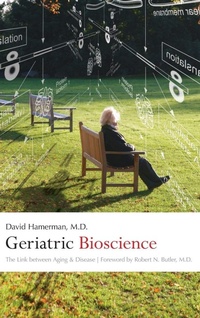
Geriatric Bioscience
The Link between Aging and Disease
Published on 28. January 2008
Book
Hardback
316 pages
978-0-8018-8692-8 (ISBN)
Description
It is increasingly important for physicians who treat older persons, and for researchers on aging, to understand how molecular biology informs clinical expressions of aging and age-related conditions such as osteoporosis, diabetes, osteoarthritis, frailty, cancer, and dementia. Dr. David Hamerman translates basic scientific concepts into precepts of clinical practice and sheds light on the links among biology, natural aging, longevity, and disease. Exploring the connections between disease and the science behind it, Geriatric Bioscience addresses how mechanisms of inflammation, cytokine expression, and stress responses influence disease and how preventive gerontology in the practice of medicine could compress morbidity. Hamerman also discusses cutting-edge therapies such as cyclo-oxygenases, bisphosphonates, statins, cytokine inhibitors, and hormone therapies.
Examining the science of geriatrics and converting its concepts into clinical applications, this groundbreaking work provides clinicians and researchers with a solid foundation for a greater understanding of the diagnosis, treatment, and prevention of age-related diseases as well as recommendations for promoting healthy aging.
Examining the science of geriatrics and converting its concepts into clinical applications, this groundbreaking work provides clinicians and researchers with a solid foundation for a greater understanding of the diagnosis, treatment, and prevention of age-related diseases as well as recommendations for promoting healthy aging.
Reviews / Votes
Hamerman leads the advanced and careful reader to a better understanding of the relationships between the biology of aging and the emergence of aging-related diseases. Choice 2008 A unique presentation based on the author's many decades of research and experience in the science of aging. It is extremely well documented with more than a thousand references and a helpful reference... an important source of information from an expert. -- Dr. Steven Schwartz Riverdale Press 2008 The nexus between obesity, heart disease, diabetes, cancer, and Alzheimer's disease is tantalizing. It takes the hand of a master to synthesize so much material and give a unified overarching view of the relationship between aging and disease. This skillful hand is seen in the smooth flow of the book and a most pleasurable style of writing. -- David O. Staats Doody's Review Service 2008 A must-read for clinicians providing primary care in geriatrics -- Laura J. Niedernhofer Journal of Clinical Investigation 2008 An inspiring, concise, comprehensive, and stimulating primer of the field for aspiring gerontologists, geriatricians, and other physicians who will care for elderly persons. -- William B. Hazzard, MD JAMA 2008 The depth of knowledge presented is astounding... It is a must read for young and in-training geriatricians. -- Dr. Denise Zwahlen-Minton Pharos 2009 I found much of interest in the collection. -- John E. Morley Ageing and Society 2008More details
Language
English
Place of publication
Baltimore, MD
United States
Target group
Adult education
College/higher education
Professional and scholarly
Illustrations
8 farbige Abbildungen, 4 s/w Photographien bzw. Rasterbilder, 14 s/w Zeichnungen
14 Line drawings, black and white; 4 Halftones, black and white; 8 Illustrations, color
Dimensions
Height: 235 mm
Width: 157 mm
Thickness: 23 mm
Weight
653 gr
ISBN-13
978-0-8018-8692-8 (9780801886928)
DOI
10.56021/9780801886928
Copyright in bibliographic data and cover images is held by Nielsen Book Services Limited or by the publishers or by their respective licensors: all rights reserved.
Schweitzer Classification
Persons
David Hamerman, M.D., is Distinguished University Professor of Medicine at the Albert Einstein College of Medicine, founder of the Division of Geriatrics at Montefiore Medical Center, and editor of Osteoarthritis: Public Health Implications for an Aging Population, also published by Johns Hopkins.
Content
Foreword by Robert N. Butler
Preface
1. The Emergence and Future of Geriatrics
2. An Introduction to Concepts of Molecular Biology
3. Aging
I. Trends in the Aging of the Population
II. What Is Aging? Can We Distinguish betweenAging and Disease?
III. Mechanisms of Aging
IV. Longevity: Genetics of Extended Life Span or Risk for Adverse Events
4. Interrelations of Certain Aging-related Conditions
I. Cytokines, Inflammation, and Responses to Stress
II. Atherosclerosis: Risk Factors for Cardiovascular Disease
III. The Metabolic Syndrome and Type 2 Diabetes
IV. Osteoporosis
V. Osteoarthritis
VI. Frailty and Related Conditions: Anorexia, Sarcopenia, Exercise
VII. Cancer
VIII. Alzheimer Disease
5. Interactive Therapies Significant for an Aging Population
I. Cyclooxygenases
II. Statins
III. Bisphosphonates
IV. Thiazolidinediones and Peroxisome Proliferatoractivated Receptor
V. Cytokine Inhibitors as a Landmark for Newer Anti-inflammatory Therapies
VI. Hormonal Therapies
6. Preventive Gerontology
I. The Compression or Expansion of Morbidity?
II. Healthy Lifestyle Practices
III. "Successful Aging"
Epilogue
Glossary
References
Index
Preface
1. The Emergence and Future of Geriatrics
2. An Introduction to Concepts of Molecular Biology
3. Aging
I. Trends in the Aging of the Population
II. What Is Aging? Can We Distinguish betweenAging and Disease?
III. Mechanisms of Aging
IV. Longevity: Genetics of Extended Life Span or Risk for Adverse Events
4. Interrelations of Certain Aging-related Conditions
I. Cytokines, Inflammation, and Responses to Stress
II. Atherosclerosis: Risk Factors for Cardiovascular Disease
III. The Metabolic Syndrome and Type 2 Diabetes
IV. Osteoporosis
V. Osteoarthritis
VI. Frailty and Related Conditions: Anorexia, Sarcopenia, Exercise
VII. Cancer
VIII. Alzheimer Disease
5. Interactive Therapies Significant for an Aging Population
I. Cyclooxygenases
II. Statins
III. Bisphosphonates
IV. Thiazolidinediones and Peroxisome Proliferatoractivated Receptor
V. Cytokine Inhibitors as a Landmark for Newer Anti-inflammatory Therapies
VI. Hormonal Therapies
6. Preventive Gerontology
I. The Compression or Expansion of Morbidity?
II. Healthy Lifestyle Practices
III. "Successful Aging"
Epilogue
Glossary
References
Index