

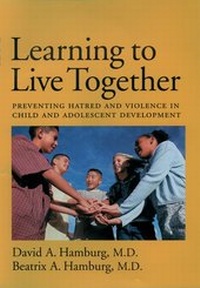
Learning to Live Together
Preventing Hatred and Violence in Child and Adolescent Development
Published on 22. April 2004
Book
Hardback
432 pages
978-0-19-515779-6 (ISBN)
Description
The aim of the book is to enhance understanding of the great danger and some sources of animosity between human groups and to focus on developmental processes by which it should be possible to diminish orientations of ethnocentrism, prejudice and hatred.
Teaching prejudice and ethnocentrism to children has, all too often in so many places, been virtually automatic and has been conducive to terrible harm in the past. The dangers of hateful outlooks are likely to be much greater as the twenty-first century unfolds.
Scholarship and practice in international relations, including war and peace issues, have gravely neglected the crucial psychological aspects of these terrible problems and the educational opportunities. There is a fruitful conjunction of developmental and social psychology in understanding such vital issues and in working toward a more humane, democratic and safe course of adolescent and child development than can in turn affect the safety of humanity in the long run. There are many intriguing examples of research, educational innovations, and visionary leadership in several countries. Most of the book is devoted to promising lines of inquiry and innovation that foster a more humane and less violent development in childhood and adolescence. It should be of interest to scholars, to the education community, and to a well-educated and socially concerned segment of the community.
Teaching prejudice and ethnocentrism to children has, all too often in so many places, been virtually automatic and has been conducive to terrible harm in the past. The dangers of hateful outlooks are likely to be much greater as the twenty-first century unfolds.
Scholarship and practice in international relations, including war and peace issues, have gravely neglected the crucial psychological aspects of these terrible problems and the educational opportunities. There is a fruitful conjunction of developmental and social psychology in understanding such vital issues and in working toward a more humane, democratic and safe course of adolescent and child development than can in turn affect the safety of humanity in the long run. There are many intriguing examples of research, educational innovations, and visionary leadership in several countries. Most of the book is devoted to promising lines of inquiry and innovation that foster a more humane and less violent development in childhood and adolescence. It should be of interest to scholars, to the education community, and to a well-educated and socially concerned segment of the community.
Reviews / Votes
Anyone living in a violent community can gain hope from this book, written for educationalists, parents, and community workers. * British Medical Journal *More details
Language
English
Place of publication
New York
United States
Target group
Professional and scholarly
Dimensions
Height: 160 mm
Width: 231 mm
Thickness: 36 mm
Weight
740 gr
ISBN-13
978-0-19-515779-6 (9780195157796)
Copyright in bibliographic data and cover images is held by Nielsen Book Services Limited or by the publishers or by their respective licensors: all rights reserved.
Schweitzer Classification
Other editions
Additional editions
David A. M. D. Hamburg | Beatrix A. M. D. Hamburg
Learning to Live Together
Preventing Hatred and Violence in Child and Adolescent Development
E-Book
04/2004
OUP eBook
€28.99
Available for download
David A. M. D. Hamburg | Beatrix A. M. D. Hamburg
Learning to Live Together
Preventing Hatred and Violence in Child and Adolescent Development
E-Book
04/2004
OUP eBook
€28.99
Available for download
Persons
Content
1. Growing Up in the Twenty-First Century ; 2. Child Development, the Human Group, and Survival ; 3. Ethnic, Religious, and Nationalist Factors in Human Conflict ; 4. Teaching Hatred ; 5. Development of Prosocial Behavior ; 6. Violence Prevention in the Context of Child and Adolescent Development ; 7. Contact, Intergroup Relations, and Opportunities for Education ; 8. Cooperative Learning ; 9. A Framework for Understanding and Addressing School Violence ; 10. Education for Conflict Resolution: From Public Concern to Research to Practice ; 11. Exemplary Programs of Conflict-Resolution Education ; 12. Community Service: Preparation for Socially Responsible Adulthood ; 13. Media as an Educational System: Can the Media Help? ; 14. Information Technology: Its Potential to Educate for Peace ; 15. International Education: A Global Outlook ; 16. Education for Peace: Concepts and Institutions ; 17. Putting Education for Peace into Practice ; 18. Educating for Peace: The Role of Universities ; 19. Overview: Toward a Better World for Our Grandchildren ; Epilogue