

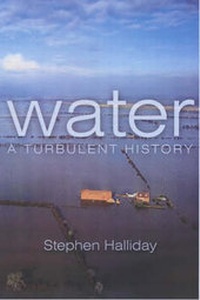
Water
A Turbulent History
Will be published approx. on 28. October 2004
Book
Hardback
256 pages
978-0-7509-3300-1 (ISBN)
Description
With water making up around 70 per cent of the earth's surface and 50 to 65 per cent of the human body, it is only fair to see ourselves as just a little waterlogged. Water is essential to human life and an important component of human history. Humans have generally settled near convenient sources of water and most of the great ancient civilizations depended on a particular source of water. London was no exception, owing its growth and development as England's first city to the rich potential of the Thames as a source of drinking water and power and as a means of communication. During the Industrial Revolution, the growth of commerce placed intolerable pressures on an inadequate road system. A new means of cheap and rapid transportation was needed, marking the beginning of the great age of canals. In the next great advance - steam trains - water was again to play an essential part. Water has brought disaster and disease, such as the nineteenth century cholera epidemic yet conversely spas and sea-bathing show the health-giving side of water. It is surprising how little attention water receives in historical accounts. Stephen Halliday's new book explores the beneficial and harmful ef
More details
Language
English
Place of publication
Stroud
United Kingdom
Publishing group
The History Press Ltd
Illustrations
75 illustrations
Dimensions
Height: 244 mm
Width: 172 mm
ISBN-13
978-0-7509-3300-1 (9780750933001)
Copyright in bibliographic data and cover images is held by Nielsen Book Services Limited or by the publishers or by their respective licensors: all rights reserved.
Schweitzer Classification
Person
Stephen Halliday is an expert on the Victorian history of London, with a special interest in public works and planning. He is the author of two outstanding works on social history, 'The Great Stink of London: Sir Joseph Bazalgette and the Cleansing of the Victorian Metropolis' and 'Underground to Everywhere: London's Underground in the Life of the Capital'.