

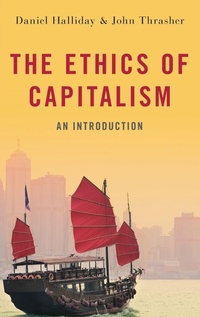
The Ethics of Capitalism
An Introduction
Published on 29. June 2020
Book
Hardback
248 pages
978-0-19-009620-5 (ISBN)
Description
Can capitalism have moral foundations? Though this question may seem strange in today's world of vast economic disparities and widespread poverty, discussions originating with the birth of capitalism add a critical perspective to the current debate on the efficacy and morality of capitalist economies.
Authors Daniel Halliday and John Thrasher use this question to introduce classical political philosophy as a framework by which to evaluate the ethics of capitalism today. They revisit and reconstruct historical eighteenth- and nineteenth-century defenses of capitalism, as written by key proponents such as Adam Smith and John Stuart Mill. They ask what these early advocates of market order would say about contemporary economies, and argue for the importance of connecting these foundational defenses to discussions of economic systems and the roles they play in economic justice and injustice today.
The textbook covers longstanding problems that are as old as the discussion of capitalism itself, such as wage inequality, global trade, and the connection between paid labor and human flourishing. It also addresses new challenges, such as climate change, the welfare state, and competitive consumption, and provides topical global case studies. Additionally, it includes study questions at the end of each chapter and an author-created companion website to help guide classroom discussion.
Authors Daniel Halliday and John Thrasher use this question to introduce classical political philosophy as a framework by which to evaluate the ethics of capitalism today. They revisit and reconstruct historical eighteenth- and nineteenth-century defenses of capitalism, as written by key proponents such as Adam Smith and John Stuart Mill. They ask what these early advocates of market order would say about contemporary economies, and argue for the importance of connecting these foundational defenses to discussions of economic systems and the roles they play in economic justice and injustice today.
The textbook covers longstanding problems that are as old as the discussion of capitalism itself, such as wage inequality, global trade, and the connection between paid labor and human flourishing. It also addresses new challenges, such as climate change, the welfare state, and competitive consumption, and provides topical global case studies. Additionally, it includes study questions at the end of each chapter and an author-created companion website to help guide classroom discussion.
Reviews / Votes
This book is an extremely valuable contribution to the recently reemerging field of political economy. If one is looking for a clear and accessible text to use in a political economy course, it is a strong contender. It is also an option for those looking for an introduction to a particular ethical issue concerning capitalism and markets. Regardless of why individuals pick up a copy, there is reason to think that readers will help move us closer to political economy's next "Golden Age." * Jeffrey Carroll, Journal of Value Inquiry * The authors have done a great service to teachers of political philosophy and political economy by writing an accessible introduction to political economy from a philosophical perspective ... The authors say that they intend the book to be a "gateway drug," to make students hungry for more scholarship in political economy. I cannot wait to teach a course based on the book, because I expect that it will work. The book is written in an accessible and engaging style that makes it particularly suitable for undergraduates. The tone they strike is that of a trusted friend that helps you make up your mind, rather than that of the preacher or ideologue. The Further Reading sections at the end of each chapter capture essential classics and are up to date with some of the best research in the area, providing a good starting point for developing extended essays. * Marco Meyer, Notre Dame Philosophical Reviews *More details
Language
English
Place of publication
New York
United States
Target group
Professional and scholarly
Dimensions
Height: 240 mm
Width: 161 mm
Thickness: 20 mm
Weight
593 gr
ISBN-13
978-0-19-009620-5 (9780190096205)
Copyright in bibliographic data and cover images is held by Nielsen Book Services Limited or by the publishers or by their respective licensors: all rights reserved.
Schweitzer Classification
Other editions
Additional editions
Book
06/2020
Oxford University Press Inc
€45.10
Shipment within 15-20 days
E-Book
05/2020
1st Edition
OUP eBook
€18.49
Available for download
E-Book
05/2020
1st Edition
OUP eBook
€17.99
Available for download
Persons
Daniel Halliday is Senior Lecturer in Philosophy at the University of Melbourne. He earned his Ph.D. in Philosophy from Stanford University in 2011.
John Thrasher is Assistant Professor in the Philosophy Department and in the Smith Institute for Political Economy and Philosophy at Chapman University in Orange County, California. He is also an Adjunct Senior Research Fellow at Monash University. He earned his Ph.D. in Philosophy from the University of Arizona in 2013.
John Thrasher is Assistant Professor in the Philosophy Department and in the Smith Institute for Political Economy and Philosophy at Chapman University in Orange County, California. He is also an Adjunct Senior Research Fellow at Monash University. He earned his Ph.D. in Philosophy from the University of Arizona in 2013.
Author
Senior Lecturer in PhilosophySenior Lecturer in Philosophy, University of Melbourne
Assistant Professor, Philosophy Department, Smith Institute for Political Economy and PhilosophyAssistant Professor, Philosophy Department, Smith Institute for Political Economy and Philosophy, Chapman University
Content
Contents
Chapter 1: Introduction: What is this book about?
1. Everyone hates capitalism?
2. What is capitalism?
3. What are the alternatives to capitalism?
4. "Ethics of Capitalism": an oxymoron?
Conclusions
Study Questions
Chapter 2: Capitalism seemed like a good idea at the time: The rise and fall (and resurrection?) of Political Economy
1. 1770-1868: The "Golden Age" of Political Economy
2. The "Fragmented Age": Economics and Political Philosophy in the 20th Century
3. The Idea of Economic Justice
Conclusions
Study Questions
Further Reading
Chapter 3: Getting out of feudalism--and staying out!
1. Feudalism and Capitalism
2. Great Escapes: Australian convicts, American radicals, and other heroes
3. Signs of a revival of feudalism?
4. Inherited wealth and the return of the 'rentier'
5. Big business and labor market domination
Conclusions
Study Questions
Further Reading
Chapter 4: Market Order and Market Failure
1. Spontaneous orders and why they matter
2. Prices and information
3. Can markets fail?
4. Markets behaving badly
a. Price gouging
b. Positional goods
c. Public goods
5. Market failure or government failure?
Conclusions
Study Questions
Further Reading
Chapter 5: So, why not socialism?
1. The century of socialism
2. What is socialism?
3. Types of socialism
a. "Utopian" socialism
b. Anarchism
c. Marxism
4. Market socialism
5. Problems with socialism
6. Ideals and reality
7. Ethical socialism
Conclusions
Study Questions
Further Reading
Chapter 6: Low wages and lousy jobs
1. The old stories: Malthus, Mill, and competitions among the unskilled
2. What makes a lousy job lousy?
3. Is alienated labor under-rated?
4. Exploitation-not getting out what you put in
5. Exploitation-alternatives to Marx
6. The new story: runaway incomes at the top
Conclusions
Study Questions
Further Reading
Chapter 7: The welfare state and its rivals
1. Labor markets and the minimum wage
2. The classic welfare state
3. Subsidized idleness or empowerment for the masses? The case for Universal Basic Income
4. Prevention is better than cure? Property owning democracy
5. Meritocracy
6. Comparing Systems
Conclusions
Study Questions
Further Reading
Chapter 8: We are the world, or how I learned to stop worrying and love global trade
1. Globalization-the new common enemy?
2. Homo Mercator
3. Why do we trade, anyway?
4. The British Empire and the persistence of pseudo-trade
5. The old skepticism: mercantilism and why the British Empire was actually bad for the British
6. The new skepticism: populism in the 21st century
7. Trade injustice in the 21st century
8. If trade isn't the enemy, then what (or who) is?
a. Protectionism and subsidizing failing industries
b. Mobility of capital and its impact on taxation
c. Automation
Conclusions
Study Questions
Further Reading
Chapter 9: Keeping up with the Jones's (and the Kardashians): Positional goods and wars of all against all
1. We can't all be better than average
2. Zero-sum versus positive-sum
3. Capitalism's greatest disappointment?
4. Arms races, good and bad
5. Peace treaties and finish lines
Conclusions
Study Questions
Further Reading
Chapter 10: Why are we still working so hard?
1. Keynes and the 15-hour week
2. What jobs are machines "stealing", and how?
3. More on machine misbehavior
4. The (moral) importance of leisure time
5. The end of work?
Conclusions
Study Questions
Further Reading
Chapter 11: Do markets wreck the planet?
1. Stories of destruction
a. Markets aren't the only culprits
b. Resources often get consumed more readily than conserved
c. Resources aren't intrinsically limited
2. Why is the environment so vulnerable? Collective action problems and the distribution of incentives
a. Prevention
b. Alleviation
3. If it ain't broke don't sell it? Planned obsolescence
4. Who wants to shoot a rhino? Markets and conservation
Conclusions
Study Questions
Further Reading
Chapter 12: Boldly going where no market has gone before--should some things not be for sale?
1. Kidneys, used underwear, and tossed dwarfs: intuitive discomfort about commodification
2. The moral downsides of prohibition
3. Are some things "beyond price"?
4. Markets as hierarchy-reinforcers
5. Maybe it's all just too much? Privacy and the need for (any kind of) market-free zone
Conclusions
Study Questions
Further reading
References
Chapter 1: Introduction: What is this book about?
1. Everyone hates capitalism?
2. What is capitalism?
3. What are the alternatives to capitalism?
4. "Ethics of Capitalism": an oxymoron?
Conclusions
Study Questions
Chapter 2: Capitalism seemed like a good idea at the time: The rise and fall (and resurrection?) of Political Economy
1. 1770-1868: The "Golden Age" of Political Economy
2. The "Fragmented Age": Economics and Political Philosophy in the 20th Century
3. The Idea of Economic Justice
Conclusions
Study Questions
Further Reading
Chapter 3: Getting out of feudalism--and staying out!
1. Feudalism and Capitalism
2. Great Escapes: Australian convicts, American radicals, and other heroes
3. Signs of a revival of feudalism?
4. Inherited wealth and the return of the 'rentier'
5. Big business and labor market domination
Conclusions
Study Questions
Further Reading
Chapter 4: Market Order and Market Failure
1. Spontaneous orders and why they matter
2. Prices and information
3. Can markets fail?
4. Markets behaving badly
a. Price gouging
b. Positional goods
c. Public goods
5. Market failure or government failure?
Conclusions
Study Questions
Further Reading
Chapter 5: So, why not socialism?
1. The century of socialism
2. What is socialism?
3. Types of socialism
a. "Utopian" socialism
b. Anarchism
c. Marxism
4. Market socialism
5. Problems with socialism
6. Ideals and reality
7. Ethical socialism
Conclusions
Study Questions
Further Reading
Chapter 6: Low wages and lousy jobs
1. The old stories: Malthus, Mill, and competitions among the unskilled
2. What makes a lousy job lousy?
3. Is alienated labor under-rated?
4. Exploitation-not getting out what you put in
5. Exploitation-alternatives to Marx
6. The new story: runaway incomes at the top
Conclusions
Study Questions
Further Reading
Chapter 7: The welfare state and its rivals
1. Labor markets and the minimum wage
2. The classic welfare state
3. Subsidized idleness or empowerment for the masses? The case for Universal Basic Income
4. Prevention is better than cure? Property owning democracy
5. Meritocracy
6. Comparing Systems
Conclusions
Study Questions
Further Reading
Chapter 8: We are the world, or how I learned to stop worrying and love global trade
1. Globalization-the new common enemy?
2. Homo Mercator
3. Why do we trade, anyway?
4. The British Empire and the persistence of pseudo-trade
5. The old skepticism: mercantilism and why the British Empire was actually bad for the British
6. The new skepticism: populism in the 21st century
7. Trade injustice in the 21st century
8. If trade isn't the enemy, then what (or who) is?
a. Protectionism and subsidizing failing industries
b. Mobility of capital and its impact on taxation
c. Automation
Conclusions
Study Questions
Further Reading
Chapter 9: Keeping up with the Jones's (and the Kardashians): Positional goods and wars of all against all
1. We can't all be better than average
2. Zero-sum versus positive-sum
3. Capitalism's greatest disappointment?
4. Arms races, good and bad
5. Peace treaties and finish lines
Conclusions
Study Questions
Further Reading
Chapter 10: Why are we still working so hard?
1. Keynes and the 15-hour week
2. What jobs are machines "stealing", and how?
3. More on machine misbehavior
4. The (moral) importance of leisure time
5. The end of work?
Conclusions
Study Questions
Further Reading
Chapter 11: Do markets wreck the planet?
1. Stories of destruction
a. Markets aren't the only culprits
b. Resources often get consumed more readily than conserved
c. Resources aren't intrinsically limited
2. Why is the environment so vulnerable? Collective action problems and the distribution of incentives
a. Prevention
b. Alleviation
3. If it ain't broke don't sell it? Planned obsolescence
4. Who wants to shoot a rhino? Markets and conservation
Conclusions
Study Questions
Further Reading
Chapter 12: Boldly going where no market has gone before--should some things not be for sale?
1. Kidneys, used underwear, and tossed dwarfs: intuitive discomfort about commodification
2. The moral downsides of prohibition
3. Are some things "beyond price"?
4. Markets as hierarchy-reinforcers
5. Maybe it's all just too much? Privacy and the need for (any kind of) market-free zone
Conclusions
Study Questions
Further reading
References