

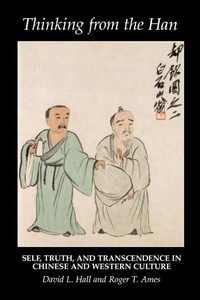
Thinking from the Han
Self, Truth, and Transcendence in Chinese and Western Culture
Published on 23. December 1997
Book
Paperback/Softback
360 pages
978-0-7914-3614-1 (ISBN)
Description
This book continues a comparative project begun with the authors' Thinking Through Confucius and Anticipating China. It continues the comparative discussions by focusing upon three concepts--self, truth, transcendence--which best illuminate the distinctive characters of the two cultures. "Self" specifies the meaning of the human subject, "truth" considers that subject's manner of relating to the world of which it is a part, and "transcendence" raises the issue as to whether the self/world relationship is grounded in something other than the elements resourced immediately in self and world. Considered together, the discussions of these concepts advertise in a most dramatic fashion the intellectual barriers currently existing between Chinese and Western thinkers. More importantly, these discussions reformulate Chinese and Western vocabularies in a manner that will enhance the possibilities of intercultural communication.
Reviews / Votes
"I especially like the book's clarity of presentation and its attempt to address the way in which contemporary Westerners are likely to misunderstand the Chinese. The way the book draws attention to the practical effects that the different philosophical backgrounds of China and the West have on our current efforts at cross-cultural dialogue is extremely timely and gives life to the philosophical ideas considered."The discussion of Chinese approaches to gender issues is fascinating, and it represents a real contribution to gender theory. The clarification of the way in which Chinese thought does and does not correspond to deconstructionist outlooks is helpful and surprising. The discussion of Daoism's use of humor is both delightful and seriously important for scholars of either tradition and the discussion of the li in relation to human rights is extremely helpful for ethical thought." -- Kathleen Higgins, The University of Texas at Austin
More details
Language
English
Place of publication
Albany, NY
United States
Target group
College/higher education
Professional and scholarly
Product notice
Paperback (trade)
Illustrations
Total Illustrations: 0
Dimensions
Height: 229 mm
Width: 152 mm
Thickness: 21 mm
Weight
584 gr
ISBN-13
978-0-7914-3614-1 (9780791436141)
Copyright in bibliographic data and cover images is held by Nielsen Book Services Limited or by the publishers or by their respective licensors: all rights reserved.
Schweitzer Classification
Other editions
Additional editions
David L. Hall | Roger T. Ames
Thinking from the Han
Self, Truth, and Transcendence in Chinese and Western Culture
E-Book
12/1997
State University of New York Press
€37.99
Available for download
Persons
David L. Hall is Professor of Philosophy at the University of Texas at El Paso. He is the author of The Civilization of Experience: A Whiteheadian Theory of Culture; The Uncertain Phoenix: Adventures Toward a Post-Cultural Sensibility; and Eros and Irony: A Prelude to Philosophical Anarchism. With SUNY Press, Professor Hall is coauthor of Thinking Through Confucius (with Roger T. Ames); and Anticipating China (with Roger T. Ames); author of The Arimaspian Eye and Richard Rorty: Prophet and Poet of the New Pragmatism. Roger T. Ames is Professor of Philosophy at the University of Hawaii and editor of Philosophy East and West. He is the author of The Art of Rulership: A Study in Ancient Chinese Political Thought and coeditor of Nature in Asian Traditions of Thought: Essays in Environmental Philosophy (with J. Baird Callicott); Self and Deception: A Cross-Cultural Philosophical Enquiry (with Wimal Dissanayake); Self as Body in Asian Theory and Practice; and Self as Person in Asian Theory and Practice (both with Wimal Dissanayake and Thomas Kasulis), all published by SUNY Press. He is also the translator of Sun-tzu: The Art of Warfare; and Sun Pin: The Art of Warfare (with D. C. Lau).
Content
Prologue
Part I Metaphors of Identity
1. The Problematic of Self in Western Thought
Self, History, and Culture
The Modern Self
Mixing Metaphors: The Vagueness of the Self
2. The Focus-Field Self in Classical Confucianism
The "Selfless" Self
The Mindless Self
The Bodiless Self
The Aimless Self
The Nonwilling Self
Self as Field and Focus
3. The Focus-Field Self in Classical Daoism
The Tripartite Psyche and the Wu -Forms of Daoism
Dao and De :Difference and Deference
Self, Humor, and the Transformation of Things
4. Chinese Sexism
The Gender of Thinking
Dualistic Sexism
Correlative Sexism
Part II "Truth" as a Test Case of Cultural Comparison
5. Excursus on Method
The Way and the Truth
Ars Contextualis
What Has Athens to Do with Alexandria?
Some Ironies of the Search for Truth
6. Cultural Requisites for a Theory of Truth in China
Coherence and World Order
Reality and Appearance
Theory and Practice
Rational Arguments
Logic and Rhetoric
Sensibility Matrices: China and the West
7. A Pragmatic Understanding of the Way (Dao)
Plotting a Course (Dao)
One Way or Many?
Becoming an Exemplary Person (Junzi)
Living Up to One's Word (Xin) and Having Integrity (Cheng)
Becoming a Genuine Person (Zhenren)
Confucianism and Daoism: Convergences and Divergences
Truth and the Harmony of the Way
Part III Transcendence and Immanence as Cultural Clues
8. The Decline of Transcendence in the West
What is 'Transcendence'?
The Collapse of the Western Gods
Theology and Mysticism
The Waning of Transcendence in Science and Society
9. Tian and Dao as Nontranscendent Fields
The "Transcendence Debate" in Contemporary China
Tian
Dao
10. The Chinese Community without Transcendence
Could Socrates and Confucius Be Friends?
Rites and Rights
Notes
Works Cited
Index
Part I Metaphors of Identity
1. The Problematic of Self in Western Thought
Self, History, and Culture
The Modern Self
Mixing Metaphors: The Vagueness of the Self
2. The Focus-Field Self in Classical Confucianism
The "Selfless" Self
The Mindless Self
The Bodiless Self
The Aimless Self
The Nonwilling Self
Self as Field and Focus
3. The Focus-Field Self in Classical Daoism
The Tripartite Psyche and the Wu -Forms of Daoism
Dao and De :Difference and Deference
Self, Humor, and the Transformation of Things
4. Chinese Sexism
The Gender of Thinking
Dualistic Sexism
Correlative Sexism
Part II "Truth" as a Test Case of Cultural Comparison
5. Excursus on Method
The Way and the Truth
Ars Contextualis
What Has Athens to Do with Alexandria?
Some Ironies of the Search for Truth
6. Cultural Requisites for a Theory of Truth in China
Coherence and World Order
Reality and Appearance
Theory and Practice
Rational Arguments
Logic and Rhetoric
Sensibility Matrices: China and the West
7. A Pragmatic Understanding of the Way (Dao)
Plotting a Course (Dao)
One Way or Many?
Becoming an Exemplary Person (Junzi)
Living Up to One's Word (Xin) and Having Integrity (Cheng)
Becoming a Genuine Person (Zhenren)
Confucianism and Daoism: Convergences and Divergences
Truth and the Harmony of the Way
Part III Transcendence and Immanence as Cultural Clues
8. The Decline of Transcendence in the West
What is 'Transcendence'?
The Collapse of the Western Gods
Theology and Mysticism
The Waning of Transcendence in Science and Society
9. Tian and Dao as Nontranscendent Fields
The "Transcendence Debate" in Contemporary China
Tian
Dao
10. The Chinese Community without Transcendence
Could Socrates and Confucius Be Friends?
Rites and Rights
Notes
Works Cited
Index