

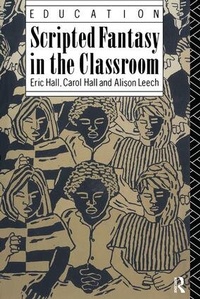
Scripted Fantasy in the Classroom
1st Edition
Published on 28. June 2017
Book
Hardback
180 pages
978-1-138-41629-1 (ISBN)
Description
Many teachers have tried simple relaxation techniques in their classrooms and been surprised by their success. This step by step guide to the technique of scripted fantasy shows how the forces of the imagination can be harnessed to improve the social skills and classroom performance of students of all ages and all abilities. It provides sample scripts to get the teacher started, and gives advice on classroom management and on processing the fantasy experience without compromising students' privacy.
More details
Language
English
Place of publication
London
United Kingdom
Publishing group
Taylor & Francis Ltd
Target group
College/higher education
Dimensions
Height: 234 mm
Width: 156 mm
Weight
453 gr
ISBN-13
978-1-138-41629-1 (9781138416291)
Copyright in bibliographic data and cover images is held by Nielsen Book Services Limited or by the publishers or by their respective licensors: all rights reserved.
Schweitzer Classification
Other editions
Additional editions
Eric Hall | Alison Leech
Scripted Fantasy in the Classroom
E-Book
09/2005
1st Edition
Routledge
€68.49
Available for download
Eric Hall | Alison Leech
Scripted Fantasy in the Classroom
E-Book
09/2005
1st Edition
Routledge
€68.49
Available for download
Eric Hall | Alison Leech
Scripted Fantasy in the Classroom
Book
07/1990
1st Edition
Routledge
€74.00
Shipment within 15-20 days
Persons
Eric Hall, Carol Hall, Alison Leech
Content
Introduction; Chapter 1 Case History of a Lesson; Chapter 2 Catching an Elusive Concept; Chapter 3 Turning Fantasy into a Reality; Chapter 4 Introductory Scripts; Chapter 5 Travel Scripts; Chapter 6 Outcomes of Using Scripted Fantasy in the Classroom; Chapter 7 Growth Scripts; Chapter 8 Projection; Chapter 9 Projection Scripts; Chapter 10 The Right Brain; Chapter 11 Relaxation and Healing Scripts; Chapter 12 Historical Background; Chapter 13 Scripts for Encouraging Creativity; Chapter 14 Conclusion;