

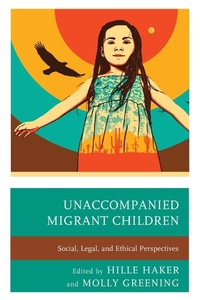
Unaccompanied Migrant Children
Social, Legal, and Ethical Perspectives
Published on 12. May 2021
Book
Paperback/Softback
268 pages
978-1-4985-7454-9 (ISBN)
Description
Unaccompanied migrant children are the most vulnerable group of migrants and refugees. Their experiences, their contested legal status in the host countries, and their treatment before, during, and after migration call for an ethics of child migration that places unaccompanied migrant children at the center.
This volume gathers international experts from the fields of social work, social science, law, philosophy, and Catholic ethics. Social science, psychological, and social work studies, analyses of US and international law of child migration, refuge and asylum policies, and several case studies regarding law enforcement highlight the more recent shifts in policies both in the United States and Europe. The current policies are confronted with two major normative frameworks that go beyond migration laws or the international refugee and asylum provisions: the United Nations Convention of the Rights of the Child, and the approach of the Catholic social ethics of migration.
The authors address the challenges of childhood under the conditions of migration: the uprooting of lives, the journey and transition into foreign countries and cultures, and the transition into adulthood. They discern the legal provisions and obstacles of the immigration process, the securitization of the borders, and the criminalization of unaccompanied migrant children. Catholic social ethics, the theological authors argue, must offer more than its pastoral call for charity, solidarity, and compassion that is already in place, inspiring multiple Catholic organizations, groups, and individuals. The Christian emphasis on family rights and values, originating in the story of the Holy Family, is necessary, yet insufficient when children are separated from their parents-instead, children must be recognized as vulnerable agents in their own right, and the moral dilemmas families sometimes face be acknowledged. US and European policies must be informed by the interpretation of justice, and the principle of the common good must be held against the firewalling of the West. As a political ethics, Catholic social ethics must critique and reject the use of the Christian religion for nationalist policies and depictions of migrant children as a threat to the cultural identity of Western societies.
This volume gathers international experts from the fields of social work, social science, law, philosophy, and Catholic ethics. Social science, psychological, and social work studies, analyses of US and international law of child migration, refuge and asylum policies, and several case studies regarding law enforcement highlight the more recent shifts in policies both in the United States and Europe. The current policies are confronted with two major normative frameworks that go beyond migration laws or the international refugee and asylum provisions: the United Nations Convention of the Rights of the Child, and the approach of the Catholic social ethics of migration.
The authors address the challenges of childhood under the conditions of migration: the uprooting of lives, the journey and transition into foreign countries and cultures, and the transition into adulthood. They discern the legal provisions and obstacles of the immigration process, the securitization of the borders, and the criminalization of unaccompanied migrant children. Catholic social ethics, the theological authors argue, must offer more than its pastoral call for charity, solidarity, and compassion that is already in place, inspiring multiple Catholic organizations, groups, and individuals. The Christian emphasis on family rights and values, originating in the story of the Holy Family, is necessary, yet insufficient when children are separated from their parents-instead, children must be recognized as vulnerable agents in their own right, and the moral dilemmas families sometimes face be acknowledged. US and European policies must be informed by the interpretation of justice, and the principle of the common good must be held against the firewalling of the West. As a political ethics, Catholic social ethics must critique and reject the use of the Christian religion for nationalist policies and depictions of migrant children as a threat to the cultural identity of Western societies.
Reviews / Votes
As a nation, the U.S. tore African children from their parents to sell and Indian children to educate at boarding schools. So tearing children from their immigrant parents is more the norm then the historical exception. Few protested then, few are aware today. This is why Greening and Haker's book is so crucial for such a time as this. Relying on professionals working directly with migrant children, here in the U.S. and Europe, the editors provide practical praxis based on academic research which could be implemented by our governments, our faith communities, ourselves. -- Miguel A. De La Torre, professor of Social Ethics and Latinx Studies, Iliff School of Theology This book is a strong challenge to the way the United States and Europe treat unaccompanied migrant children today. Drawing on the experience of the children themselves, it provides careful social analysis of the sources of their mistreatment and issues a ringing call to change the direction of migration policy. The ethical arguments in this book are both compelling and urgently needed. -- David Hollenbach S.J., Pedro Arrupe Distinguished Professor,Georgetown University This is a powerful, moving, and motivating book. From Javier Zamora's gripping and gut-wrenching poem; through the social scientists who immerse themselves and us in migrant children's realities; the service providers who capture our own feelings of pain and powerlessness; the theologians who envision a more generous, just and faithful embrace of the vulnerable and tenacious young-we are reminded just how merciless and unrelenting our national policies can be. The take-away: Neither turn away nor despair. Register the gravity of this suffering inflicted on children. Make space for the compassion that nurtures solidarity and justice. Take action. -- Lisa Sowle Cahill, J. Donald Monan Professor of Theology, Boston CollegeMore details
Language
English
Place of publication
United States
Publishing group
Bloomsbury Publishing Plc
Target group
Professional and scholarly
Illustrations
2 tables;
Dimensions
Height: 229 mm
Width: 152 mm
Thickness: 16 mm
Weight
430 gr
ISBN-13
978-1-4985-7454-9 (9781498574549)
Copyright in bibliographic data and cover images is held by Nielsen Book Services Limited or by the publishers or by their respective licensors: all rights reserved.
Schweitzer Classification
Other editions
Additional editions
Unaccompanied Migrant Children
Social, Legal, and Ethical Perspectives
E-Book
12/2018
1st Edition
Lexington Books
€38.49
Available for download
Persons
Hille Haker is the Richard McCormick S.J. Endowed Chair of Catholic Moral Theology at Loyola University Chicago.
Molly Greening is a PhD student at Loyola University Chicago in the Integrative Studies in Ethics and Theology (ISET) program.
Molly Greening is a PhD student at Loyola University Chicago in the Integrative Studies in Ethics and Theology (ISET) program.
Content
Introduction
Molly Greening and Hille Haker
Part I
1. Unaccompanied
Javier Zamora
2. Childhood, Violence, and Displacement: Experiences of Unaccompanied Immigrant Children from the Perspective of Human and Legal Service Providers in North and Central America
Maria Vidal de Haymes, Adam Avrushin, and Celeste Sanchez
3. Trauma, Detachment, and Non-Belonging: The Plight of Migrant and Refugee Children
Stephanie N. Arel
4. Unaccompanied Refugee Children and Adolescents and Access to Vocational Training in Germany-with a Focus on Bavaria
Philip Anderson
Part II
5. Betraying Children's Rights: Unaccompanied Immigrant Children in the United States
Katherine Kaufka Walts
6. The Curious Case of Jane Doe
Susan Terrio
7. Human Vulnerability and Vulnerable Rights: On Children's Rights and Asylum Politics in Sweden
Elena Namli and Linde Lindkvist
Part III
8. Holy Family or Holy Child? Child Migrants as Vulnerable Agents
Cristina L.H. Traina
9. Toward a Moral Response to Unaccompanied Minors in the U.S. Context
Kristin E. Heyer
10. Justice as Responsibility to Child Migrants
Tisha Rajendra
11. Going It Alone-Political Ethics and the Rights of Unaccompanied Migrant Children
Hille Haker
Molly Greening and Hille Haker
Part I
1. Unaccompanied
Javier Zamora
2. Childhood, Violence, and Displacement: Experiences of Unaccompanied Immigrant Children from the Perspective of Human and Legal Service Providers in North and Central America
Maria Vidal de Haymes, Adam Avrushin, and Celeste Sanchez
3. Trauma, Detachment, and Non-Belonging: The Plight of Migrant and Refugee Children
Stephanie N. Arel
4. Unaccompanied Refugee Children and Adolescents and Access to Vocational Training in Germany-with a Focus on Bavaria
Philip Anderson
Part II
5. Betraying Children's Rights: Unaccompanied Immigrant Children in the United States
Katherine Kaufka Walts
6. The Curious Case of Jane Doe
Susan Terrio
7. Human Vulnerability and Vulnerable Rights: On Children's Rights and Asylum Politics in Sweden
Elena Namli and Linde Lindkvist
Part III
8. Holy Family or Holy Child? Child Migrants as Vulnerable Agents
Cristina L.H. Traina
9. Toward a Moral Response to Unaccompanied Minors in the U.S. Context
Kristin E. Heyer
10. Justice as Responsibility to Child Migrants
Tisha Rajendra
11. Going It Alone-Political Ethics and the Rights of Unaccompanied Migrant Children
Hille Haker