

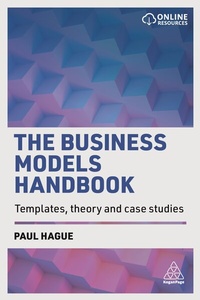
The Business Models Handbook
Templates, Theory and Case Studies
1st Edition
Published on 3. January 2019
Book
Hardback
336 pages
978-0-7494-9752-1 (ISBN)
Description
Enhance your business and marketing planning and overcome common challenges, with this collection of the most valuable and reliable business frameworks and models.
Business frameworks sit at the heart of every successful business. They add structure and clarity to business problems and can help practitioners overcome the everyday challenges they face. The Business Models Handbook brings together the most helpful and widely used templates and frameworks into a single, invaluable resource. Each chapter focuses on an individual business framework, giving an overview of 50 of the best known frameworks and how it will help an organization grow and be profitable. Each supported by a real-world case study, these include ANSOFF matrix, Price-Quality-Strategy model, Stage-Gate model, Service Profit Chain and many more.
Authored by a leading global market researcher with a background working on over 3,000 different research projects, The Business Models Handbook is an invaluable resource for any student or professional. Online resources include lecture slides that align with each chapter.
Business frameworks sit at the heart of every successful business. They add structure and clarity to business problems and can help practitioners overcome the everyday challenges they face. The Business Models Handbook brings together the most helpful and widely used templates and frameworks into a single, invaluable resource. Each chapter focuses on an individual business framework, giving an overview of 50 of the best known frameworks and how it will help an organization grow and be profitable. Each supported by a real-world case study, these include ANSOFF matrix, Price-Quality-Strategy model, Stage-Gate model, Service Profit Chain and many more.
Authored by a leading global market researcher with a background working on over 3,000 different research projects, The Business Models Handbook is an invaluable resource for any student or professional. Online resources include lecture slides that align with each chapter.
Reviews / Votes
"As strategy is all about three things - implementation, implementation, implementation - The Business Models Handbook is especially useful because it not only discusses the most important business models, but also provides practical guidance on how each model can be used." * Rennie Gould, CEO, Customize UK Training * "An excellent guide from a trusted source, this book will fast-track knowledge for managers wishing to develop their strategy or indeed their strategic thinking." * Professor Stuart Roper, Huddersfield Business School, University of Huddersfield * "Paul Hague has produced an excellent all-in-one handbook that covers a multitude of business models that are used every day by marketing professionals. Thanks to his lifelong experience as a market researcher, Hague is able to thoroughly explain these models and also to provide case studies on how to use them. The Business Models Handbook is a practical text that all marketing experts should read." * Jeroen Beukeboom, Global Market Intelligence Leader and Senior Analyst, AkzoNobel Industrial Coatings * "As well as being an absolute must for any MBA student, this superbly well-chosen collection of tools and models will not only save the life of many a business executive with a challenging presentation to make, but might just make life a little better for their audiences into the bargain. Too much time has been wasted at management meetings by businesses misusing or misunderstanding these hugely valuable and important tools. Now there is no excuse!" * Peter Cheverton, Director, INSIGHT Marketing and People Ltd * "A comprehensive toolkit for managers wishing to learn the key insights from academic research of the last 60 years, and how they can help business." * Dr Chris Raddats, Senior Lecturer in Marketing and Operations, Management School, University of Liverpool *More details
Language
English
Place of publication
London
United Kingdom
Target group
College/higher education
Professional and scholarly
Product notice
Cloth over boards
Dimensions
Height: 240 mm
Width: 165 mm
Thickness: 30 mm
Weight
450 gr
ISBN-13
978-0-7494-9752-1 (9780749497521)
Copyright in bibliographic data and cover images is held by Nielsen Book Services Limited or by the publishers or by their respective licensors: all rights reserved.
Schweitzer Classification
Other editions
New editions
Paul Hague
The Business Models Handbook
The Tools, Techniques and Frameworks Every Business Professional Needs to Succeed
Book
08/2023
2nd Edition
Kogan Page Ltd
€140.30
Shipment within 10-20 days
Additional editions
Book
01/2019
1st Edition
Kogan Page Ltd
€47.22
Article exhausted; check for reprint
Person
Paul Hague is the Founder of B2B International Ltd, a global market research company. He is fellow of the Market Research Society and the author of ten books, sharing 30 years of practical experience in market research and marketing. He is a visiting fellow at Manchester Metropolitan University and a guest lecturer at Manchester Business School. His books have been translated into Italian, Indonesian, Bulgarian, Polish, Portuguese and Chinese.
Content
Chapter - 01: Introduction - An overview of business and marketing models;
Chapter - 02: The 4Ps - How to design your marketing mix;
Chapter - 03: ADL matrix - Strengthening a product portfolio or strategic business units;
Chapter - 04: AIDA - A business model for improving marketing communications;
Chapter - 05: Ansoff matrix - How to grow your company;
Chapter - 06: Benchmarking - Setting targets for business and marketing KPIs;
Chapter - 07: Blue ocean strategy - Kick-starting innovation and new product development;
Chapter - 08: Boston Consulting Group (BCG) matrix - Planning a product portfolio or multiple strategic business units;
Chapter - 09: Brand audit - Improving the strength of a brand;
Chapter - 10: Competitive intelligence - Assessing market strengths and weaknesses;
Chapter - 11: Conjoint analysis - Assessing optimum pricing and the value of component parts;
Chapter - 12: Customer journey maps - Assessing the current performance of marketing and sales processes;
Chapter - 13: Customer lifetime value - Estimating customer spend over their lifetime with the company;
Chapter - 14: Customer value proposition - Creating a compelling purchase motive;
Chapter - 15: Diffusion of innovation - Launching new products and services;
Chapter - 16: Directional policy matrix - How to prioritize segments or new ideas;
Chapter - 17: Disruptive innovation model - Identifying unique ways of beating the competition;
Chapter - 18: Edward de Bono's six thinking hats - Brainstorming problems and generating new ideas;
Chapter - 19: EFQM excellence model - Improving an organization's quality and performance;
Chapter - 20: Four corners - Analysing competitor strategies;
Chapter - 21: Gap analysis - Improving areas of weakness in a company;
Chapter - 22: Greiner's growth model - Recognition and transition through different phases of company growth;
Chapter - 23: Kano model - Identifying purchase motivations;
Chapter - 24: Kotler's five product levels - Adding value to a product or service;
Chapter - 25: Market sizing - Assessing the size and value of a served or potential market;
Chapter - 26: Maslow's hierarchy - Differentiating market positioning;
Chapter - 27: McKinsey 7S - A company 'health check' audit tool;
Chapter - 28: Mintzberg's 5Ps for strategy - Devising a competitive strategy;
Chapter - 29: MOSAIC - Setting objectives for current and potential opportunities and how to reach them;
Chapter - 30: Net Promoter Score (R) - A tool for driving customer excellence;
Chapter - 31: New product pricing (Gabor-Granger and van Westendorp) - Pricing new products;
Chapter - 32: Personas - Improving the focus of marketing messages;
Chapter - 33: PEST - Assessing four major macro factors that shape a company's future;
Chapter - 34: Porter's five forces - Assessing five economic factors for competitive intensity;
Chapter - 35: Porter's generic strategies - Pinpointing the strongest competitive position;
Chapter - 36: Price elasticity - Outlining opportunities for raising or lowering prices;
Chapter - 37: Price quality strategy - Guiding a company's pricing strategy;
Chapter - 38: Product life cycle - Determining a long-term product strategy;
Chapter - 39: Product service positioning matrix - Positioning products according to quality and service value;
Chapter - 40: Segmentation - Using customer groups to gain competitive advantage;
Chapter - 41: Service profit chain - Connecting employee satisfaction and performance with company profits;
Chapter - 42: SERVQUAL - Aligning customer expectations and company performance;
Chapter - 43: SIMALTO - Identifying the customer value placed on product or service improvements;
Chapter - 44: Stage gate new product development - Planning the development and launch of new products and services;
Chapter - 45: SWOT analysis - Analysing growth opportunities at product, team or business level;
Chapter - 46: System 1 and System 2 thinking - Identifying the emotional forces that drive decisions;
Chapter - 47: USP - Pinpointing the unique selling point of a product or service;
Chapter - 48: Value-based marketing - Adding value to products and services to improve profitability;
Chapter - 49: Value chain - Identifying product or service value during the manufacturing process;
Chapter - 50: Value equivalence line - Managing price and product benefits in a business strategy;
Chapter - 51: Value net - How to benefit from competitor collaboration
Chapter - 02: The 4Ps - How to design your marketing mix;
Chapter - 03: ADL matrix - Strengthening a product portfolio or strategic business units;
Chapter - 04: AIDA - A business model for improving marketing communications;
Chapter - 05: Ansoff matrix - How to grow your company;
Chapter - 06: Benchmarking - Setting targets for business and marketing KPIs;
Chapter - 07: Blue ocean strategy - Kick-starting innovation and new product development;
Chapter - 08: Boston Consulting Group (BCG) matrix - Planning a product portfolio or multiple strategic business units;
Chapter - 09: Brand audit - Improving the strength of a brand;
Chapter - 10: Competitive intelligence - Assessing market strengths and weaknesses;
Chapter - 11: Conjoint analysis - Assessing optimum pricing and the value of component parts;
Chapter - 12: Customer journey maps - Assessing the current performance of marketing and sales processes;
Chapter - 13: Customer lifetime value - Estimating customer spend over their lifetime with the company;
Chapter - 14: Customer value proposition - Creating a compelling purchase motive;
Chapter - 15: Diffusion of innovation - Launching new products and services;
Chapter - 16: Directional policy matrix - How to prioritize segments or new ideas;
Chapter - 17: Disruptive innovation model - Identifying unique ways of beating the competition;
Chapter - 18: Edward de Bono's six thinking hats - Brainstorming problems and generating new ideas;
Chapter - 19: EFQM excellence model - Improving an organization's quality and performance;
Chapter - 20: Four corners - Analysing competitor strategies;
Chapter - 21: Gap analysis - Improving areas of weakness in a company;
Chapter - 22: Greiner's growth model - Recognition and transition through different phases of company growth;
Chapter - 23: Kano model - Identifying purchase motivations;
Chapter - 24: Kotler's five product levels - Adding value to a product or service;
Chapter - 25: Market sizing - Assessing the size and value of a served or potential market;
Chapter - 26: Maslow's hierarchy - Differentiating market positioning;
Chapter - 27: McKinsey 7S - A company 'health check' audit tool;
Chapter - 28: Mintzberg's 5Ps for strategy - Devising a competitive strategy;
Chapter - 29: MOSAIC - Setting objectives for current and potential opportunities and how to reach them;
Chapter - 30: Net Promoter Score (R) - A tool for driving customer excellence;
Chapter - 31: New product pricing (Gabor-Granger and van Westendorp) - Pricing new products;
Chapter - 32: Personas - Improving the focus of marketing messages;
Chapter - 33: PEST - Assessing four major macro factors that shape a company's future;
Chapter - 34: Porter's five forces - Assessing five economic factors for competitive intensity;
Chapter - 35: Porter's generic strategies - Pinpointing the strongest competitive position;
Chapter - 36: Price elasticity - Outlining opportunities for raising or lowering prices;
Chapter - 37: Price quality strategy - Guiding a company's pricing strategy;
Chapter - 38: Product life cycle - Determining a long-term product strategy;
Chapter - 39: Product service positioning matrix - Positioning products according to quality and service value;
Chapter - 40: Segmentation - Using customer groups to gain competitive advantage;
Chapter - 41: Service profit chain - Connecting employee satisfaction and performance with company profits;
Chapter - 42: SERVQUAL - Aligning customer expectations and company performance;
Chapter - 43: SIMALTO - Identifying the customer value placed on product or service improvements;
Chapter - 44: Stage gate new product development - Planning the development and launch of new products and services;
Chapter - 45: SWOT analysis - Analysing growth opportunities at product, team or business level;
Chapter - 46: System 1 and System 2 thinking - Identifying the emotional forces that drive decisions;
Chapter - 47: USP - Pinpointing the unique selling point of a product or service;
Chapter - 48: Value-based marketing - Adding value to products and services to improve profitability;
Chapter - 49: Value chain - Identifying product or service value during the manufacturing process;
Chapter - 50: Value equivalence line - Managing price and product benefits in a business strategy;
Chapter - 51: Value net - How to benefit from competitor collaboration