

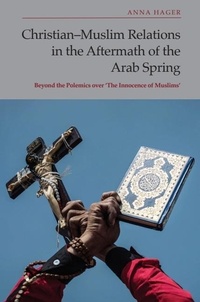
Christian-Muslim Relations in the Aftermath of the Arab Spring
Beyond the Polemics over 'The Innocence of Muslims'
Will be published approx. on 31. January 2026
Book
Paperback/Softback
240 pages
978-1-3995-2845-0 (ISBN)
Description
This book uses 'The Innocence of Muslims' controversy as an entry point into the study of relations between Christians and Muslims in Egypt, Lebanon and Jordan. Instead of dismissing the condemnations and joint reactions as shallow and ritualised displays of solidarity, Anna Hager argues that they offer insights into the mechanisms of Christian-Muslim relations. Christians and Muslims, including Islamist figures, channelled the potential violence - turning it into an occasion to strengthen inter-communal relations and, crucially, their own positions.
Reviews / Votes
Christian-Muslim Relations in the Aftermath of the Arab Spring offers timely reflection on the character of relations between Christians and Muslims in the Middle East. Based upon a wide range of sources skilfully deployed, Hager seeks to describe how society assuages violence, reframing Muslim-Christian relations at moments of tension around Christian agency and the constraints on radical Muslim actors, thus allowing for a dynamic and complex web of political factors to strengthen their relations and respective religious statuses. Hager offers much to ponder in considering the Christian-Muslim encounter today. -- Anthony O'Mahony, University of Oxford Anna Hager's book Christian-Muslim Relations in the Aftermath of the Arab Spring. Beyond the Polemics over 'The Innocence of Muslims' is a significant contribution to the field of Oriental Studies, offering a methodical solution to a complex question: how do we understand the nuanced dynamics between Christian and Muslim communities in the wake of transformative political events? By focusing on the reactions to the controversial 'Innocence of Muslims' video, Hager brings new insights that challenge conventional wisdom and provide a richer understanding of agency, rhetoric, and power in the Middle East. -- Marta Wozniak-BobinskaMore details
Language
English
Place of publication
Edinburgh
United Kingdom
Target group
College/higher education
Dimensions
Height: 154 mm
Width: 236 mm
Thickness: 17 mm
Weight
360 gr
ISBN-13
978-1-3995-2845-0 (9781399528450)
Copyright in bibliographic data and cover images is held by Nielsen Book Services Limited or by the publishers or by their respective licensors: all rights reserved.
Schweitzer Classification
Person
Anna Hager is currently a research fellow at the University of Vienna, Austria. She has published on Christian-Muslim relations, Christians in the Middle East and the Syriac Orthodox Church in Guatemala.
Content
Introduction: Revisiting Christian-Muslim Relations through a Minor Controversy
1. Beyond the Controversy: Islamist Movements and the Constraints of the Political Game Introduction Egypt: Claiming the Islamic Leadership The Risks of Antagonising Copts Lebanon: Contesting Hezbollah's Islamic and Lebanese leadership Jordan: Dissatisfaction with the Regime Conclusion
2. Another Understanding of Violence: From Coptic-Muslim Violence to a Far Greater Danger Introduction The Starting Point: Sectarian Violence in Egypt The Issue of Christian Fear The Hierarchisation of Targets and Victims The Greater Danger: Potential Violence Conclusion
3. The Stakes of Being Christian or Muslim: The Other Key Actors of Christian-Muslim Relations Introduction The Legal and Political Foundations of being Christian or Muslim in Egypt, Jordan and Lebanon Another Key Player: Official Islam The Forgotten Christian Laity The Churches Upset Speaking as and for Christians Conclusion
4. Searching for Proximity to the Other: Redefining Fitna and Dhimma Introduction Classical Islamic and Christian Attitudes: Polemics The Moderation of Islamist Attitudes towards Christians The Fear of Fitna A Christian Expansion of the Term dhimma Searching for Proximity to Muslims The Limited Institutionalisation of Proximity Conclusion
5. The Core of Peaceful Relations: Rituals of Solidarity and Avoidance Introduction Ritualised and Avoiding Language: Rituals of Solidarity Behaviour and the Expectation of Reciprocity Excurse: The Issue of Christmas A Powerful Ritual: The United Egyptian Nation Conclusion
6. Renegotiating the Promises of the Arab Spring Introduction Old and New Fears What Level of Differentiation? The Egyptian, Lebanese and Jordanian Nations The Religious Foundations of Unity The Political Sources of Unity Conclusion
Conclusion: The Requirements for the Ideal Islamic Society
Bibliography
1. Beyond the Controversy: Islamist Movements and the Constraints of the Political Game Introduction Egypt: Claiming the Islamic Leadership The Risks of Antagonising Copts Lebanon: Contesting Hezbollah's Islamic and Lebanese leadership Jordan: Dissatisfaction with the Regime Conclusion
2. Another Understanding of Violence: From Coptic-Muslim Violence to a Far Greater Danger Introduction The Starting Point: Sectarian Violence in Egypt The Issue of Christian Fear The Hierarchisation of Targets and Victims The Greater Danger: Potential Violence Conclusion
3. The Stakes of Being Christian or Muslim: The Other Key Actors of Christian-Muslim Relations Introduction The Legal and Political Foundations of being Christian or Muslim in Egypt, Jordan and Lebanon Another Key Player: Official Islam The Forgotten Christian Laity The Churches Upset Speaking as and for Christians Conclusion
4. Searching for Proximity to the Other: Redefining Fitna and Dhimma Introduction Classical Islamic and Christian Attitudes: Polemics The Moderation of Islamist Attitudes towards Christians The Fear of Fitna A Christian Expansion of the Term dhimma Searching for Proximity to Muslims The Limited Institutionalisation of Proximity Conclusion
5. The Core of Peaceful Relations: Rituals of Solidarity and Avoidance Introduction Ritualised and Avoiding Language: Rituals of Solidarity Behaviour and the Expectation of Reciprocity Excurse: The Issue of Christmas A Powerful Ritual: The United Egyptian Nation Conclusion
6. Renegotiating the Promises of the Arab Spring Introduction Old and New Fears What Level of Differentiation? The Egyptian, Lebanese and Jordanian Nations The Religious Foundations of Unity The Political Sources of Unity Conclusion
Conclusion: The Requirements for the Ideal Islamic Society
Bibliography