


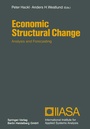
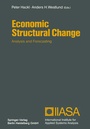
Economic Structural Change
Analysis and Forecasting
Published on 2. May 1991
Book
Hardback
X, 385 pages
978-3-540-53839-4 (ISBN)
Description
Structural change is a fundamental concept in economic model building. Statistics and econometrics provide the tools for identification of change, for estimating the onset of a change, for assessing its extent and relevance. Statistics and econometrics also have de veloped models that are suitable for picturing the data-generating process in the presence of structural change by assimilating the changes or due to the robustness to its presence. Important subjects in this context are forecasting methods. The need for such methods became obvious when, as a consequence of the oil price shock, the results of empirical analyses suddenly seemed to be much less reliable than before. Nowadays, economists agree that models with fixed structure that picture reality over longer periods are illusions. An example for less dramatic causes than the oil price shock with similarly profound effects is economic growth and its impacts on the economic system. Indeed, economic growth was a motivating concept for this volume. In 1983, the International Institute for Applied Systems Analysis (IIASA) in Laxen burg/ Austria initiated an ambitious project on "Economic Growth and Structural Change".
More details
Language
English
Place of publication
Heidelberg
Germany
Publishing group
Springer Berlin
Target group
College/higher education
Professional and scholarly
Illustrations
30
56 s/w Tabellen, 30 s/w Abbildungen
30 black & white illustrations, 56 black & white tables, biography
Dimensions
Height: 24.2 cm
Width: 17 cm
Weight
800 gr
ISBN-13
978-3-540-53839-4 (9783540538394)
DOI
10.1007/978-3-662-06824-3
Schweitzer Classification
Other editions
Additional editions
Book
10/2013
Springer
€53.49
Shipment within 7-9 days
E-Book
06/2013
Springer
€53.49
Available for download
Content
1 Introduction.- I Identification of Structural Change.- 2 Recursive M-Tests for the Change-Point Problem.- 3 Recursive vs. OLS Residuals in the CUSUM Test.- 4 Kimball's Inequality and Bounds Tests for Comparing Several Regressions under Heteroscedasticity.- 5 A Further Look at Model Evaluation.- 6 Bayesian Inferences about the Intersection of Two Regressions.- 7 Nonparametric Sequential Surveillance of Intervention Effects in Time Series.- 8 A Monte Carlo Study of the Effects of Structural Breaks on Tests for Unit Roots.- II Model Building in the Presence of Structural Change.- 9 Forecast Encompassing and Model Evaluation.- 10 An Introduction to Time-Varying Parameter Cointegration.- 11 Disequilibrium Modeling, Switching Regressions, and Their Relationship to Structural Change.- 12 Stochastic Trends in Simultaneous Equation Systems.- 13 Time-Varying Nonlinear Regression.- 14 Stability Analysis Using Kaiman Filtering, Scoring, EM, and an Adaptive EM method.- III Forecasting in the Presence of Structural Change.- 15 A Note on Bayesian Forecast Combination Procedures.- 16 A New Approach to Statistical Forecasting.- IV Economic Modeling and the Use of Empirical Data.- 17 The Relation between Economic Growth and Structural Change.- 18 Structural Change in Swedish and Finnish Monthly Industrial Output Series.- 19 On the Estimation of Time-varying Parameters in Transfer Function Models.- 20 Abrupt and Gradual Structural Shifts in State-Space Models.- 21 Structural Changes in the Real GNP Interdependence of the USA, West Germany, and Japan: 1970-1986.- 22 Interactive Poverty and Affluence of a Society: Change-Point Models for Structural Changes.- Author Index.- List of Authors.