


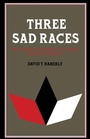
Three Sad Races
Racial Identity and National Consciousness in Brazilian Literature
Published on 28. February 1983
Book
Hardback
208 pages
978-0-521-24722-1 (ISBN)
Description
Brazilians have traditionally and very accurately viewed their nation as the product of the coming together and subsequent interaction of its disparate racial ancestry: native American Indians, Portuguese settlers and African slaves. Examining the social and cultural implications of this racial diversity is essential to the search for a viable and cohesive national identity, which has long been a major concern of Brazil's writers. Originally published in 1983, Three Sad Races is a study of how Brazilian literature - the only national literature in the Americas comparable in both quantity and quality to that of the United States - reflects these themes and gives vent to the general disquietude concerning the nation's predicament. Haberly presents an innovative interpretation of the development of Brazilian literature from the sixteenth to the twentieth centuries, as well as detailed critical analyses of the works of six of the nation's greatest writers.
More details
Language
English
Place of publication
Cambridge
United Kingdom
Target group
Professional and scholarly
Illustrations
Worked examples or Exercises
Dimensions
Height: 216 mm
Width: 138 mm
Thickness: 19 mm
Weight
425 gr
ISBN-13
978-0-521-24722-1 (9780521247221)
Copyright in bibliographic data is held by Nielsen Book Services Limited or its licensors: all rights reserved.
Schweitzer Classification
Other editions
New editions
Book
01/2012
Cambridge University Press
€53.90
Shipment within 15-20 days
Additional editions
Book
01/2012
Cambridge University Press
€53.90
Shipment within 15-20 days
Content
Acknowledgements; Introduction; 1. From Indians to Indianism; 2. The songs of an exile: Antonio Goncalves Dias; 3. The novelist as matchmaker: Jose de Alencar; 4. The poet as slave: Antonio de Castro Alves; 5. A journey through the escape hatch: Joaquim Maria Machado de Assis; 6. The black swan: Joao da Cruz e Sousa; 7. From despair to Modernism; 8. The harlequin: Mario de Andrade; Conclusion: the Edenic metaphor; Notes; Selected bibliography; Index.