

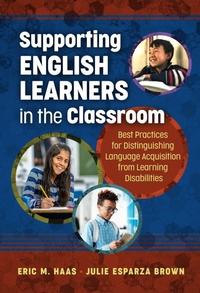
Supporting English Learners in the Classroom
Best Practices for Distinguishing Language Acquisition from Learning Disabilities
Will be published approx. on 3. May 2019
Book
Paperback/Softback
240 pages
978-0-8077-5953-0 (ISBN)
Description
This resource offers educators evidence-based best practices to help them address the individual needs of English learners with academic challenges and those who have been referred for special education services. The authors include guidance and specific tools to help districts, schools, and classrooms use multi-tiered systems of support (MTSS) and other interventions.
More details
Language
English
Place of publication
New York
United States
Target group
Professional and scholarly
Dimensions
Height: 229 mm
Width: 156 mm
Thickness: 19 mm
Weight
1 gr
ISBN-13
978-0-8077-5953-0 (9780807759530)
Copyright in bibliographic data and cover images is held by Nielsen Book Services Limited or by the publishers or by their respective licensors: all rights reserved.
Schweitzer Classification
Persons
Eric M. Haas is a professor and director of the educational leadership doctoral program at California State University, East Bay. Julie Esparza Brown is an associate professor in the Department of Special Education at the Graduate School of Education, Portland State University.
Content
Contents
Acknowledgments?ix
1.?Introduction?1
2.?Problems in Identifying English Learner Students at Risk for Learning Disabilities and In Need of Special Education ?9
English Learner Student Statistics?9
EL and Dual Identified Student Diversity?10
Factors Influencing EL and Dual Identified Student Success?11
Misidentification and Misplacement of Struggling EL Students?12
Changing Achievement and Contexts for EL and Dual Identified Students K-12?15
We Need to Improve EL and Dual Identified Student Education?20
3.?Culturally and Linguistically Responsive Multi-Tiered Support Systems for English Learners: High-Quality Teaching Practices Across the Tiers?23
A Multi-Tiered System of Supports (MTSS)?25
Understanding Today's Learners?28
Multi-Tiered System of Supports for English Learners: Unique Considerations?29
Using MTSS to Support All Students?45
Putting It All Together: The PLUSS Framework?60
Supporting All Students?62
4.?Culturally and Linguistically Responsive Multi-Tiered Support Systems for English Learners: Assessment Across the Tiers?65
Understanding Assessment as a Process: Assessment Versus Testing?65
Basic Principles of Assessment: What Practitioners Need to Know?66
Determining Assessment Type: What's the Question Being Addressed? ?70
Assessment Across the Tiers of MTSS?77
Assessment at Tier 1?78
Assessment at Tier 2?85
Assessment at Tier 3?90
Equitable Opportunities Means Equal Standards?92
5.?Effective Instruction for English Learner Students with Academic Challenges in General and Special Education: Collaborative Program Elements?95
Typologies of English Learners: Differences Across the Population That Impact Instruction and Achievement?97
Special Education?102
Process for Appropriate Special Education Referrals?108
After the Referral?115
The Culture-Language Test Classifications and Culture-Language Interpretive Matrix?120
Creating Culturally and Linguistically Appropriate Individual Education Plans?122
Specially Designed Instruction (SDI)-Program Models?129
Universal Design for Learning?132
Policies for Reclassifying EL Students with Disabilities?133
Differentiating Language Acquisition From Learning Disabilities?135
6.?School-, District-, and Statewide Improvement: Lessons from State Manuals on Dual Identified Students?137
Overview of State Dual Identified Student Manuals?138
System Improvement Theory in Action in the State Manuals?141
System Improvement Beyond the Manuals?147
New Issues in the Near Future?151
7.?Using Legal Rights and Responsibilities to Promote Effective Programs and Practices for EL Students at Risk for or Having a Learning Dis/Ability?153
ESSA and the Current Education Policy Environment?154
Legal Rights of EL students and Related Educator Responsibilities?158
Legal Rights of Students and Related Educator Responsibilities?162
8.?Conclusion?169
Needs Assessment: Key Questions?169
Complementary Roles and Actions?170
Final Thoughts?171
Appendix: Collaborative Problem-Solving Form (CPSF)?173
Notes?185
References?189
Index?213
About the Authors?229
Acknowledgments?ix
1.?Introduction?1
2.?Problems in Identifying English Learner Students at Risk for Learning Disabilities and In Need of Special Education ?9
English Learner Student Statistics?9
EL and Dual Identified Student Diversity?10
Factors Influencing EL and Dual Identified Student Success?11
Misidentification and Misplacement of Struggling EL Students?12
Changing Achievement and Contexts for EL and Dual Identified Students K-12?15
We Need to Improve EL and Dual Identified Student Education?20
3.?Culturally and Linguistically Responsive Multi-Tiered Support Systems for English Learners: High-Quality Teaching Practices Across the Tiers?23
A Multi-Tiered System of Supports (MTSS)?25
Understanding Today's Learners?28
Multi-Tiered System of Supports for English Learners: Unique Considerations?29
Using MTSS to Support All Students?45
Putting It All Together: The PLUSS Framework?60
Supporting All Students?62
4.?Culturally and Linguistically Responsive Multi-Tiered Support Systems for English Learners: Assessment Across the Tiers?65
Understanding Assessment as a Process: Assessment Versus Testing?65
Basic Principles of Assessment: What Practitioners Need to Know?66
Determining Assessment Type: What's the Question Being Addressed? ?70
Assessment Across the Tiers of MTSS?77
Assessment at Tier 1?78
Assessment at Tier 2?85
Assessment at Tier 3?90
Equitable Opportunities Means Equal Standards?92
5.?Effective Instruction for English Learner Students with Academic Challenges in General and Special Education: Collaborative Program Elements?95
Typologies of English Learners: Differences Across the Population That Impact Instruction and Achievement?97
Special Education?102
Process for Appropriate Special Education Referrals?108
After the Referral?115
The Culture-Language Test Classifications and Culture-Language Interpretive Matrix?120
Creating Culturally and Linguistically Appropriate Individual Education Plans?122
Specially Designed Instruction (SDI)-Program Models?129
Universal Design for Learning?132
Policies for Reclassifying EL Students with Disabilities?133
Differentiating Language Acquisition From Learning Disabilities?135
6.?School-, District-, and Statewide Improvement: Lessons from State Manuals on Dual Identified Students?137
Overview of State Dual Identified Student Manuals?138
System Improvement Theory in Action in the State Manuals?141
System Improvement Beyond the Manuals?147
New Issues in the Near Future?151
7.?Using Legal Rights and Responsibilities to Promote Effective Programs and Practices for EL Students at Risk for or Having a Learning Dis/Ability?153
ESSA and the Current Education Policy Environment?154
Legal Rights of EL students and Related Educator Responsibilities?158
Legal Rights of Students and Related Educator Responsibilities?162
8.?Conclusion?169
Needs Assessment: Key Questions?169
Complementary Roles and Actions?170
Final Thoughts?171
Appendix: Collaborative Problem-Solving Form (CPSF)?173
Notes?185
References?189
Index?213
About the Authors?229