


The Grammar of Expressivity
Published on 6. February 2019
Book
Hardback
312 pages
978-0-19-881212-8 (ISBN)
Description
This volume provides a detailed account of the syntax of expressive language, that is, utterances that express, rather than describe, the emotions and attitudes of the speaker. While the expressive function of natural language has been widely studied in recent years, the role that grammar plays in the interpretation of expressive items has been largely neglected in the semantic and pragmatic literature.
Daniel Gutzmann demonstrates that expressivity has strong syntactic reflexes that interact with the semantic and pragmatic interpretation of these utterances, and argues that expressivity is in fact a syntactic feature on a par with other established features such as tense and gender. Evidence for this claim is drawn from three detailed case studies of expressive adjectives, intensifiers, and vocatives; their puzzling properties are accounted for through a minimalist approach to syntactic features and agreement, which shows that expressivity can partake in agreement operations, trigger movement, and be selected for syntactically. The analysis not only supports the hypothesis of expressive syntax, but also highlights the hidden role that grammar may play in phenomena that are traditionally considered to be solely semantic in nature.
Daniel Gutzmann demonstrates that expressivity has strong syntactic reflexes that interact with the semantic and pragmatic interpretation of these utterances, and argues that expressivity is in fact a syntactic feature on a par with other established features such as tense and gender. Evidence for this claim is drawn from three detailed case studies of expressive adjectives, intensifiers, and vocatives; their puzzling properties are accounted for through a minimalist approach to syntactic features and agreement, which shows that expressivity can partake in agreement operations, trigger movement, and be selected for syntactically. The analysis not only supports the hypothesis of expressive syntax, but also highlights the hidden role that grammar may play in phenomena that are traditionally considered to be solely semantic in nature.
More details
Series
Language
English
Place of publication
Oxford
United Kingdom
Target group
Professional and scholarly
Dimensions
Height: 240 mm
Width: 161 mm
Thickness: 21 mm
Weight
634 gr
ISBN-13
978-0-19-881212-8 (9780198812128)
Copyright in bibliographic data and cover images is held by Nielsen Book Services Limited or by the publishers or by their respective licensors: all rights reserved.
Schweitzer Classification
Other editions
Additional editions
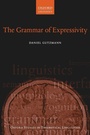
Daniel Gutzmann
The Grammar of Expressivity
Book
02/2019
Oxford University Press
€65.40
Shipment within 15-20 days
Daniel Gutzmann
The Grammar of Expressivity
E-Book
01/2019
1st Edition
OUP eBook
€27.49
Available for download
Person
Daniel Gutzmann is Senior Lecturer in German Linguistics at the University of Cologne. His research interests are semantics, pragmatics, and syntax with a particular special focus on the interaction between them. He has worked on a range of topics including particles, verum focus, and quotation, and is a leading expert on expressive language. He is the author of Use-Conditional Meaning: Studies in Multidimensional Semantics (OUP, 2015) and co-editor of several volumes in the series Current Research in the Semantics/Pragmatics Interface (CRiSPI, Brill).
Content
Acknowledgments
List of tables and figures
List of abbreviations, symbols, and typographic conventions
1: Introduction
2: The expressive function of language
3: Syntax, features, and agreement
4: Expressive adjectives
5: Expressive intensifiers
6: Expressive vocatives
7: Looking back and looking ahead
References
Index
List of tables and figures
List of abbreviations, symbols, and typographic conventions
1: Introduction
2: The expressive function of language
3: Syntax, features, and agreement
4: Expressive adjectives
5: Expressive intensifiers
6: Expressive vocatives
7: Looking back and looking ahead
References
Index