

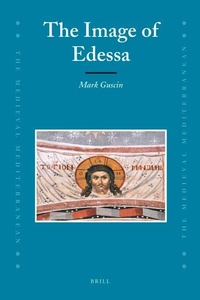
The Image of Edessa
Published on 17. December 2008
Book
Hardback
256 pages
978-90-04-17174-9 (ISBN)
Description
The icon known as the Image of Edessa (and later the Mandylion) is attributed to the times of Christ, although its existence before the sixth century is a matter for debate. It was taken from Edessa to Constantinople in the mid-tenth century and all traces of the icon are lost after the sack of Constaninople in 1204. The Image has never had its own biography containing all the known texts and information about this fascinating object. This book provides critical editions with previously unpublished versions of all related texts, translations of all texts into English and a detailed analysis of the origins, known history, possible fate and exact nature of the Image of Edessa.
Reviews / Votes
"...Therefore, Guscin's task is immense, but in the end, his work accomplishes the job for which it is commissioned when he writes: "I hope to have met Steven Runciman's wish for the Image of Edessa to have its own complete biography and history with the present book.""Reed Bernick, Paradosis, Posted on Monday, July 23, 2012, at 10:38 am.
More details
Series
Language
English
Place of publication
Leiden
Netherlands
Product notice
sewn/stitched
Cloth over boards
Dimensions
Height: 244 mm
Width: 165 mm
Thickness: 18 mm
Weight
567 gr
ISBN-13
978-90-04-17174-9 (9789004171749)
Copyright in bibliographic data and cover images is held by Nielsen Book Services Limited or by the publishers or by their respective licensors: all rights reserved.
Schweitzer Classification
Other editions
Additional editions

Marc Guscin
The Image of Edessa
Software
03/2009
Brill
Unfortunately, price unknown
Available (delivery time upon request)
Person
Mark Guscin, BA Hons Degree (1st Class) in Latin from University of Manchester (1984), is currently Manager of International Relations for the City Council of La Coruna (Spain). He has published several books on medieval history and on the Napoleonic Wars, including The History of the Sudarium of Oviedo (2004), The Burial Cloths of Christ (2000) and (in Spanish) Moore 1763 - 1809 (2001).
Content
List of Illustrations
Acknowledgements
Introduction
Part One The Texts and Translations
1. The Narratio de imagine Edessana
2. The Sermon of Gregory Referendarius
3. The Synaxarion
4. The Synaxarion according to Iveron 797
5. The Abgar letters recorded separately in Mount Athos Manuscripts
6. The Menaion
Part Two The Image of Edessa
1. The Abgar Legend
2. The Origins of the Image
3. Edessa and Constantinople
4. The Fourth Crusade
5. The Image of Edessa in art
6. What was the Image of Edessa?
7. Conclusions
Bibliography
Index
Acknowledgements
Introduction
Part One The Texts and Translations
1. The Narratio de imagine Edessana
2. The Sermon of Gregory Referendarius
3. The Synaxarion
4. The Synaxarion according to Iveron 797
5. The Abgar letters recorded separately in Mount Athos Manuscripts
6. The Menaion
Part Two The Image of Edessa
1. The Abgar Legend
2. The Origins of the Image
3. Edessa and Constantinople
4. The Fourth Crusade
5. The Image of Edessa in art
6. What was the Image of Edessa?
7. Conclusions
Bibliography
Index