

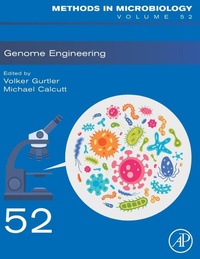
Genome Engineering: Volume 52
Published on 26. April 2023
Book
Hardback
250 pages
978-0-12-823540-9 (ISBN)
Description
Genome Engineering, Volume 52 in the Methods in Microbiology series, highlights new advances in the field with this new volume presenting interesting chapters written by an international board of authors. Topics covered include Whole genome transplantation in Mollicutes, Natural transformation as a tool in Acinetobacter baylyi: evolution by amplification of gene copy number, Natural transformation as a tool in Acinetobacter baylyi: streamlined engineering and mutational analysis, Methods to characterize cryptic biosynthetic gene clusters in Streptomyces, Genome engineering in bacteria: current and prospective applications, Tools for activation and identification of cryptic biosynthesis pathways in Streptomyces.
More details
Series
Language
English
Place of publication
San Diego
United States
Publishing group
Elsevier Science Publishing Co Inc
Target group
Professional and scholarly
Product notice
Laminated cover
Dimensions
Height: 235 mm
Width: 191 mm
Thickness: 16 mm
Weight
651 gr
ISBN-13
978-0-12-823540-9 (9780128235409)
Copyright in bibliographic data and cover images is held by Nielsen Book Services Limited or by the publishers or by their respective licensors: all rights reserved.
Schweitzer Classification
Other editions
Additional editions
Persons
Dr Gurtler is a Molecular biologist with extensive industry experience and expertise in DNA analysis for the identification and typing of organisms. He is known internationally as the author of the original methodology of ribotyping. He is Advisor to Geneious (Bioinformatics software company) and previous head of Molecular Biology at Austin Health Microbiology, currently Adjunct Professor at RMIT University, Editor of Journal of Microbiological Methods, Editor of Heliyon and Series Editor of Methods in Microbiology. Dr Gurtler is currently working in collaboration with Assoc. Prof Danilla Grando on ribosome analysis of E. coli isolates and association with virulence. He visits RMIT regularly to advise on experimental methods and help PhD students use Geneious Bioinformatic software. Dr. Michael (Mick) Calcutt is a Professor and the Director of Graduate Studies for the Molecular Pathogenesis and Therapeutics Program at the Department of Veterinary Pathobiology, College of Veterinary Medicine, University of Missouri. He completed his BSc. in the University of Sheffield, UK, and his Ph.D in the University of Leicester, UK.
Dr. Calcutt's research focuses on aspects of the molecular genetics and pathogenesis of Mycoplasmas, a diverse genus of cell wall-less bacteria that includes many important pathogens of food animals and humans. In the absence of a cell wall, the single limiting membrane represents the unique and critical interface between the pathogen and host. Analysis of the repertoire, function and potential antigenic variation of surface membrane proteins is one of the primary research interests in the laboratory, together with understanding chromosomal dynamics and the role of mobile genetic elements in such plasticity. Increasingly, whole genome sequencing and comparative genomic approaches are being exploited to systematically assess the deduced surface proteome, horizontal gene transfer and accessory gene pool that likely contribute to the pathobiology of these organisms.
Dr. Calcutt's research focuses on aspects of the molecular genetics and pathogenesis of Mycoplasmas, a diverse genus of cell wall-less bacteria that includes many important pathogens of food animals and humans. In the absence of a cell wall, the single limiting membrane represents the unique and critical interface between the pathogen and host. Analysis of the repertoire, function and potential antigenic variation of surface membrane proteins is one of the primary research interests in the laboratory, together with understanding chromosomal dynamics and the role of mobile genetic elements in such plasticity. Increasingly, whole genome sequencing and comparative genomic approaches are being exploited to systematically assess the deduced surface proteome, horizontal gene transfer and accessory gene pool that likely contribute to the pathobiology of these organisms.
Content
1. Whole genome transplantation in Mollicutes
Joerg Jores, Fabien Labroussaa and Sergi Torres Puig
2. Natural transformation as a tool in Acinetobacter baylyi: evolution by amplification of gene copy number
Ellen L. Neidle, Suvi Santala and Isabel Pardo Mendoza
3. Natural transformation as a tool in Acinetobacter baylyi: streamlined engineering and mutational analysis
Suvi Santala, Ellen L. Neidle and Isabel Pardo Mendoza
4. Methods to characterize cryptic biosynthetic gene clusters in Streptomyces
Chung Thanh Nguyen
5. Genome engineering in bacteria: current and prospective applications
Ruben Dario Arroyo Olarte, Edgar Morales Rios and Karla Daniela Rodriguez Hernandez
6. Tools for activation and identification of cryptic biosynthesis pathways in Streptomyces
Hue Nguyen
Joerg Jores, Fabien Labroussaa and Sergi Torres Puig
2. Natural transformation as a tool in Acinetobacter baylyi: evolution by amplification of gene copy number
Ellen L. Neidle, Suvi Santala and Isabel Pardo Mendoza
3. Natural transformation as a tool in Acinetobacter baylyi: streamlined engineering and mutational analysis
Suvi Santala, Ellen L. Neidle and Isabel Pardo Mendoza
4. Methods to characterize cryptic biosynthetic gene clusters in Streptomyces
Chung Thanh Nguyen
5. Genome engineering in bacteria: current and prospective applications
Ruben Dario Arroyo Olarte, Edgar Morales Rios and Karla Daniela Rodriguez Hernandez
6. Tools for activation and identification of cryptic biosynthesis pathways in Streptomyces
Hue Nguyen