


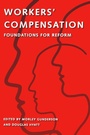
Workers' Compensation
Foundations for Reform
Published on 21. June 2000
Book
Hardback
336 pages
978-0-8020-4453-2 (ISBN)
Description
Workers' compensation began in the early 1900s to address some of the human costs of the Industrial Revolution, and was the first of Canada's social institutions. It aimed to redress social instability by reimbursing workers for their suffering while protecting companies from costly court cases. Today employers often feel overburdened and workers believe they are undercompensated. Litigation, which the system intended to avoid, has been increasing. Little-understood environmental illness, computer-related injuries, and lower-back pain are just some of the results of new work environments that make injury assessment a constant source of conflict. This text brings together authorities from the disciplines of law, economics, sociology, medicine, and epidemiology to grapple with the most pressing issues. These ten essays explore compensation, the impact of workers' compensation on the macro-economy, the nature of appeals litigation, and the efficacy of regulatory control and cost incentives in reducing work-related injuries.
More details
Language
English
Place of publication
Toronto
Canada
Target group
College/higher education
Professional and scholarly
Product notice
Cloth over boards
Illustrations
Illustrations
Dimensions
Height: 236 mm
Width: 161 mm
Thickness: 31 mm
Weight
674 gr
ISBN-13
978-0-8020-4453-2 (9780802044532)
Copyright in bibliographic data is held by Nielsen Book Services Limited or its licensors: all rights reserved.
Schweitzer Classification
Other editions
Additional editions
E-Book
06/2000
1st Edition
University of Toronto Press
€96.95
Available for download