

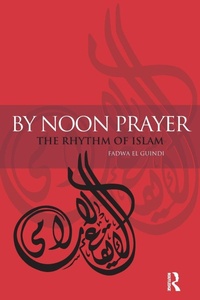
By Noon Prayer
The Rhythm of Islam
1st Edition
Published on 1. August 2008
Book
Paperback/Softback
220 pages
978-1-84520-097-8 (ISBN)
Description
A groundbreaking anthropological analysis of Islam as experienced by Muslims, By Noon Prayer builds a conceptual model of Islam as a whole, while travelling along a comparative path of biblical, Egyptological, ethnographic, poetic, scriptural and visual materials. Grounded in long-term observation of Arabo-Islamic culture and society, the study captures the rhythm of Islam weaving through the lives of Muslim women and men.Examples of the rhythmic nature of Islam can be seen in all aspects of Muslims' everyday lives. Muslims break their Ramadan fast upon the sun setting, and they receive Ramadan by sighting the new moon. Prayer for their dead is by noon and burial is before sunset. This is space and time in Islam - moon, sun, dawn and sunset are all part of a unique and unified rhythm, interweaving the sacred and the ordinary, nature and culture in a pattern that is characteristically Islamic.
More details
Language
English
Place of publication
Oxford
United Kingdom
Publishing group
Taylor & Francis Ltd
Target group
College/higher education
Dimensions
Height: 234 mm
Width: 156 mm
Thickness: 12 mm
Weight
345 gr
ISBN-13
978-1-84520-097-8 (9781845200978)
Copyright in bibliographic data and cover images is held by Nielsen Book Services Limited or by the publishers or by their respective licensors: all rights reserved.
Schweitzer Classification
Other editions
Additional editions
E-Book
05/2020
1st Edition
Routledge
€55.49
Available for download
E-Book
05/2020
1st Edition
Routledge
€55.49
Available for download
Book
08/2008
1st Edition
Berg Publishers
€207.50
Shipment within 3-4 weeks
Person
Fadwa El Guindi is director and research anthropologist at El Nil Research in Los Angeles. She is currently Distinguished Professor of Anthropology at the University of Qatar, Doha, Qatar.
Content
Part One: SPATIALITY AND TEMPORALITY1. Conceptual Overview 2. The Anthropology Of Time And SpacePart Two: COSMOS AND CALENDAR3. Order and Creative Beginning 4. Science, Religion and Business of TemporalityPart Three: ARABO-ISLAMIC ECOLOGY OF RHYTHM5. Marking Time, Carving Space6. Khususiyya, Qudsiyya, Jama'iyya: A Theory of Arabo-Islamic RhythmConclusion