

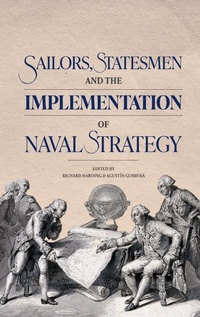
Sailors, Statesmen and the Implementation of Naval Strategy
Published on 18. June 2024
Book
Hardback
216 pages
978-1-83765-120-7 (ISBN)
Description
Explores the varied relationship between political leaders and naval experts, from the 16th to 21st centuries
The shaping of national defence strategies is particularly difficult in the case of navies. Few political leaders have naval experience, in contrast to the case of armies where political leaders and army commanders have often shared similar social and professional backgrounds. Bringing together historical examples from Britain, the United States, Spain and France, the book provides insights into this key relationship.
The authors highlight factors which have made for successful relationships between political leaders and naval experts, showing how changing circumstances have affected the dialogue and underlines the importance of good exchange of knowledge, expertise and understanding for successful policy making and strategic outcomes. Sea power continues to be crucial in the present world's increasingly unstable geopolitical situation, the mutual exchange of expertise between naval experts and political leaders is as important as ever, and the risk of political 'sea blindness' remains high. This book's historical examples provide good guidance on how to manage the relationship between political leaders and naval experts well.
The shaping of national defence strategies is particularly difficult in the case of navies. Few political leaders have naval experience, in contrast to the case of armies where political leaders and army commanders have often shared similar social and professional backgrounds. Bringing together historical examples from Britain, the United States, Spain and France, the book provides insights into this key relationship.
The authors highlight factors which have made for successful relationships between political leaders and naval experts, showing how changing circumstances have affected the dialogue and underlines the importance of good exchange of knowledge, expertise and understanding for successful policy making and strategic outcomes. Sea power continues to be crucial in the present world's increasingly unstable geopolitical situation, the mutual exchange of expertise between naval experts and political leaders is as important as ever, and the risk of political 'sea blindness' remains high. This book's historical examples provide good guidance on how to manage the relationship between political leaders and naval experts well.
Reviews / Votes
How does a naval officer gain a hearing for his expert advice, let alone actually play a role in statecraft? Examination of this question should interest any reader of this review with experience in Whitehall. Richard Harding brings the discussion right up to date in his excellent 'Reflections' that conclude this volume. * THE NAVAL REVIEW *More details
Language
English
Place of publication
Woodbridge
United Kingdom
Publishing group
Boydell & Brewer Ltd
Target group
College/higher education
Product notice
Cloth over boards
Dimensions
Height: 240 mm
Width: 161 mm
Thickness: 16 mm
Weight
493 gr
ISBN-13
978-1-83765-120-7 (9781837651207)
Copyright in bibliographic data and cover images is held by Nielsen Book Services Limited or by the publishers or by their respective licensors: all rights reserved.
Schweitzer Classification
Other editions
Additional editions
Unknown | Agustin Guimera | Richard Harding
Sailors, Statesmen and the Implementation of Naval Strategy
E-Book
06/2024
1st Edition
Boydell & Brewer Ltd
€48.99
Available for download
Agustín Guimerá | Richard Harding
Sailors, Statesmen and the Implementation of Naval Strategy
E-Book
06/2024
1st Edition
De Gruyter
€48.99
Available for download
Persons
Richard Harding is emeritus professor at the University of Westminster. He is author and editor of many books, including The Emergence of Britain's Global Naval Supremacy: The War of 1739-1748 (2010) and Naval Leadership and Management, 1650-1950 (2012), both published by Boydell and Brewer.
Agustin Guimera is a researcher at the Instituto de Historia, Consejo Supeior de Investigaciones Cientificas, Madrid. He is the author of numerous studies of comparative naval leadership.
Agustin Guimera is a researcher at the Instituto de Historia, Consejo Supeior de Investigaciones Cientificas, Madrid. He is the author of numerous studies of comparative naval leadership.
Content
List of Contributors
Introduction Naval Leadership: Expertise and Strategy, Richard Harding
1. The Evolution of French Naval Leadership: Defining the Admiralty of France from the Sixteenth to the Eighteenth Century, Alan James
2. The Makers of Spanish Naval Strategy in the Eighteenth Century: Strategy, Tactics and Shipbuilding Policy, Ivan Valdez-Bubnov
3. Naval Strategic Leadership in Britain, 1739-1748: Political Leaders and Professional Knowledge, Richard Harding
4. The Statesman and the Naval Leader: The Count of Floridablanca and Navy Minister Antonio Valdes, 1783-1792, Agustin Guimera
5. Defining French Eighteenth-Century Naval Strategy, Olivier Chaline
6. Casto Mendez Nunez: The Admiral who could have been Regent, 1861-1868, Agustin Ramon Rodriguez Gonzalez
7. Teaching by Example: Julian Corbett's The Campaign of Trafalgar of 1910, Andrew Lambert
8. Spanish Naval Leadership during the Second Republic: Jose Giral Pereira, Adolfo Morales Trueba
9. The Quest to Understand Naval Leadership: Educating Admirals for High Command in the U.S. Navy from the 18th Century into the 21st Century, John B. Hattendorf
10. Reflections, Richard Harding
Bibliography
Index
Introduction Naval Leadership: Expertise and Strategy, Richard Harding
1. The Evolution of French Naval Leadership: Defining the Admiralty of France from the Sixteenth to the Eighteenth Century, Alan James
2. The Makers of Spanish Naval Strategy in the Eighteenth Century: Strategy, Tactics and Shipbuilding Policy, Ivan Valdez-Bubnov
3. Naval Strategic Leadership in Britain, 1739-1748: Political Leaders and Professional Knowledge, Richard Harding
4. The Statesman and the Naval Leader: The Count of Floridablanca and Navy Minister Antonio Valdes, 1783-1792, Agustin Guimera
5. Defining French Eighteenth-Century Naval Strategy, Olivier Chaline
6. Casto Mendez Nunez: The Admiral who could have been Regent, 1861-1868, Agustin Ramon Rodriguez Gonzalez
7. Teaching by Example: Julian Corbett's The Campaign of Trafalgar of 1910, Andrew Lambert
8. Spanish Naval Leadership during the Second Republic: Jose Giral Pereira, Adolfo Morales Trueba
9. The Quest to Understand Naval Leadership: Educating Admirals for High Command in the U.S. Navy from the 18th Century into the 21st Century, John B. Hattendorf
10. Reflections, Richard Harding
Bibliography
Index