

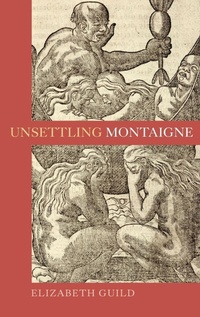
Unsettling Montaigne
Poetics, Ethics and Affect in the Essais and Other Writings
Published on 17. April 2014
Book
Hardback
306 pages
978-1-84384-371-9 (ISBN)
Description
Striking new readings of Montaigne's works, focussing on such concepts as scepticism and tolerance.
Montaigne's Essais (1580-1592) are one of the most remarkable works of the European Renaissance. The Essais' innovative open-mindedness is at odds with the dogmatism and intolerance of their times, the decades of civil and religious wars in France, and their tolerant and searching human questions and ethics of difference remain compelling for twenty-first century readers. But the sceptical open-endedness that vitalizes this writing is also often troubled and troubling: personal losses and the collapse of cultural ideals moved Montaigne to write, and their attendant anxieties are not resolved into tranquil reflection.
Unsettling Montaigne reassesses Montaigne's scepticism. Informed by psychoanalytic and related theory, its close attention to Montaigne's complex uses of metaphor illuminates the psychic economy of his scepticism and tolerance and their poetics, while new readings ofhis Essais and other texts reveal the significance of disquieting questions, thought and affect for the ethos his writing fosters. The analysis deals with figures such as cannibals and cannibalism, hunger, shaking, tickling, place, the brother, and haunting in Montaigne's exploration of concepts which tested his understanding and self-understanding. The volume also demonstrates how figuration supports openness to difference for both writer and readers, and is fundamental to this writing's aesthetic, psychic and ethical creativity.
Elizabeth Guild lectures in French at the University of Cambridge, and is a Fellow of Robinson College.
Montaigne's Essais (1580-1592) are one of the most remarkable works of the European Renaissance. The Essais' innovative open-mindedness is at odds with the dogmatism and intolerance of their times, the decades of civil and religious wars in France, and their tolerant and searching human questions and ethics of difference remain compelling for twenty-first century readers. But the sceptical open-endedness that vitalizes this writing is also often troubled and troubling: personal losses and the collapse of cultural ideals moved Montaigne to write, and their attendant anxieties are not resolved into tranquil reflection.
Unsettling Montaigne reassesses Montaigne's scepticism. Informed by psychoanalytic and related theory, its close attention to Montaigne's complex uses of metaphor illuminates the psychic economy of his scepticism and tolerance and their poetics, while new readings ofhis Essais and other texts reveal the significance of disquieting questions, thought and affect for the ethos his writing fosters. The analysis deals with figures such as cannibals and cannibalism, hunger, shaking, tickling, place, the brother, and haunting in Montaigne's exploration of concepts which tested his understanding and self-understanding. The volume also demonstrates how figuration supports openness to difference for both writer and readers, and is fundamental to this writing's aesthetic, psychic and ethical creativity.
Elizabeth Guild lectures in French at the University of Cambridge, and is a Fellow of Robinson College.
Reviews / Votes
Indispensable for specialists, who will profit from being unsettled from standard readings of Montaigne, but will be of interest to those who want to peer into the labyrinthine mind of one of the Renaissance's most anxious thinkers. * MODERN LANGUAGE REVIEW * Dislodging Montaigne from the more comfortable, as it were tenured, positions in which he is commonly placed, this study offers a compelling account of the texture and significance of his life's work. * H-FRANCE * Guild's 'unsettled' Montaigne . . . fulfills the promise of reading the Essais in their disquieting familiarity. * MODERN PHILOLOGY * [Offers] a series of coherent and persuasive readings of key passages from a variety of essays that encourage our appreciation of Montaigne's ethical actuality and verbal dexterity. * FRENCH STUDIES * If Montaigne stood for freedom of sconscience and inquiry, and responded with reasonably doubt to the rhetoric of violence and hate, he paid a price: the Essays, Guild argues, are a project driven and inhabited by anxiety. Recommended. * CHOICE *More details
Series
Language
English
Place of publication
Cambridge
United Kingdom
Publishing group
Boydell & Brewer Ltd
Target group
College/higher education
Product notice
Cloth over boards
Dimensions
Height: 240 mm
Width: 161 mm
Thickness: 21 mm
Weight
628 gr
ISBN-13
978-1-84384-371-9 (9781843843719)
Copyright in bibliographic data and cover images is held by Nielsen Book Services Limited or by the publishers or by their respective licensors: all rights reserved.
Schweitzer Classification
Other editions
Additional editions
Elizabeth Guild
Unsettling Montaigne
Poetics, Ethics and Affect in the <I>Essais</I> and Other Writings
E-Book
04/2014
1st Edition
De Gruyter
€48.99
Available for download
Person
Elizabeth Guild