

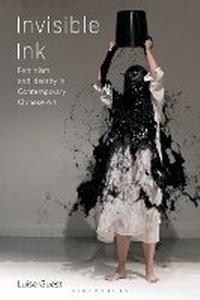
Invisible Ink
Feminism and Identity in Contemporary Chinese Art
Will be published approx. on 19. February 2026
Book
Hardback
216 pages
978-1-350-43395-3 (ISBN)
Description
What does it mean to be a woman artist - or a feminist artist - in China today? Analyzing how Chinese women artists have reinvented traditional forms of ink and brush painting, Invisible Ink shows how the use of ink in their work becomes a tool of gender and art historical subversion in contemporary Chinese art.
The book explores how the work of Bingyi, Ma Yanling, Tao Aimin, Xiao Lu and Xie Rong invoke contemporary manifestations of the traditional Chinese form of ink and brush painting to explore themes of the embodied, gendered experience of Chinese identity, including: motherhood and daughterhood; the exercise of state control over fertility in the implementation of the One Child Policy; and the experience of menopause in a society that prizes youth and beauty.
Each chapter examines one artist, analysing carefully selected key works and drawing on interviews with the artists themselves. It positions the artists as intervening, not only in historically exclusive, elitist literati traditions, but also in contemporary art discourses in which their contributions have been similarly marginalised. It explores the ambivalent views of the artists towards (Western) feminism and positions their work as counter-hegemonic expressions of a specifically Chinese experience of patriarchy.
Addressing an understudied aspect of contemporary Chinese art, this book powerfully illuminates the material culture of ink and brush painting through a transcultural, intersectional feminist lens, revealing the ways in which the form bridges Chinese history and the present day.
The book explores how the work of Bingyi, Ma Yanling, Tao Aimin, Xiao Lu and Xie Rong invoke contemporary manifestations of the traditional Chinese form of ink and brush painting to explore themes of the embodied, gendered experience of Chinese identity, including: motherhood and daughterhood; the exercise of state control over fertility in the implementation of the One Child Policy; and the experience of menopause in a society that prizes youth and beauty.
Each chapter examines one artist, analysing carefully selected key works and drawing on interviews with the artists themselves. It positions the artists as intervening, not only in historically exclusive, elitist literati traditions, but also in contemporary art discourses in which their contributions have been similarly marginalised. It explores the ambivalent views of the artists towards (Western) feminism and positions their work as counter-hegemonic expressions of a specifically Chinese experience of patriarchy.
Addressing an understudied aspect of contemporary Chinese art, this book powerfully illuminates the material culture of ink and brush painting through a transcultural, intersectional feminist lens, revealing the ways in which the form bridges Chinese history and the present day.
Reviews / Votes
Invisible Ink is a unique contribution to the study of women artists and contemporary art. With innovative and in-depth research, Luise Guest uncovers the multi-layered meanings of ink as both medium and creative space in the feminist practice of five Chinese women artists. * Monica Merlin, Assistant Professor of Art History, VCUarts Qatar * Weaves together a wealth of insights gathered from conversations with women artists across China. This vital expansion of the material turn in writing on contemporary Chinese art introduces a much-needed gendered lens to our understanding of cultural traditions and their reinvention. * Alex Burchmore, Lecturer in Art History and Curatorial Studies, Australian National University, Australia * Invisible Ink does not argue for simply adding women into the picture, but rather for how serious attention to their art remakes our understanding of both experimental ink painting and feminist art as expansive fields of practice. * Sasha Su-Ling Welland, Professor of Gender, Women & Sexuality Studies, University of Washington, USA *More details
Language
English
Place of publication
London
United Kingdom
Publishing group
Bloomsbury Publishing PLC
Target group
Professional and scholarly
Product notice
sewn/stitched
Cloth over boards
With dust jacket
Illustrations
50 colour illus.
Dimensions
Height: 236 mm
Width: 154 mm
Thickness: 18 mm
Weight
567 gr
ISBN-13
978-1-350-43395-3 (9781350433953)
Copyright in bibliographic data and cover images is held by Nielsen Book Services Limited or by the publishers or by their respective licensors: all rights reserved.
Schweitzer Classification
Other editions
Additional editions
E-Book
01/2026
1st Edition
Bloomsbury Visual Arts
€93.99
Not yet available
E-Book
01/2026
1st Edition
Bloomsbury Visual Arts
€93.99
Not yet available
Person
Luise Guest is an independent researcher, writer and curator based in Sydney, Australia. She is the author of Half the Sky: Conversations with Women Artists in China (2016) and has written for many journals and art magazines including Australian and New Zealand Journal of Art and Journal of Chinese Contemporary Art.
Content
List of illustrations
Preface
Acknowledgements
Glossary
Introduction
1. Hiding in plain sight: where are the women?
2. Rituals of ink and water: painting as performance in the work of Xiao Lu
3. 'Upstairs girls': nueshu reinvented in the work of Tao Aimin
4. From silence to speech: mothers and daughters in the work of Ma Yanling
5. A trespasser in the literati garden: Bingyi's poetics of ink
6. Body calligraphy: Xie Rong's autobiographies
7. Conclusion: Ink art as a feminist praxis
Afterword
References
Index
Preface
Acknowledgements
Glossary
Introduction
1. Hiding in plain sight: where are the women?
2. Rituals of ink and water: painting as performance in the work of Xiao Lu
3. 'Upstairs girls': nueshu reinvented in the work of Tao Aimin
4. From silence to speech: mothers and daughters in the work of Ma Yanling
5. A trespasser in the literati garden: Bingyi's poetics of ink
6. Body calligraphy: Xie Rong's autobiographies
7. Conclusion: Ink art as a feminist praxis
Afterword
References
Index