

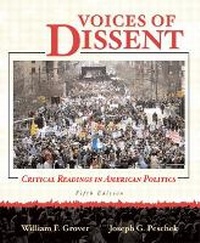
Voices of Dissent
Critical Readings in American Politics
5th Edition
Published on 3. February 2004
Book
Paperback/Softback
368 pages
978-0-321-12905-5 (ISBN)
Description
This distinctive reader-the only collection of critical readings on American government available-takes students far beyond the mainstream debate between liberalism and conservatism to fundamentally challenge the status quo.
Voices of Dissent provides a systematic series of critical perspectives on American politics that goes beyond the debate between mainstream liberalism and conservatism. This text nurtures students' abilities to critically assess the "givens" of political and economic life in the United States. A recurrent theme in the selections is political economy and the tension between capitalism and democracy.
Voices of Dissent provides a systematic series of critical perspectives on American politics that goes beyond the debate between mainstream liberalism and conservatism. This text nurtures students' abilities to critically assess the "givens" of political and economic life in the United States. A recurrent theme in the selections is political economy and the tension between capitalism and democracy.
More details
Edition
5th edition
Language
English
Place of publication
United States
Publishing group
Pearson Education (US)
Target group
Professional and scholarly
Dimensions
Height: 235 mm
Width: 191 mm
Weight
619 gr
ISBN-13
978-0-321-12905-5 (9780321129055)
Copyright in bibliographic data and cover images is held by Nielsen Book Services Limited or by the publishers or by their respective licensors: all rights reserved.
Schweitzer Classification
Other editions
New editions
Book
03/2006
6th Edition
Pearson
€47.01
Article is exhausted; no reprint
Previous edition
Book
12/2002
4th Edition
Pearson
€32.23
Article exhausted; check for reprint
Content
Preface.
Introduction: Why a Critical Reader?
I. STRUCTURE.
1. Democracy and Political Economy.
1. Jim Hightower, This Land Is Your Land.
2. Charles E. Lindblom, The Market as Prison.
3. Dan Clawson, Alan Neustadtl, Mark Weller, Why Does the Air Stink? Corporate Power and Public Policy
4. John Bellamy Foster, Global Ecology and the Common Good.
2. Ideology and Political Culture
5. Jennifer L. Hochschild, What Is the American Dream?
6. Robert N. Bellah, Richard Madsen, William M. Sullivan, Ann Swidler, Steven M. Tipton, Liberal Individualism and the Crisis of Citizenship.
7. Alexis De Tocqueville, Power of Majority Opinion in America over Thought.
8. Robert Jensen, Goodbye to Patriotism.
3. Constitutional and State Structures.
9. Joshua Cohen and Joel Rogers, American Exceptionalism: The Politics of Fragmentation.
10. Kenneth M. Dolbeare and Linda Medcalf, The Dark Side of the Constitution.
11. Daniel Lazare, The Constitution, the Supreme Court, and the Decline of American Democracy.
12. Howard Zinn, Some Truths Are Not Self-Evident.
II. POLITICS AND INSTITUTIONS.
4. Mass Media and Politics.
13. Robert W. McChesney and John Nichols, It's the Media, Stupid.
14. W. Lance Bennett, News Content and Illusion: Four Information Biases That Matter.
15. Mark Crispin Miller, The Media and the Bush Dyslexicon.
16. Ina Howard, Media Power Sources: TV Sets the Agenda.
5. Parties and Elections.
17. Frances Fox Piven and Richard A. Cloward, Why Americans Still Don't Vote.
18. Micah L. Sifry, Finding the Lost Voters.
19. Joel Rogers and Ruy Teixeira, America's Forgotten Majority.
20. Lani Guinier, After the Deluge: Electoral Reform in the Wake of the Election of 2000.
6. Congress.
21. John C. Berg, Congress and Big Business.
22. Benjamin Ginsberg and Martin Shefter, RIP for Democratic Politics.
23. Senator James Jeffords (I-VT) and Representative Barbara Lee (D-CA), Courage in Congress: Two Dissenters Explain Their Actions.
24. William F. Grover, Congress and Movement-Building: Bernie Sanders and the Congressional Progressive Caucus.
7. The Presidency.
25. Michael A. Genovese, The Limits of Presidential Power.
26. Bruce Miroff, The Presidential Spectacle.
27. Kevin Phillips, Presidential Dynasties.
28. Joseph G. Peschek, The Bush Doctrine and the New American Empire.
8. Law and the Courts.
29. Carl Swidorski, Corporations, the Law, and Democracy.
30. Cass R. Sunstein, Is Free Speech the Enemy of Democracy?
31. Patricia J. Williams, This Dangerous Patriot's Game.
32. Nina Schuyler, Women's Rights and the Cultural Defense Argument.
III. POLITICS AND VISION.
9. Political Challenges at Home and Abroad.
33. Holly Sklar, Betsy Leondar-Wright, Chuck Collins, The Shaky American Dream: The Perils of the Growing American Wealth Gap.
34. Barbara Ehrenreich, Doing It for Ourselves: Can Feminism Survive Class Polarization?
35. Brian Gilmore, Black America and the Dilemma of Patriotism.
36. Noam Chomsky, The U.S. and Global Wars of Terror.
10. Visions of a New Democracy.
37. Martin Luther King, Jr., Letter from Birmingham Jail.
38. Naomi Klein, Reclaiming the Commons.
39. Elaine Bernard, Why Unions Matter.
40. Ralph Nader, Closing the Democracy Gap.
Resources for Further Study.
APPENDIX.
The Declaration of Independence.
The Constitution of the United States.
The Federalist No. 10.
Introduction: Why a Critical Reader?
I. STRUCTURE.
1. Democracy and Political Economy.
1. Jim Hightower, This Land Is Your Land.
2. Charles E. Lindblom, The Market as Prison.
3. Dan Clawson, Alan Neustadtl, Mark Weller, Why Does the Air Stink? Corporate Power and Public Policy
4. John Bellamy Foster, Global Ecology and the Common Good.
2. Ideology and Political Culture
5. Jennifer L. Hochschild, What Is the American Dream?
6. Robert N. Bellah, Richard Madsen, William M. Sullivan, Ann Swidler, Steven M. Tipton, Liberal Individualism and the Crisis of Citizenship.
7. Alexis De Tocqueville, Power of Majority Opinion in America over Thought.
8. Robert Jensen, Goodbye to Patriotism.
3. Constitutional and State Structures.
9. Joshua Cohen and Joel Rogers, American Exceptionalism: The Politics of Fragmentation.
10. Kenneth M. Dolbeare and Linda Medcalf, The Dark Side of the Constitution.
11. Daniel Lazare, The Constitution, the Supreme Court, and the Decline of American Democracy.
12. Howard Zinn, Some Truths Are Not Self-Evident.
II. POLITICS AND INSTITUTIONS.
4. Mass Media and Politics.
13. Robert W. McChesney and John Nichols, It's the Media, Stupid.
14. W. Lance Bennett, News Content and Illusion: Four Information Biases That Matter.
15. Mark Crispin Miller, The Media and the Bush Dyslexicon.
16. Ina Howard, Media Power Sources: TV Sets the Agenda.
5. Parties and Elections.
17. Frances Fox Piven and Richard A. Cloward, Why Americans Still Don't Vote.
18. Micah L. Sifry, Finding the Lost Voters.
19. Joel Rogers and Ruy Teixeira, America's Forgotten Majority.
20. Lani Guinier, After the Deluge: Electoral Reform in the Wake of the Election of 2000.
6. Congress.
21. John C. Berg, Congress and Big Business.
22. Benjamin Ginsberg and Martin Shefter, RIP for Democratic Politics.
23. Senator James Jeffords (I-VT) and Representative Barbara Lee (D-CA), Courage in Congress: Two Dissenters Explain Their Actions.
24. William F. Grover, Congress and Movement-Building: Bernie Sanders and the Congressional Progressive Caucus.
7. The Presidency.
25. Michael A. Genovese, The Limits of Presidential Power.
26. Bruce Miroff, The Presidential Spectacle.
27. Kevin Phillips, Presidential Dynasties.
28. Joseph G. Peschek, The Bush Doctrine and the New American Empire.
8. Law and the Courts.
29. Carl Swidorski, Corporations, the Law, and Democracy.
30. Cass R. Sunstein, Is Free Speech the Enemy of Democracy?
31. Patricia J. Williams, This Dangerous Patriot's Game.
32. Nina Schuyler, Women's Rights and the Cultural Defense Argument.
III. POLITICS AND VISION.
9. Political Challenges at Home and Abroad.
33. Holly Sklar, Betsy Leondar-Wright, Chuck Collins, The Shaky American Dream: The Perils of the Growing American Wealth Gap.
34. Barbara Ehrenreich, Doing It for Ourselves: Can Feminism Survive Class Polarization?
35. Brian Gilmore, Black America and the Dilemma of Patriotism.
36. Noam Chomsky, The U.S. and Global Wars of Terror.
10. Visions of a New Democracy.
37. Martin Luther King, Jr., Letter from Birmingham Jail.
38. Naomi Klein, Reclaiming the Commons.
39. Elaine Bernard, Why Unions Matter.
40. Ralph Nader, Closing the Democracy Gap.
Resources for Further Study.
APPENDIX.
The Declaration of Independence.
The Constitution of the United States.
The Federalist No. 10.