

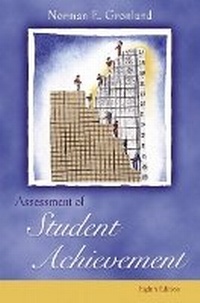
Assessment of Student Achievement
8th Edition
Published on 12. May 2005
Book
Paperback/Softback
240 pages
978-0-205-45727-4 (ISBN)
Description
/*0205457274 Gronlund, Assessment of Student Achievement 8e*/This text is a balanced, concise, and practical guide for testing and performance assessment linked to effective classroom instruction and learning. Assessment of Student Achievement, Eighth Edition, emphasizes that assessment is a broad term that includes testing and performance assessment, each used where it is most appropriate. Valid assessment is necessary for effective instruction with a goal of improved student learning. A portion of the text is devoted to each of the following topics: how to prepare and use classroom tests and performance assessments and how to assign grades and interpret standardized test scores to students and parents. The material is presented in an accessible, direct, and brief format.
More details
Edition
8th edition
Language
English
Place of publication
United States
Publishing group
Pearson Education (US)
Target group
Professional and scholarly
Dimensions
Height: 228 mm
Width: 156 mm
Thickness: 15 mm
Weight
391 gr
ISBN-13
978-0-205-45727-4 (9780205457274)
Copyright in bibliographic data and cover images is held by Nielsen Book Services Limited or by the publishers or by their respective licensors: all rights reserved.
Schweitzer Classification
Other editions
New editions
Norman E. Gronlund | C. Keith Waugh
Assessment of Student Achievement
Book
03/2008
9th Edition
Pearson
€67.11
Article exhausted; check for reprint
Previous edition
Norman E. Gronlund
Assessment of Student Achievement
Book
05/2002
7th Edition
Pearson
€57.19
Article exhausted; check for reprint
Content
Each chapter concludes with "Summary of Points" and "References and Additional Reading."
Preface.
1. Achievement Assessment and Instruction.
Relation between Instruction and Assessment.
Assessment in the Instructional Process.
Other Ways Assessment Can Aid Learning.
Teachers' Standards for Student Assessment.
2. Nature of Student Assessment.
Major Types of Assessment Methods.
Guidelines for Effective Student Assessment.
Validity and Reliability in Assessment Planning.
Norm-Referenced and Criterion-Referenced Assessment.
3. Content Standards and Student Achievement.
Nature of Content Standards.
Examples of Content Standards.
Content Standards, Teaching and Assessment.
4. Planning for Assessment.
Using the Revised Taxonomy of Educational Objectives as a Guide.
Role of Instructional Objectives.
Preparing for Assessment.
Types of Assessment Procedures.
5. Preparing and Using Achievement Tests.
Preparing the Test Specifications.
Considerations in Constructing Relevant Test Items.
General Guidelines for Item Writing.
Arranging the Items in the Test.
Preparing Directions.
Administering and Scoring the Test.
Analyzing the Effectiveness of Test Items.
6. Writing Selection Items: Multiple Choice.
Nature of Multiple-Choice Items.
Rules for Writing Multiple-Choice Items.
7. Writing Selection Items: True-False, Matching, and Interpretive Exercise.
True-False Items.
Matching Items.
The Interpretive Exercise.
8. Writing Supply Items: Short Answer and Essay.
Short-Answer Items.
Essay Questions.
9. Performance Assessments.
Components of Performance Skills.
Stating Objectives for Performance Assessment.
Restricted and Extended Performance Tasks.
Steps in Preparing Performance Assessments.
Specifying the Performance Outcomes.
Selecting the Focus of the Assessment.
Selecting an Appropriate Degree of Realism.
Selecting the Performance Situation.
Making Performance Assessment More Authentic.
Selecting the Method of Observing, Recording, and Scoring.
Improving Performance Assessments.
10. Portfolio Assessment.
Advantages of Using Classroom Portfolios.
Planning for the Use of Portfolios.
Evaluating the Portfolio.
11. Grading and Reporting.
Selecting the Basis for Grading.
Combining Data for Grading.
Electronic Grading.
Guidelines for Effective and Fair Grading.
Reporting to Students and Parents.
12. Interpreting Standardized Achievement Test Scores.
Features of Standardized Achievement Tests.
Interpreting Norm-Referenced Scores.
Percentile Ranks.
Grade Equivalent Scores.
Standard Scores.
Criterion-Referenced Interpretation.
13. Validity and Reliability.
Validity.
Reliability.
Glossary.
Index.
Appendix.
Preface.
1. Achievement Assessment and Instruction.
Relation between Instruction and Assessment.
Assessment in the Instructional Process.
Other Ways Assessment Can Aid Learning.
Teachers' Standards for Student Assessment.
2. Nature of Student Assessment.
Major Types of Assessment Methods.
Guidelines for Effective Student Assessment.
Validity and Reliability in Assessment Planning.
Norm-Referenced and Criterion-Referenced Assessment.
3. Content Standards and Student Achievement.
Nature of Content Standards.
Examples of Content Standards.
Content Standards, Teaching and Assessment.
4. Planning for Assessment.
Using the Revised Taxonomy of Educational Objectives as a Guide.
Role of Instructional Objectives.
Preparing for Assessment.
Types of Assessment Procedures.
5. Preparing and Using Achievement Tests.
Preparing the Test Specifications.
Considerations in Constructing Relevant Test Items.
General Guidelines for Item Writing.
Arranging the Items in the Test.
Preparing Directions.
Administering and Scoring the Test.
Analyzing the Effectiveness of Test Items.
6. Writing Selection Items: Multiple Choice.
Nature of Multiple-Choice Items.
Rules for Writing Multiple-Choice Items.
7. Writing Selection Items: True-False, Matching, and Interpretive Exercise.
True-False Items.
Matching Items.
The Interpretive Exercise.
8. Writing Supply Items: Short Answer and Essay.
Short-Answer Items.
Essay Questions.
9. Performance Assessments.
Components of Performance Skills.
Stating Objectives for Performance Assessment.
Restricted and Extended Performance Tasks.
Steps in Preparing Performance Assessments.
Specifying the Performance Outcomes.
Selecting the Focus of the Assessment.
Selecting an Appropriate Degree of Realism.
Selecting the Performance Situation.
Making Performance Assessment More Authentic.
Selecting the Method of Observing, Recording, and Scoring.
Improving Performance Assessments.
10. Portfolio Assessment.
Advantages of Using Classroom Portfolios.
Planning for the Use of Portfolios.
Evaluating the Portfolio.
11. Grading and Reporting.
Selecting the Basis for Grading.
Combining Data for Grading.
Electronic Grading.
Guidelines for Effective and Fair Grading.
Reporting to Students and Parents.
12. Interpreting Standardized Achievement Test Scores.
Features of Standardized Achievement Tests.
Interpreting Norm-Referenced Scores.
Percentile Ranks.
Grade Equivalent Scores.
Standard Scores.
Criterion-Referenced Interpretation.
13. Validity and Reliability.
Validity.
Reliability.
Glossary.
Index.
Appendix.