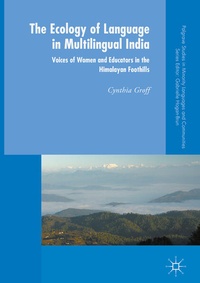
The Ecology of Language in Multilingual India
Description
Reviews / Votes
"Cynthia Groff invites readers to get to know Kumani young women's multilingualism, literacy practices, and lives - as told in their own words and stories. Drawing on her experiences living and learning with them at Lakshmi Ashram in northern India, Groff eloquently shows how the young women's experiences entwine with the school's Gandhian vision of empowerment. (Nancy Hornberger, University of Pennsylvania, USA)"Cynthia Groff's ethnographic work in the Kumaun region of India offers an excellent kaleidoscopic view of multilingualism from a folk perspective and an insightful analysis of the complexities and challenges of some core issues in multilingualism - the fluidity of linguistic boundaries and the hierarchical relationships among languages. The work shows a deep engagement with the current concerns in respect of language policies and practices in multilingual societies." (Ajit Mohanty, Jawaharlal Nehru University, India)
"Cynthia Groff's book is a major achievement andcontribution in the field of Educational Linguistics. The carefully observed, often lyrical, rendering of ethnographic detail is punctuated by astute insights about the language ecology in the Kumaun region of India. Connections are highlighted between Indian language policy, language ideologies, and the educational experiences of a group of girls in a Gandhian boarding school. The girls are the heart of the book and, by highlighting their beliefs and experiences, Groff gives voice to those who have traditionally been quieted, in India and throughout the world." (David Cassels Johnson, University of Iowa, USA)
More details
Other editions
Additional editions